 Jun 18, 2026
 0 Comments
While the Great Lakes Bay region is blessed to have produced many notable musical artists over the decades such as jazz saxophonist Sonny Stitt, the legendary Stevie Wonder, Madonna, Greta VanFleet, and contemporary bluesman Larry McCray, the band known as Question Mark & the Mysterians is without doubt the only group to achieve international fame by forging their own original brand of ‘Garage Rock’, which became a rock-n-roll genre all its own.
Wrongly thought of as ‘one hit wonders’, the band actually placed five singles on the Billboard Charts, released two classic albums of their own tightly defined material, and went from rags to riches over an incredible 15-month period beginning in 1966 that ended with the collapse of the Cameo-Parkway record label until the group disbanded in 1969 after recording their never-released ‘third’ album.
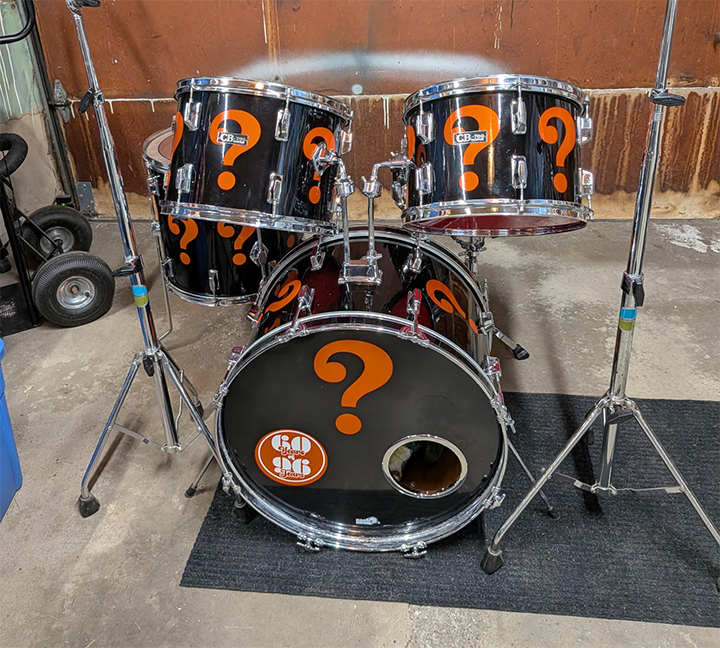
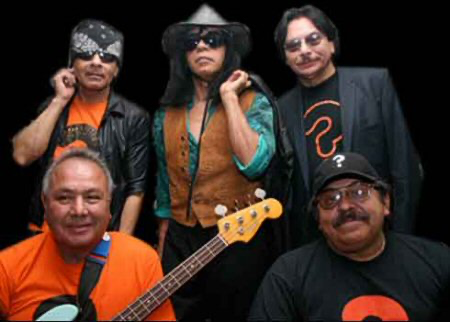
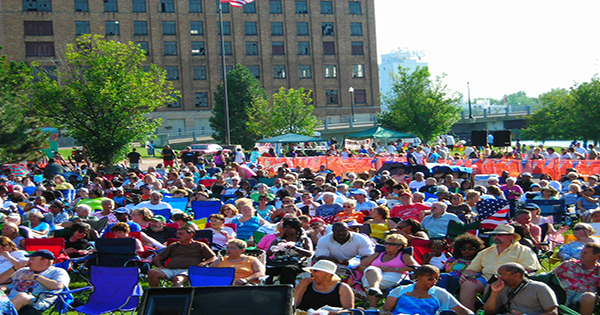
To commemorate and celebrate the 60th Anniversary of their immortal and legendary punk-rock anthem 96 Tears, the original founding members of Question Mark & the Mysterians will be performing a special Farwell Performance on Sunday, July 12th from 3:00 to 6:00 PM at Bay City’s Wenonah Park. This free concert will also feature the Larry McCray Band (including Steve & Carl McCray for the first time in years) along with an opening performance The Prospect Brass Band, who won the honor of Best Big Jazz Band at this year’s 40th REVIEW Music Awards.
Tom Mulvaney who runs 706 Productions and Musik Maschine Studio has been the key organizer and promoter of the Mysterians concert.
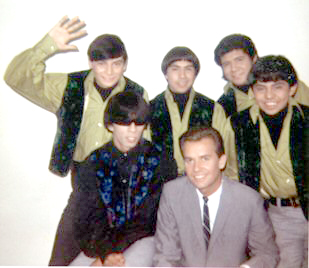
The Mysterians originally began as a trio consisting of Larry Borjas (guitar), Robert Martinez (drums), and Bobby Balderrama (lead guitar), and first joined forces back in the early 1960s. To document this epic journey I recently had the pleasure to sit down with Bobby to discuss the group’s origins and take a trip down memory lane to recapture through recollection the experience of their rocket ride of destiny to musical stardom.
REVIEW: When you look back at the whole experience with Question Mark & the Mysterians going back to when you guys first started playing together, what was that whole process like? How did you guys first come together and how did you develop that grungy pop-sound?
Bobby Balderama: How it all started was when me and my nephew Larry Borjas would get together over the weekends and start jamming together out of boredom. He would come over to my house, or I would spend the weekend over at his house, and we would practice together. Eventually my sister and his mother said to me, ‘Bobby, why don’t you and Larry start a band?’ They put this thought in my mind and I couldn’t let go of it, so we started a three-piece instrumental band kind of modeled after The Ventures – a surf-rock band that was huge at the time.
We started learning songs by The Beatles and Rolling Stones, and Larry was four years older than me and he actually was a better guitar player at that time; which when you’re in middle school is a huge age difference, so I practiced more and he was more into the girls. I was still too young for that, so I practiced and learned and got better on the guitar and one day he looked at me and said, ‘Bobby, why don’t you be the lead guitar player and I’ll play the bass guitar,’
We started playing out at gigs but everybody kept asking us if anybody sang in the band, I was bummed out because I didn’t really want to sing, I just wanted to keep playing the guitar and doing The Ventures, but I realized with The Beatles and Rolling Stones making such a big splash here in the United States and everybody wanting to hear their music, I knew we had to get a singer. Our drummer, Robert Martinez, suggested we try out his brother Rudy saying that he not only sings well, but is a really good dancer and we should check him out. We brought him over and he blew us away.
REVIEW: Buit how did the sound come together? Did it take a while to develop that unmistakable transistor-driven Farfisa organ toned garage rock sound that served as a template for Punk Rock, or did that just come naturally?
Bobby: Honestly, we didn’t really have a sound until one day I was watching Shindig on the TV and saw The Dave Clark Five and noticed they had a keyboard player who was playing a Vox organ and was doing a lot of the lead work. He was standing up and I heard that sound and loved it, so told the guys we needed a keyboard player and started looking around, My brother worked at the foundry in Saginaw and knew somebody in Bay City that could play keyboard and he was a young guy, so I got his number and called him but his father was very strict.
I explained I was in a band and heard that his son could play the keyboard. His father explained that his son had studied piano since the age of five and was being trained to go play Jazz in Las Vegas. I told him that was great, but while he was still in this area do you think he might be interested in playing Rock ‘n Roll. His Dad said that was up to him, but he had plans for his son. We brought him in and were practicing and while going over a song I knew that organ sound was going to be important in the band. And that’s how we got Frank Rodriguez into the group.
His parents were away one day and we were practicing in his basement. We started learning to go back and forth with these power-chords. We had a new drummer at the time, Eddie Serrato, because Robert was getting drafted and Eddie started playing along with me. We didn’t have a bass player at the time, so Franke played bass on the organ with his left hand, and we started jamming to it.
With that kind of beat I couldn’t play the lead, so Frankie came out with that introductory lead riff on the organ, and suddenly Rudy had his microphone, and he would record everything we did on one of those little Mission Impossible tape recorders. Once we finished playing, we felt really good about the song and that was how 96 Tears was born.
We needed to put words to the music and Eddie asked Rudy, who wasn’t known as Question Mark at that time, what he was going to do with it? He recorded it, took it home, wrote the words and put it together. According to Question Mark he wrote those words long before we came up with the music, and I think he might have – I really don’t know. But he came back with the words and Eddie asked what we were going to call the song. He said, “I’m going to call it ‘Too Many Teardrops’
Eddie said, ‘Why don’t you give it a number?’ We all looked at each other and didn’t. know what he meant, so he said, ‘Why don’t you call it ’69 Tears’? We weren’t sure that would work so he said, ‘Well, let’s turn the numbers around and call it ‘96 Tears’. Rudy said, “Yean, I like it.’ So that’s what we went with.
REVIEW: What was the time frame and period between the time you formed the band and the time you hit Number One in the nation with 96 Tears?
Bobby: I was going to Weber Intermediate School in Saginaw at the time and used to walk home with this girl and asked her if I could play this song for her, which was right around the end of the school year. She didn’t like the song, so I remember telling Question Mark I didn’t know if this song was going to make it. That would be back in May of 1966.
Then it started growing. We had a hard time getting it played, even with the radio stations around here at first, but then we became friends with Dick Fabian and Bob Dyer and they helped us along with Jim Leach who was known as ‘Jimmy Hollywood’; and then thanks to Bob Dell it started getting airplay on WTAC down in Flint. We were playing at Mount Holly and getting into rotation down there and asked if we could get a raise. He said, ‘I won’t give you a raise, but I’ll play the crap out of your song.’ And before we knew it, all the record stores were running out of records.
From there it started getting played on CKLW in the Detroit and Windsor market, which was the most popular radio station in Detroit. Before we knew it, the song became number one and that’s when we got picked up by Cameo/Parkway, and the rest is history. It all happened very fast.
REVIEW: Do you remember where you were when you found out that 96 Tears had made it to Number One?
Bobby: The first time I heard it was on my little radio that I used to listen to when I got on the school bus. When I heard that beat coming out of my little radio, I was so young and naïve it felt like a dream, to be honest.
REVIEW: Do you have any memories or high points from that initial roller coaster ride to fame that stand out in your mind?
Bobby: One of them was opening for The Yardbirds, who I wanted to meet really bad because they had Jeff Beck in the band. He was one of my favorite guitar players that I even named my son after.
We were in New York City playing at some club and they put us up in some really nice hotel and I remember getting on the elevator to go down to the lobby and their singer, Keith Reif, got onto the elevator. I started talking to him and asked where Jeff Beck was, and he said, ‘Oh, he’s got mononucleosis so isn’t on this tour.”
I didn’t know what mono was, but said I hoped he got better soon, and he thanked me and that was the last time I talked to any of those members. Ironically, the guy that took over Jeff’s spot was Jimmy Page. To be honest, I was not impressed with his playing. Jeff and Jimmy had different styles and I wasn’t that impressed with Jimmy until he came out with Led Zeppelin.
REVIEW: You followed up 96 Tears with Can’t Get Enough of You Baby, which was also a hit that Smashmouth released a cover of and re-ignited interest in the group thirty years later.
Bobby: Yean, our second single was I Need Somebody and then we followed that up with Can’t Get Enough of You Baby, which both charted. We didn’t write that song, but we did write I Need Somebody. Neil Bogart brought Can’t Get Enough of You to us and he wanted Frankie to start out that song with a similar organ lead like we did with 96 Tears, which being a musician I couldn’t believe he was saying because you never want to play a follow-up song the same way you did the previous hit.
I wanted our musicianship to evolve along with our sound, so it became recognizable the way you can always tell a song by The Young Rascals or The Beatles, so I told Bogart I didn’t think that was a good idea and was trying to be very honest and not rude, because as a kid I was taught never to be a rude person. I respected my elders and politely stated that starting a song like 96 Tears was a bad idea, and I could tell he wanted Frank to play that song throughout the whole track the way he did on 96 Tears.
Bogart was in his 30s hat the time and looked right at me and said, “You know, there are other guitar players standing in line to do what you’re doing, so if you don’t want to play it I’ll get somebody else.” I looked at him and didn’t say anything, because I’m a passive person but I wanted to blow up in his face. Instead, I followed what my parents taught me and simply looked at him and said, “Well, it’s your deal and you’re the producer,” and just walked away from him.
My respect for him was killed right in that moment. It eventually did make number one but took a long time to do so. I think it took from May to October for the 3rd single to hit number one. I like what Smashmouth did re-recording it because they had that Doors keyboard sound going on with it, and it had a different tempo and arrangement.
96 Tears has been featured in so many movies – something like eleven films, and in one of them they played the entire song. It also made it into a Superbowl commercial once.
REVIEW: You guys never got any royalties from that stuff, did you?
Bobby: Nope, but Lily Gonzalez sure did. I remember after we performed on American Bandstand in 1966 that Neil Bogart took us all out to Disneyland and gave us like a thousand dollars to buy ride tickets and Frankie and I rode all those rides the entire time we were there – he was being super nice to us. But after he told me that he was getting another guitar player, I quit responding to him after that.
REVIEW: What happened after that? How come you guys never had any other hits and at what point did the band start falling apart?
Bobby: What happened is that we found out we were being taken for a ride by our management, and through our label, so the drive wasn’t there anymore. I felt that I was wasting my time putting all my energy into writing songs, because that was a gift that God gave me. I love to write music and if I couldn’t express myself the way I needed in the band, I decided to back off.
When we went into the studio to record our first album the first thing they wanted to know is if we had any more originals. We told them, No, but they insisted we release an album, so we were in Philadelphia recording our first album and spent a whole week recording. Every night I would put chords together, Frankie would listen to it, and we’d work out the music from there. We showed the song to Question Mark in the studio, and he would sit there and write words to it on the spot. That’s how fast we were writing music together for that first album.
REVIEW: At what point did the band break up?
Bobby: Eddie had gotten into a car accident so Pete Woodman from The Bossmen joined the group for a year and then I quit in 1969. Things were sounding really good with Pete, but then Eddie got better a year later and wanted to come back, so Pete took off for Los Angeles and when Eddie came back, he only lasted a month. He never recovered fully from his accident and kept losing the beat and dropping his sticks, so he had suffered some head injuries and realized he couldn’t play anymore.
We got Jeff McDonald to play with us and went out to L.A. and recorded our third album, but to this day it has never been released. We’ve got some people today trying to get a record deal through for that, but don’t know if it will ever happen. When we recorded that album in L.A. I got along with the producer because he could see that I was the writer in the band, and Question Mark was the lyricist. There was nobody else that would come up with ideas, and then Frankie was always the guy that made the songs sound better.
He was a lot better musician than I was, but I had the idea for writing rock songs, you know? I would look at other artists and get influenced by their work and that helped me come up with all these new ideas, and we put this beautiful album together that never got released. I was doing a lot of cool lead guitar parts and even playing sitar on it, but right after recording that Pete got together with Meatloaf and started Popcorn Blizzard.
And that’s a different part of Rock ‘n Roll history.
 info@review-mag.com
 989-780-4162











Comments (0)