 Jun 18, 2026
 0 Comments
Art is an act of human creation utilizing skill and imagination to express emotions, ideas, and an appreciation for understanding both the natural beauty and experiences of the human condition, much like a border of flowers along the course of civilization.
When it comes to the visual arts there exists three forms: Painting is art to look at, Sculpture is art you can walk around, and Architecture is art you can literally walk through. Throughout history many buildings were created for man’s desire to express his glory to God and the emotions stirred by his teachings, ranging from monuments like the Taj Mahal to iconic churches such as Rome’s St Peter’s Basilica and Paris’s Notre-Dame, which are masterworks of art, engineering and history.
The Holy Family Church is one such unique and iconoclastic masterpiece of architectural design, filled with visual treasures. It is nestled along the banks of Lake Linton, within the district known as the Grove on Washington Avenue, on the East Side of Saginaw.
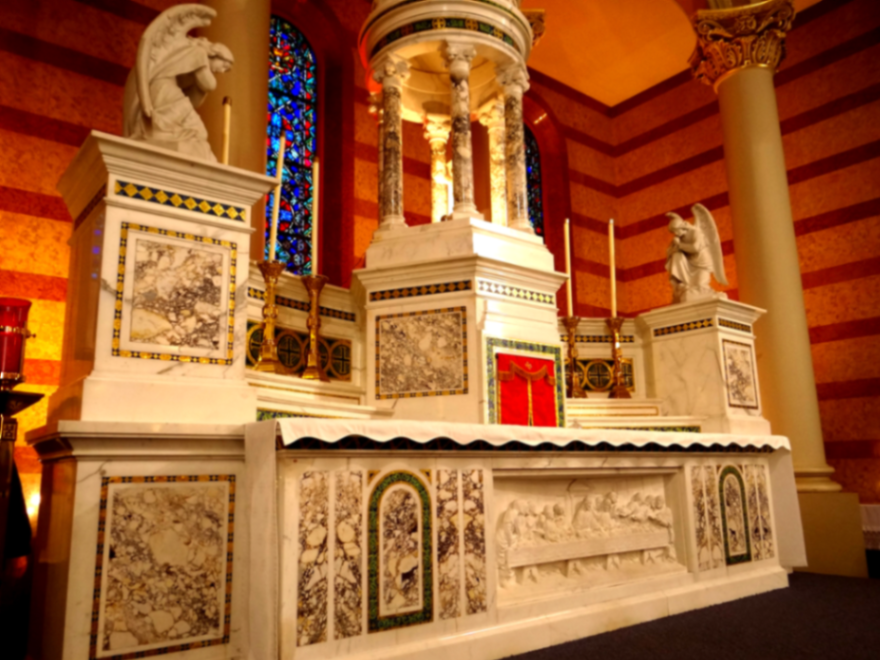
What is known as Holy Family Parish first officially opened in 1923. One of the early organizers and a patron named Edward Germain imported the Altar constructed of Carrara Marble, Breccia Violetta, and Venetian Mosaic from Italy. Germain arrived in Saginaw in 1863 and established a lumber business and soon became one of the prominent citizens of Saginaw. After a fire destroyed his original factory, he invented a new business making Germain pianos, which were sold all over the country. He bought an old church, remodeling the building into a showroom and recital hall, and called it Germain Temple of Music.
Back in 1911 the Church was primarily French speaking and growing fast. Saginaw itself would soon be the third largest city in Michigan. In 1915 Bishop Richter appointed Father Suprenant as pastor, instructing him to start work on building a church. Brielmaier & Sons submitted plans and it was decided to build the church in the style of early Christian Basilica. The cornerstone was set on October 8, 1916, with the original proposed cost to be $85,000.
Building was halted due to World War I and the official language of the church was changed from French to English (the Mass was still Latin). A second cornerstone was set on May 31, 1921 and the structure of the church was completed in 1923. The final building cost was $123,000. Work continued with finishing touches and the actual dedication ceremony was held May 30, 1924.
Once finished it was said that Holy Family Church was one of the most beautiful churches in Michigan.
Appreciation, Engagement, and Sustaining the Legacy
Midland resident John Elsen worked in the oil business and in the 1980s moved to Norway. Although harboring a firm belief in God, he was busy with his career working offshore and in distant places like, Scotland, Egypt, Australia, and Malaysia. Work took so much of his time this prevented him from developing a deeper connection within a Church. Upon his retirement ten years ago, he started seeking something to do to occupy his time and decided one of the things he would like to do is start going back to church on a regular basis.
“I could see the finality of my life so I started to attend Assumption Catholic Church in Midland,” he explains. “There was a priest there named Father Adam, who I liked a lot, and he ended up moving from Assumption to Holy Family Catholic Church in Saginaw, so I decided I would start to attend service there one Sunday every month, which eventually became every Sunday.”
Insofar as truly iconic churches merge engineering and history together, John was totally enamored with the beauty, legacy, richness, and artistry that was to be found at Holy Family that truly distinguished it from other churches populating our region, state, and even America in general.
“For one thing it’s a Basilica style church, which is rare to find in this region,” he reflects. “Apart from the artistry involved with their design, they were built in a way that is solid and durable and makes you feel closer to the presence of God in a way. I think the people in those days spent a lot of time there because the church was a center part of their life, so a lot of the members contributed a lot of their time and money to have this church become a reflection of their adoration for God. In many ways they served as community centers, and people would have Sunday dinners there, which is something that seems to have faded in our society.”
John was so taken with the plentiful beauty to be found at Holy Family that he decided to research its history and compile a chronology of all the attributes that make it such a priceless treasure situated within the heart of the Great Lakes Bay Region.
“What inspired me to do this is the fact it’s such a beautiful church and I wanted other people to know it even existed, because being from Midland and going to the East Side of Saginaw was not one of the top items on my list of things to do; but then I found it wasn’t so bad over there after all and I wanted other people to know about it. A lot of people in the church are older, and with all these treasures within it coming from places all over the world, I wanted to compile some kind of history to inspire other people to experience its beauty and support it.”
John was able to find an immense amount of information from Hoyt Library and found several useful in-depth articles from the 1930s and 1940s. Many of the pieces within Holy Family are created out of Carrara marble, which is what Michelangelo used for his statutes. .
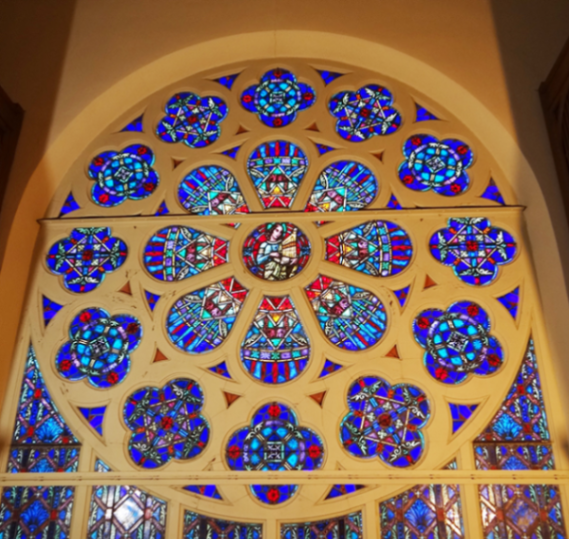
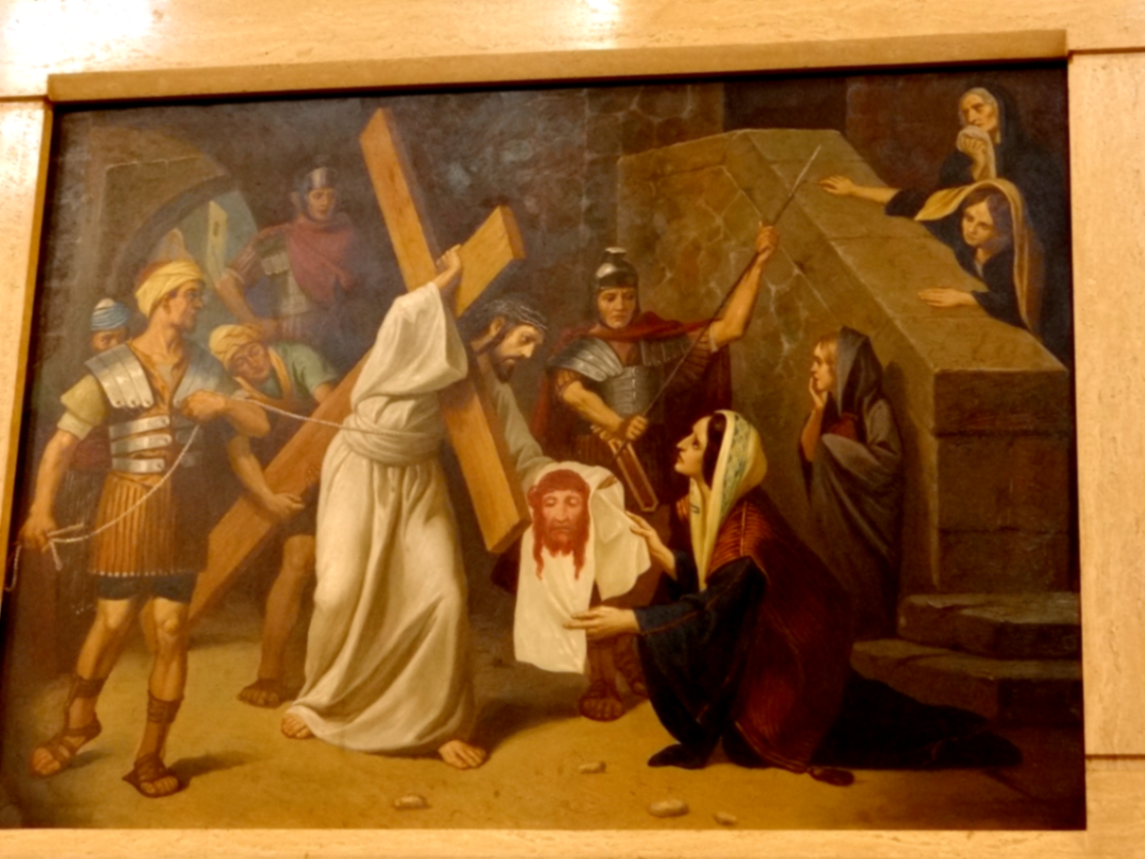
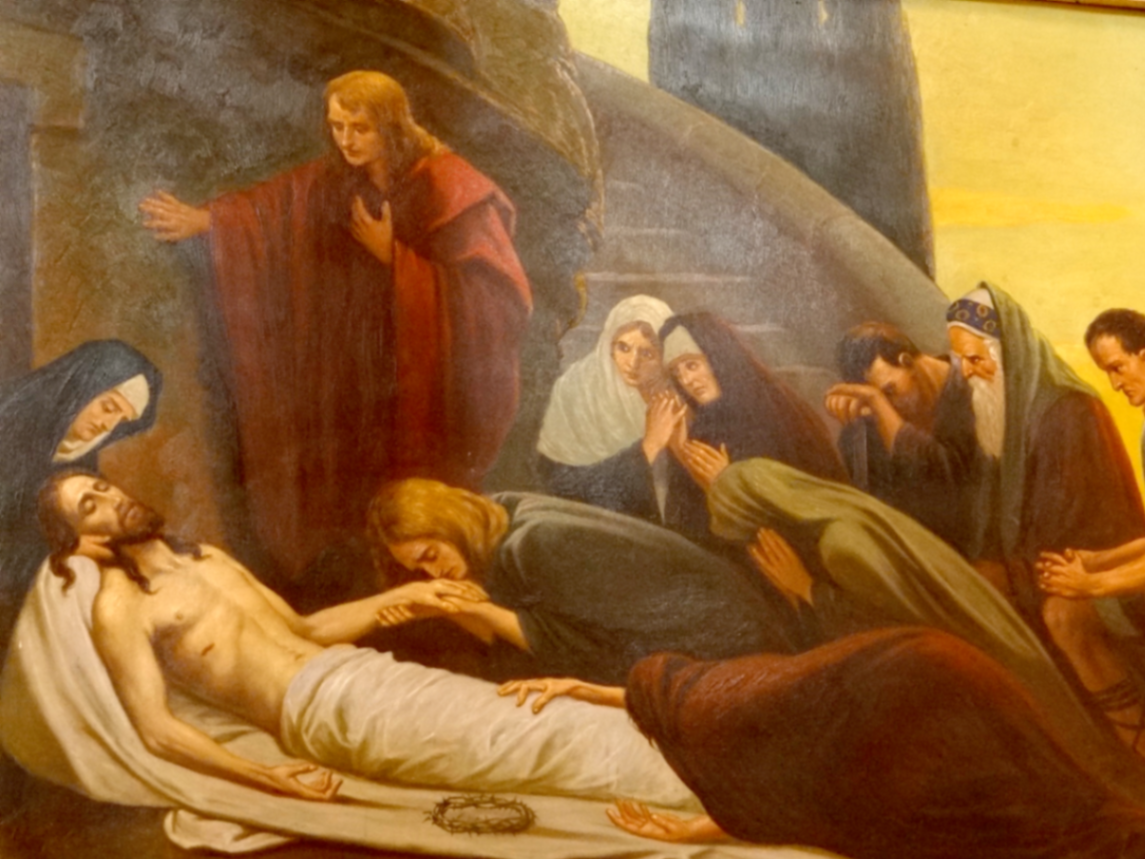
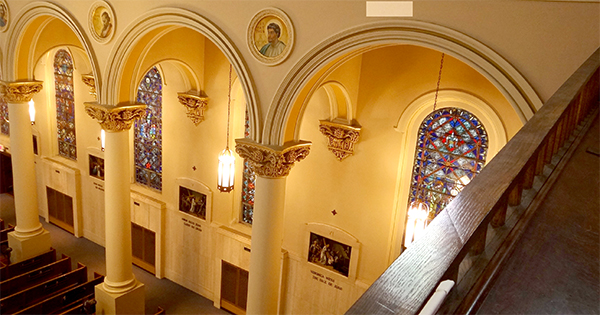
“When you first walk into the church it’s got 80-foot ceilings, which immediately grab your attention. The next thing that attracts your eye is the bright white marble of the Altar and the Communion Rail, along with the intricate detailing of the stained-glass windows, along with the paintings that were probably commissioned from the Vatican.”
Interestingly enough, in the Book of Numbers contained in the King James Version of The Bible, the Lord gives specific dimensions for creating altars, along with the types of materials to be used in them; yet many churches do not follow these dictates, while Holy Famly follows these instructions in a precise and faithful manner – no cutting corners.
“My goal in creating this history wasn’t to publish a book, but to create a keepsake to make sure some of the older parishioners could look back and feel proud and good about what they have created and sustained,” he continues. “Some even cried when I showed them the rough drafts.”
Here’s an abridged version of some of his discoveries:
• Carved 81-inch Candle Holders. Originally Sanctuary lamps imported from Venice, Italy dating back to 1848, they were donated by former Altar Society members Mrs. John Schmelzer and Mrs. Eugene Witchger in 1928.
• Carrara Italian Marble Altar & Communion Rail. The area around Carrara has been quarried since Roman times and both The Parthenon in Greece and Trojan’s Column are made from the marble harvested from that area. It was also selected by Michelangelo to create the Statues of David and the Pieta.
• Venetian Mosaic. The beautiful gold, green and blue accents on the altar and communion rail is called Venetian mosaic. Mosiac’s dates back to the ancient Mesopotamia era.
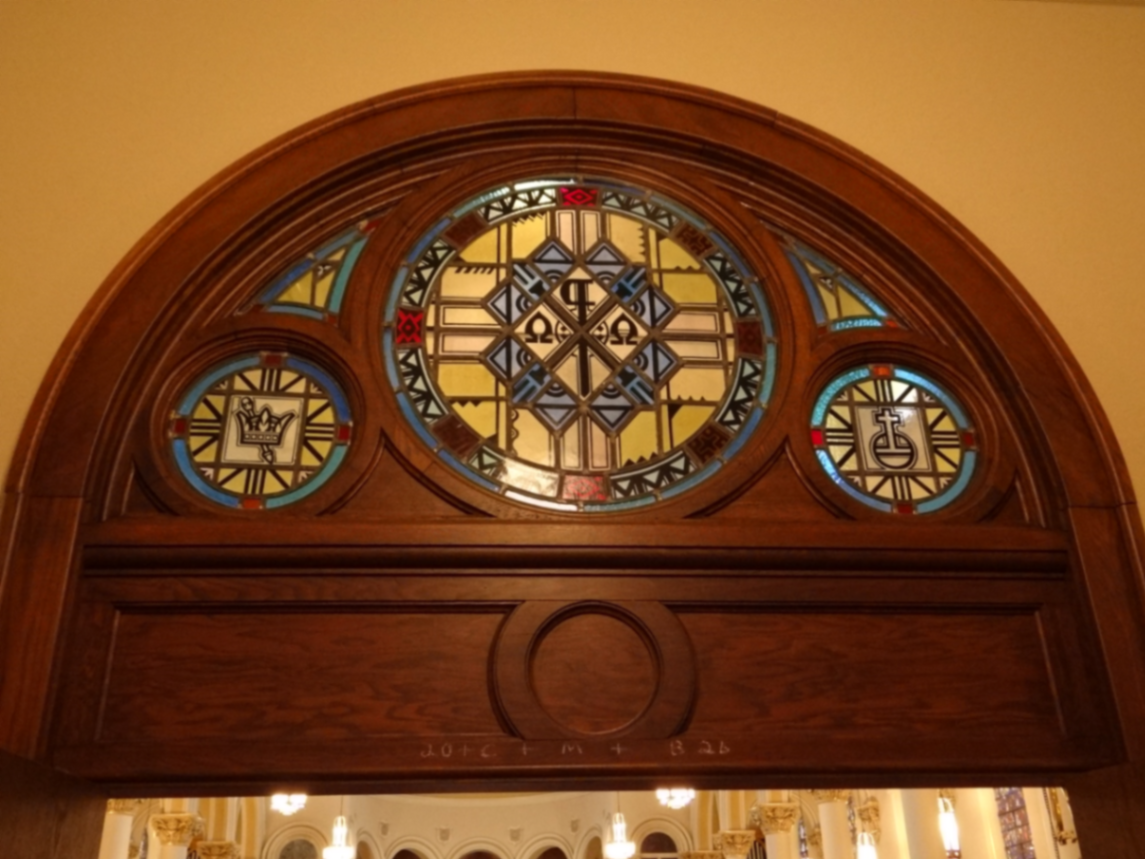
• Conrad Schmitt and German Stained Glass Windows. Holy Family architect, Erhard Breilmaier & Sons, imported the intricate stained-glass windows likely from Fritz Mayer of Munich, Germany, who have a long history with the Catholic Church. In 1892 Pope Leo XIII named the company a ‘Pontifical Institute on Christian Art’ and the Munich style of stained glass has a history of 170 years. After the German windows were installed the remaining windows came from Conrad Schmitt’s Studio in Wisconsin. The Schmitt family was from Bavaria and he hired talent from Germany to work at his company. He worked on Holy Family Church in 1941, 1942, 1943, 1945, 1993 and 2009.
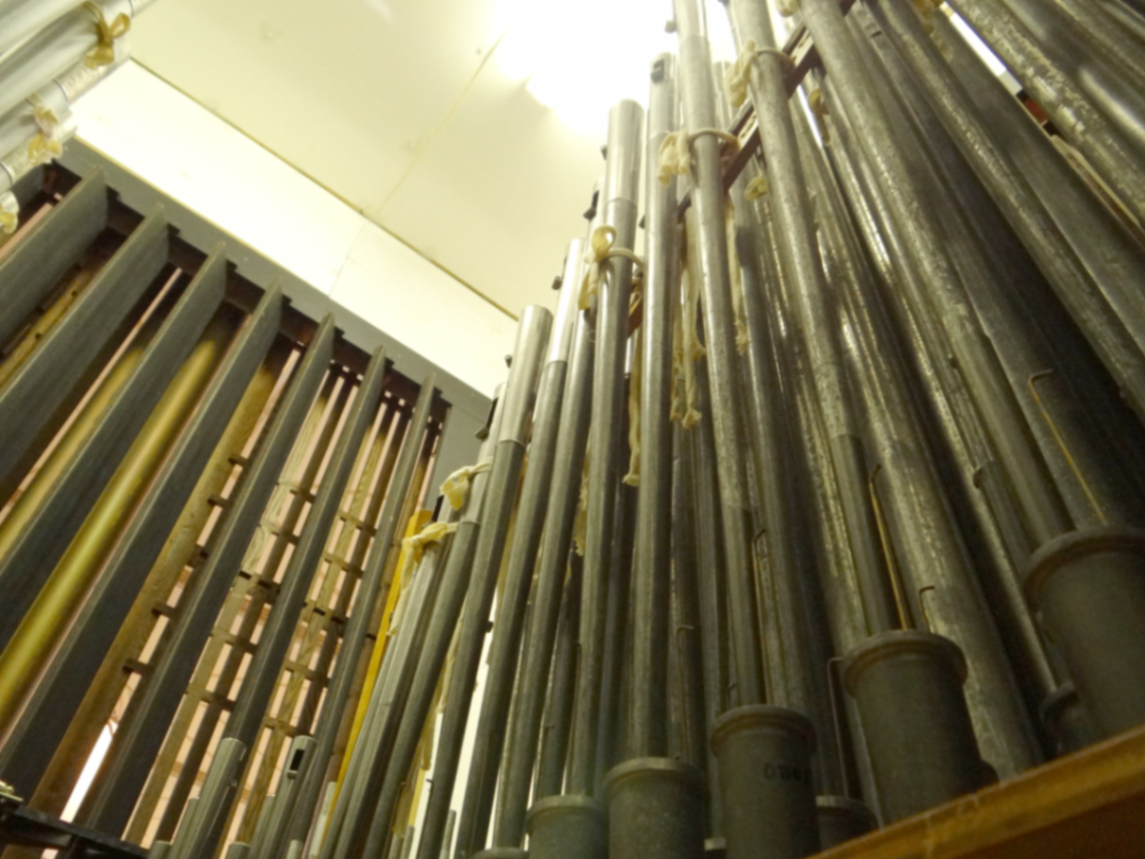
• M.P. Moeller Pipe Organ. The M.P. Moeller Company was one of the most prolific pipe-organ companies in the United States. One of the most complicated instruments to create and most difficult to play to its full potential, the one at Holy Family has 32 ranks of pipe and originally contained 2500 pipes. This masterpiece is now controlled using an electro-pneumatic system and the modernization, reconditioning, and a tuning was last done in the late 1990s at a cost of approximately $130,000, which was a donation from Dorena Lovay. The company rep who reconditioned the organ claimed it was still in remarkable shape.
• Paintings of the 12 Apostles. Holy Family Church has paintings of the 12 apostles. It is unknown whether these were commissioned through the Vatican and placed in the church. There are also paintings of three saints below the balcony railing of St. William, representing Bishop Murphy (first Bishop of Saginaw); St. John, representing Monsignor Supremant (builder of the church); and St. Stephen, representing Bishop Wozbnicki (Bishop at the time the interior was completed). These paintings are known to be placed in the church at the time of Father Horton was Pastor.
Preservationists & Posterity
In 1993 (the hundredth year of Holy Family Parish) the population of Saginaw decreased from the peak of 98,000 in 1960 to 69,000 by 1990. Today it is down to 43,500. Father Wagner became pastor in 2007 and remained until 2008. After Wagner Holy Family Parish was without a pastor. Deacon Roger Pasionek became the parish administrator and worked closely with Fathers Taylor, Wagner and Tipton to keep the church viable. This was a tough time for the Catholic Church in general. Declining parishioners resulted in many Churches being merged or closed. It was the work of Father Taylor and Deacon Roger that the Holy Family Church still exists today.
During Deacon Pasionek’s time, the dome skylight above the Altar was leaking and needed to be repaired. The entire stained-glass Skylight was removed and sent away to be repaired in 2009. Deacon Roger was very active engaging parishioners in Church activities. He held fund raisers such as the Harvest Dinner, Spring Fling, and Chili-Cook-off. Due to the flooding of the Saginaw River, the basement became flooded and the insurance money was used to build a nicer kitchen, pantry, and parish hall.
Father Tipton became the pastor in 2020. Due to a lack of Priests, he became Pastor of both Holy Family and the Cathedral. He also started bringing the English mass and Latin mass groups together for the benefit of the church. Father Mahar replaced Tipton in 2023 and started a Bible Study Group before leaving. Father Coman became Pastor in 2024, while also performing the same duties at Christ the Good Shepard. This is how it remains today and his complete story is yet to be told.
“My other intent with putting this history together is hopefully to engage foundations and individuals to contribute whatever they can to sustain the building fund for Holy Family Church,” concludes John Elsen.
“If you think about it in many ways it is a While Elephant. These intricately designed stained-glass windows and the upkeep and protection of all the artifacts and artwork requires money for maintenance, and many of the current older members don’t have the resources to pay for that kind of stuff, so I thought by creating this type of historical breakdown it would inspire more people and foundations to contribute.”
“I’ll be 75-years old in another month and what the church needs is younger people and families to become involved, so hopefully this project will garner more engagement. People like the late Charlie Kirk did a lot in terms of inspiring Generation Z to seek a relationship with God once again, so hopefully a better understanding of this history of the church, along with the beautiful artifacts instilled within it over the decades will help achieve that goal.”
Holy Family Church is a place where art, history, and faith are immutably entwined; or in the immortal words of Percy Bysshe Shelley, “History is a cyclic poem written by Time upon the memories of man.”
 info@review-mag.com
 989-780-4162

















Comments (0)