 Jun 03, 2026
 0 Comments
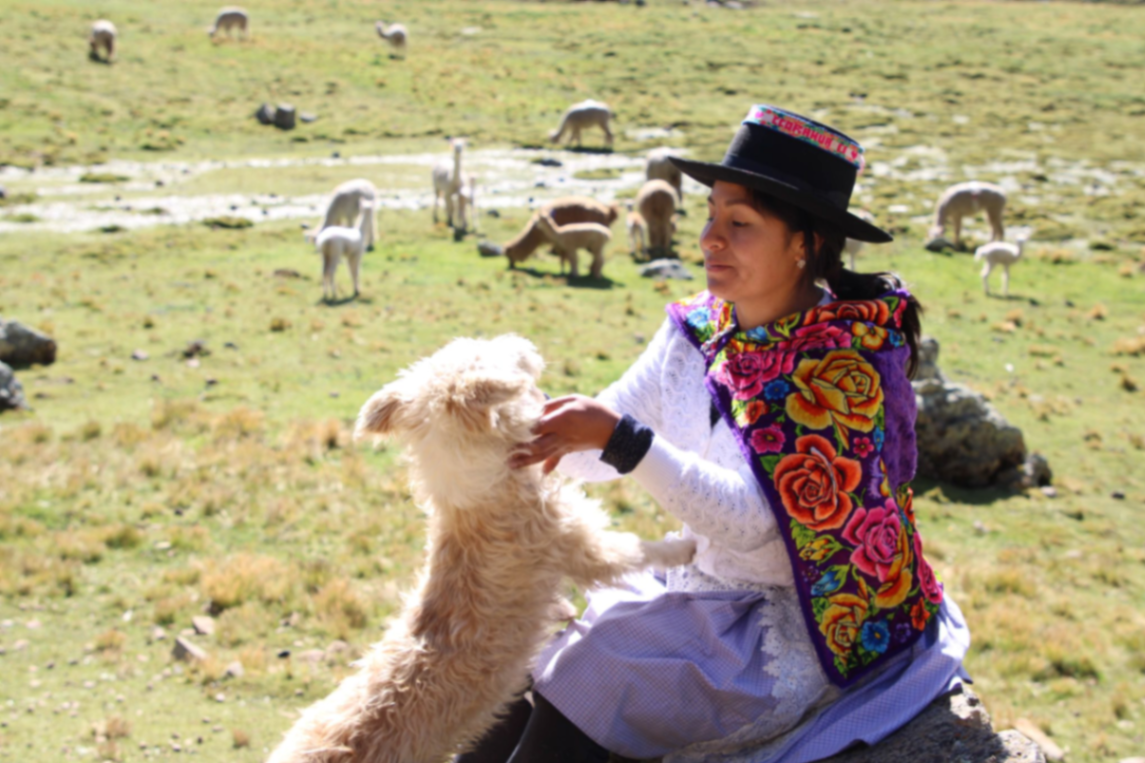
A little over 9 months ago I came across a profile on Instagram that I found to be interesting. A young girl, dressed in the vibrant colors of the indigenous people of the Andes, herding alpaca high up in the mountains. We exchanged messages and I told her it would be amazing to visit her one day and see how she lives firsthand.
Fast forward 9 months later and I have been living in Pisac, Peru for the past month and half. It is my final stop in South America before I return to the United States for a week, then go back to Poland, and in the process try to see two new Countries each year. This year it will likely also be Albania and Romania.
We finally develop a plan for me to visit. Unbeknownst to me her village of Rosaspompa is roughly 5,000 meters above sea level or 16,000 ft. Most people have difficulty breathing above 10,000 ft and I have purposely made myself have hypoxia 3 times in life just to notice the signs - twice during Pilot training and once in the Military, as I am an Air Force Veteran of 8 years; and the idea behind this is the best way to prevent suffering actual hypoxia before it puts an end to you is to notice the warning signs. While each person is a little different, numbness in fingers, general happy disposition and poor decision making is how most people are affected, while others can get a slight headache and have dizziness.
I tell Norma the days I am planning to come visit and ask where I should book a hotel? She replies, "You will stay with me in my family "cochita", something I later find out is a small family home. Rosaspompa, I later learn, only has around 165 residents, no hotels, no restaurants, cafes, markets, gas stations or otherwise. The idea of even being able to buy a coke from a market is a foreign concept.
If there were direct flights it would likely take less than 30 mins from Cusco (the town nearest to Pisac) to Ayacucho (the town nearest to Rosaspompa). In order to get there, however, I have to first fly to Lima which overshoots Ayacucho by almost an hour and then fly back.
The Airport is so small that the plane (an Airbus 320 NEO) fitted with over 180 seats lands and taxis to the end of the runway, only to turn around and taxi back. There are only 5 flights a day in and out of Ayacucho. The airport can also only handle 2 planes at a time judging by the stairs as you exit on the tarmac, something I have encountered more in South America than anywhere else.
She greets me at the airport, looking a bit different than most of her videos and photos of wearing the traditional clothing while on the alpaca farm. I look very much the same, so she spots me instantly, which is not hard to do as I am at least a foot taller than most people and a few hues lighter.
We jump into a little converted motorcycle with two seats in the back called a Torito or little bull, Pisac also has plenty of these and it looks like something either Mr. Bean or Urkel would have driven if given the opportunity.
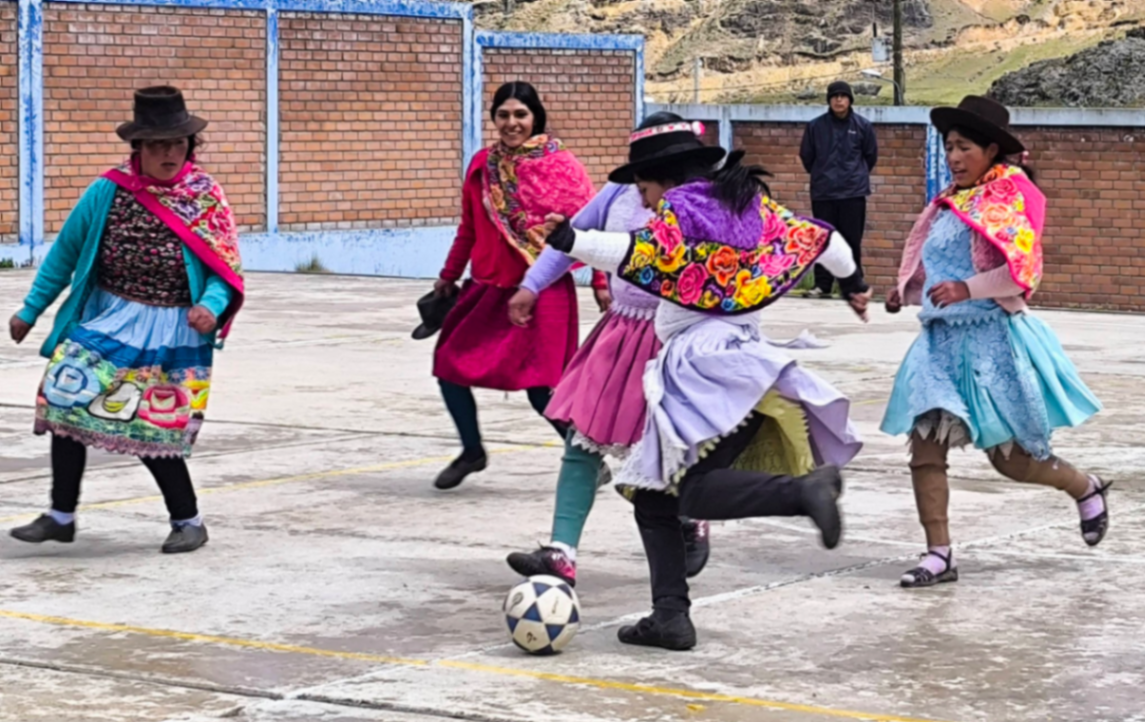
We head to a hostel and she tells me to get some rest but she will be back in about 90-minutes and plans on playing soccer with her local friends. For anyone who doesn't know, soccer is huge in South America and much of the world. I check in, meet an exotic bird that lives on the grounds of the hostel, and before I know it we are off to the grounds, the game ends, and everyone gathers afterwards to celebrate one of the other player’s kid’s birthdays.
We hit up a Chinese restaurant with another one of her friends and before heading to bed she tells me we have a ride in a collectivo to Rosaspompa the next day at 4:50 AM. A collectivo is essentially a large van that makes random stops along the route, with some travelers going all the way to Rosaspompa and a few even going further.
The next day we meet up and take another Mr. Bean sized car to a meeting point. The van which legally carries 12-15 passengers will leave full, but often fills up to over 20 and sometimes down to 8 as we weave for the next 2-hours up the mountain from around 10,000 ft altitude to over 15,000 at some points.
The regular passengers throw many of their bags and goods they are carrying on top of the car which are later tied down, but along the road we drop off and pick up others who hand-carry everything as there is standing room only. Slowly the temperature drops and I feel a little anxious, not because of really anything else than I know we are going to a high altitude and there is little time to adjust. A few years earlier on the big Island of Hawaii I drove up to over 15,000 ft, but stopped around 11,000 for around 30 minutes, which was recommended by the parks and recreation department. On this leg I am hoping that since I have been living at around 10,000 ft in Pisac, I should be okay without an adjustment period.
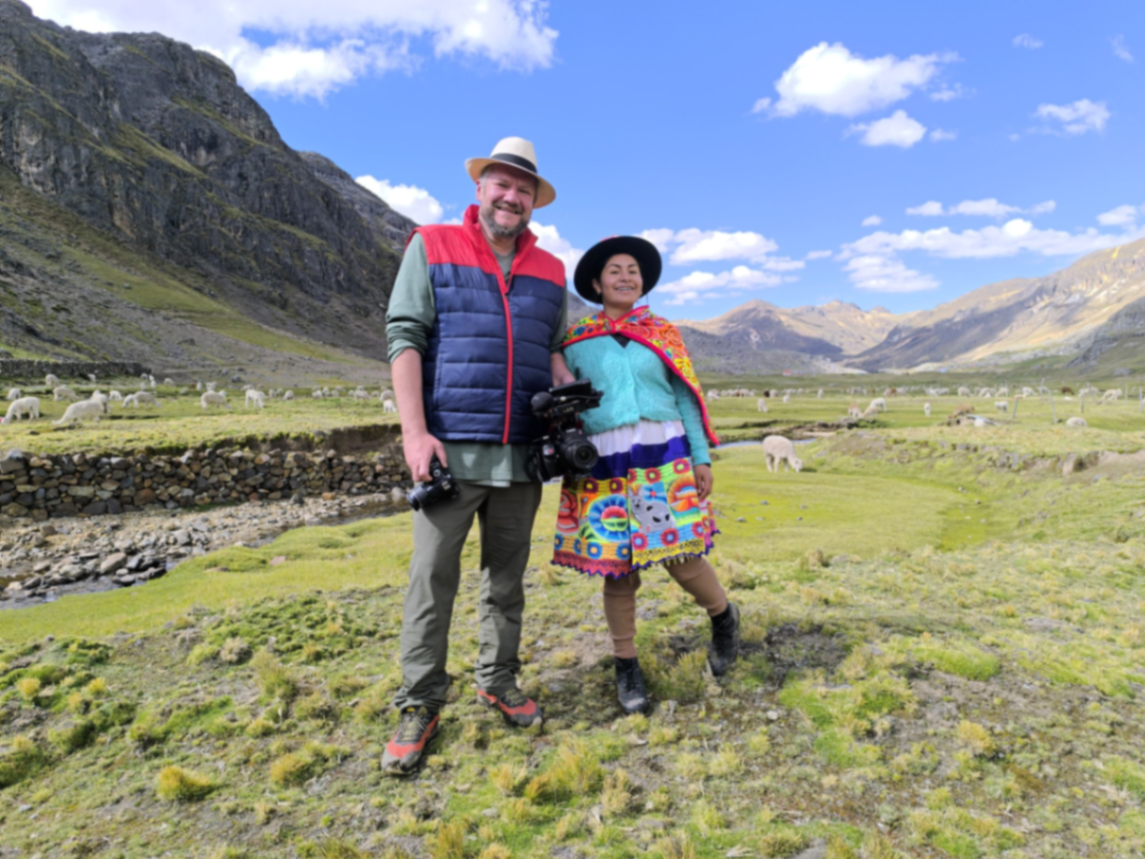
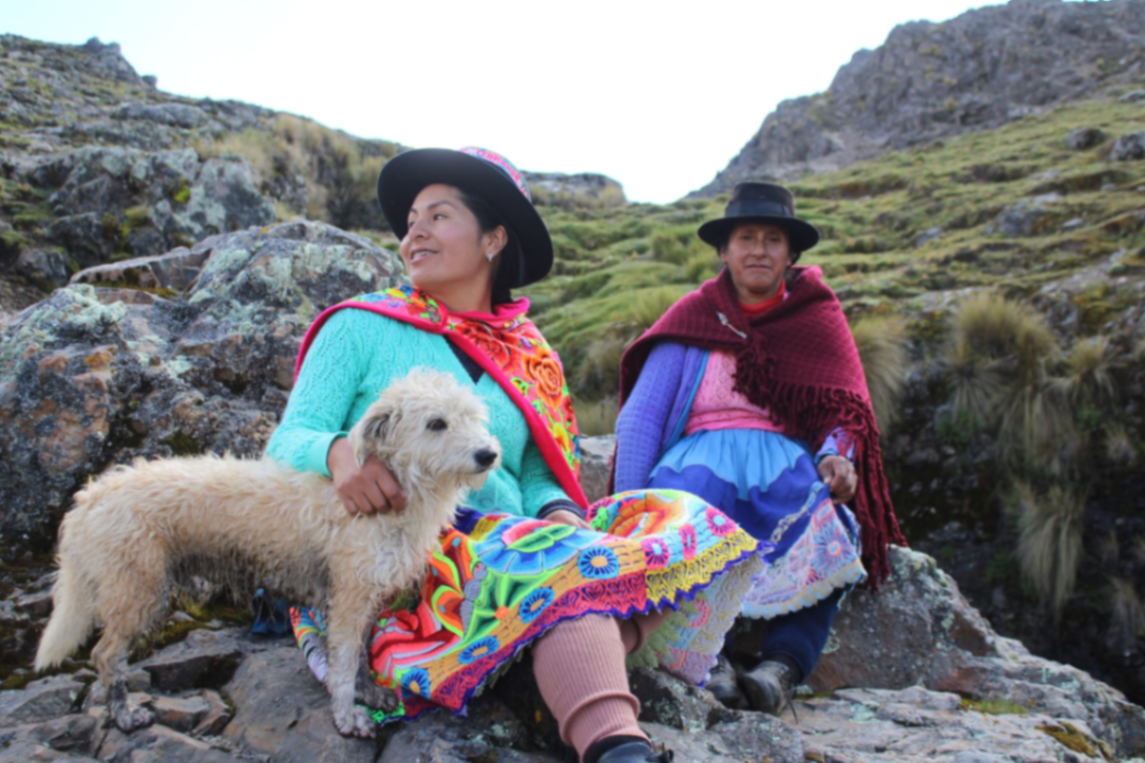
After about 15 stops we finally arrive to Rosaspompa. The air is different and there is one main road into the village and one road out. The van stops and the driver takes a break while we start walking uphill. upon arrival, Norma introduces me to her Mother and Sister-in-Law, who are sitting around the fire and cooking traditional Andean fare. The fire, which is built into part of the house also provides heat as it serves as a main source for cooking.
Over the next two days 90% of the time I see either her Mother or Sister-in-Law it is around the fireplace where they sit mostly the whole day and cook. They also stay warm in an area notorious for weather changes that make the ones we have in Michigan look mild in comparison.
Norma takes me to my room. A small metallic door covers the essnentially mud hut which has a roof but does not connect all the way completely. I am thankful there are no mosquitos but also know it can get cold and windy here and the draft will go right through the room. I am given 4 alpaca blankets that night, in a little room that has no less than 15 alpaca pelts hanging from the ceiling with some stacked on the floor. The place looks like something that you would encounter in an old American Western movie with John Wayne playing the lead role.
Later as we walk towards the alpacas we take a little side road to a small hut. The door is roughly 3-4 feet tall and the whole interior maybe measures 8 feet by 12 or 13. Norma explains to me that this is where she was born and also lived with both of her parents and 4 siblings. I am amazed at not just seeing this but at the level or pride she has in her family and the closeness of this and why she is tied to the land. She has attended university in town, but returned to this area to continue herding alpaca and be close to her family.
Later that day I join Norma, her Mother and Sister-in-Law in the kitchen for some Andean food. A mixture of rice and vegetables, a side of potatoes, and a warm drink that seems oatmeal based and is slightly sweet. While there is a table in the room, it is not used for eating. We grab small stools and sit a little over a foot off the ground as we share a meal together. I can tell by their expression that I am likely the tallest and lightest skinned person they have ever seen. They are extremely hospitable and as I am near finishing each plate, they keep trying to add more food until I have to politely decline and tell them I am unable to eat any more.
In a few hours we head up the mountain as Norma is accompanied by 3 dogs who help her round up the alpaca. Every morning she runs the herd up the mountain to feed, and each night she runs them back down. Seldom do they end up in one spot, I am able to make it about halfway up before I have multiple shortness of breath attacks which leave me feeling as if I have run a marathon after smoking 2 packs of cigarettes back-to-back.
I am also carrying about 15 pounds of fear up the mountain, which get heavier with each step. Through Google translate I tell her I will stop here and film them running down. She tells me she needs to go past the biggest mountain and it will at least take 30 mins to do so. We have already been climbing for over 40 minutes and I am aware that her 30 minutes could easily become over an hour if she climbs that mountain and finds more alpaca on the other side.
After about 45-minutes and after watching and filming multiple groups of alpacas move past me, I slowly start heading down the mountain. I am cold and the weather which changes often has probably lowered in temperature by at least 15 degrees. as the winds have also picked up. I am hoping we meet halfway down and I can still catch her herding them. I get back to my room and decide to lay down for a few minutes and about 45 minutes later I am awoken as Norma covers me with another blanket.
She invites me to eat again and we share a similar meal. I don't think her Mother or Sister-in-Law have left the kitchen area all day unless it was to just use the bathroom, It is only around 8:00 PM, but I am completely exhausted. I feel the cold creeping in and decide to lay down but not before covering up in my winter coat and alpaca hat, yet I still am cold falling asleep.
The next day I wake up naturally around 7:00 AM with my face swollen, likely to do from lack of oxygen and a slight headache. Norma is already up the mountain with the llamas and her mom tells me that - or at least that is what I gather in Quechua - the language mostly spoken by the natives here.
After a while she returns and we eat breakfast which consists of humitas tostado (a sweet corn meal served in a corn husk) and accompanied with a sweet oatmeal-based drink. Norma tells me that we have been invited to the school to celebrate Mother’s Day, so we head over there later after walking with the alpacas a little bit and seeing the natural beauty of the land, which is unlike any place I have been.
We arrive at the school where the whole village has gathered to watch multiple performances and the kids who attend both singing and dancing and doing little skits. The main person running the assembly comes up, introduces himself and shows me something under #14 which says something and "polonia". He leaves and Norma tells me that they are expecting to hear from me, so now I am expected to make a small speech in Spanish (a language I am certainly not fluent in) in front of the whole village.
I came up with something short and sweet for Mother’s day and with the help of Google translate, went up and delivered what likely resembled a bad Biblical reading during the first Communion.
During the whole festivities you get a sense of community here - oftentimes people will pour drinks into little cups, which everyone drinks from. The same cup will often be shared by 40 people before it makes its way back to you. I view this as less of a health hazard than I see it as a communal element. There is certain beauty and connectivity to it. We leave the festivities after eating a bowl of chicken and rice in a sauce and Norma heads up the mountain again to bring down the alpacas for the evening.
The second night was more manageable, mainly because I think I already adjusted a bit. It's only 8:00 PM and once again I am already spent. We share another meal and it quickly turns so dark that the night sky actually makes me forget about the cold. It is a cloudless night and we are almost 16,000 up and surrounded by mountains with very little light pollution.
The next day is my last, We plan to wake up at around 8:00 AM and there is a collectivo heading back into Rosaspompa around noon. Norma ensures me that the buses here run on time. I am amazed to hear this because in South America it seems culturally okay to be an hour late somewhere with it not being a big deal.
The next day we wake up and eat some baked potatoes, a slightly sweet drink, and a side of something like rice and mixed vegetables. Norma informs me we are going to see the thermal springs, situated at the bottom of an active volcano. On the way there as we both chase alpacas up the mountain range, her Mom walks over to meet up at a more developed path. The water is situated at the foot of the largest mountain, and a pool is built into an inside structure where people also go and bathe. There is no running water at her home, although it once looked like it was hooked up, I don't ask if this is a temporary thing as things often can be. I just accept my fate and make do with what I have.
Later that day we return to her Cochita after herding a few more stray alpacas up the mountain. It is my last day and I find myself easily tired by the elevation but also the rough terrain. A collectivo is supposed to be by around noon to take me back to Ayacucho. Before I go, Norma tells me that her nephew was wondering if I would consider being his Padrino or "Godfather" - basically asking me if I am willing to help him as he transitions from primary school to secondary.
About a week ago I was christened the same title when a friend I knew who is a Takanakuy fighter (Peruvian Bare knuckle event that used to be held before Christmas allowing locals to call people out in the community and fight them to leave any bad will or feelings in the past year) showed up with her soccer team, a bunch of cooked potatoes, and a roasted guinea pig which is a local delicacy called "Cuy" and asked if I would accept that role with them.
In the last 10 days I have sponsored a local soccer team with new jerseys, some new shoes, and socks for the team. This was of course done after being expected to eat the guinea pig and potatoes. Through Google Translate I ask her nephew what amount would help him in his studies? He says 100 soles which roughly translates to about $30 a month. I also ask him how long he will be in secondary school? He replies, "5 years". I tell him I will send him 100 sole a month for 5 years - after all, it feels great to be able to help and support a young kids’ education for basically the cost of two California rolls at a mid-grade Sushi restaurant.
Noon comes and goes, and finally around 2:50 PM a collectivo comes down the mountain and has an empty seat on the way back to Ayacucho. During this time the weather has changed from intense sunlight to cloudy and for the past hour or so a hail storm has moved in.
I say goodbye and thank you to Norma. We part with the traditional hug and kiss on the cheek, but I also kiss her hand which was a very common practice in Poland and certainly something instilled in me, not just towards older women but also as a sign of respect. Norma is after all almost 20 years younger than I am, but she is hardened by her surroundings and lifestyle. She has attended University but still returned to be with her family and the Alpacas on the farm after her studies ended.
I try to always urge people to travel, not because it is always easy, or comfortable. Oftentimes it can be of course, but even the hardships of going to such a desolate place should only make you appreciate what you have even more when you return.
Staying two nights in a place with no stores, cafes, shops, or restaurants was extremely new for me, as was the high altitude. I leave there and begin the two hours trip down and up the mountain wondering just how much longer I would be able to travel to a place like this?
At age 46 and in relatively decent health I had four breathing attacks following Norma up the mountain as she herded the alpacas, I am quite certain I won't be able to do this when I am 60, and honestly that is not that far away.
Travel where you can and when you can. You will always be better off for it. That is my message and as we part ways I tell Norma that I would like to invite her to Pisac when I return in the beginning of December.
Yes, you always learn about other places when you travel, but you also learn quite a bit about yourself.
 info@review-mag.com
 989-780-4162


















Comments (0)