 Feb 05, 2026
 0 Comments
If you want to understand a community, pull up a chair and take a look at what’s on the table.
In Saginaw County, the story of the twentieth century can be tasted as much as it can be told. From linen-draped dining rooms to sizzling lunch counters, from carhops gliding between bumpers to family booths piled high with burgers and fries, local restaurants mirrored the county’s transformation—from lumber boomtown to manufacturing powerhouse, and eventually into a community with a flavor all its own.
This deliciously layered history is the focus of the Castle Museum of Saginaw County History’s current 2026 exhibition in Centennial Hall, which is called Changing Tastes: Saginaw's Restaurants Through Time.
This full-course journey through the city’s rich culinary past is cooked up entirely in-house, consisting of a mouthwatering exhibit blending history, storytelling, and artifacts into a feast for the senses.
From the savory beginnings of Saginaw’s first Chinese restaurant to the refined elegance of dining at the Bancroft, to the nostalgic sizzle of pulling into a beloved student drive-in, every corner of this exhibit offers a new bite of local flavor. It’s a buffet of memories, seasoned with stories that have been simmering for generations.
Chief Historian and Vice President Tom Trombley explains, “This exhibit grew out of the incredible appetite people have shown for our weekly Castle Test Kitchen blog posts, where we serve up historic recipes alongside local history. The most popular pieces are always tied to places people remember dining at in their youth. With this exhibit, we’re hoping to recreate that same sense of nostalgia—like revisiting your favorite comfort food.”
Throughout the twentieth century, Americans’ relationship with food shifted dramatically, shaped by industrialization, immigration, transportation, and changing ideas about health and convenience. Saginaw County was no exception. In fact, viewed through a local lens, those sweeping national trends feel more intimate—more personal—like a favorite recipe passed down through generations.
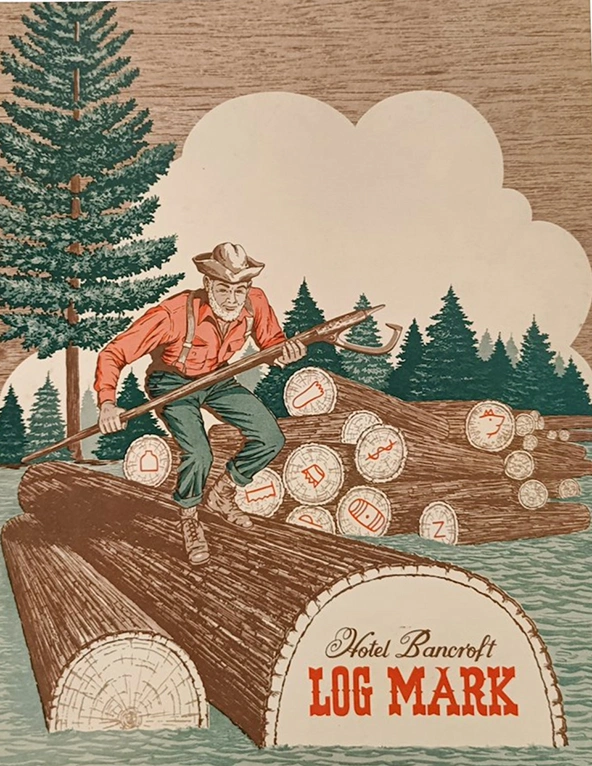
Early in the century, concerns about food purity and wholesomeness dominated the national conversation. Progressive Era reformers pushed for cleaner kitchens, safer meat, and transparent ingredients, and restaurants responded accordingly. In Saginaw, establishments such as Vatoldi’s and the Bancroft embodied this moment, offering refined dining experiences that emphasized quality, respectability, and trust. These were places where meals were events, courses unfolded at a measured pace, and dining out carried a sense of occasion.
As the decades rolled on, America’s palate widened. Immigration and internal migration brought new flavors, techniques, and traditions into the mainstream. Saginaw’s growing ethnic communities—particularly Hispanic, Italian, and Chinese—helped reshape what locals expected to see on a menu. Garlic, chili peppers, pasta, and stir-fried dishes began to appear alongside familiar Midwestern staples, subtly changing tastes one plate at a time.
Guests in the Changing Tastes exhibit will walk through these eras, beginning with Saginaw’s early twentieth century dining rooms and moving into the rise of quick, affordable food during the “pure beef” movement. Restaurants like Doyle Hamburgs catered to a public hungry for speed, consistency, and value. The hamburger—simple, hearty, and endlessly adaptable—became a symbol of modern life, perfectly suited to a workforce that needed fuel without fuss.
Then came the automobile, arguably the most transformative ingredient in Saginaw’s food story.
As car ownership surged mid-century, dining left the confines of the formal restaurant and spilled out into parking lots, curbside stalls, and drive-ins. Restaurants such as New Strand BBQ and the Pik-Nik Drive-In weren’t just places to eat—they were destinations. Food arrived wrapped in paper, trays hooked onto car windows, and conversations carried over the hum of engines and the crackle of radios. Eating became casual, social, and mobile.
Outreach Coordinator Dr. Jennifer Vannette notes that this shift reshaped more than just how food was served. “The automobile really opened up dining opportunities here in Saginaw and across the nation,” she explains. “Ethnic foods are another major component to this development. Saginaw’s Hispanic, Italian, and Chinese cuisines really came out of this dine-and-drive era and made an impact on the community. Even today, you can find popular Mexican foods on almost every menu in Saginaw.”
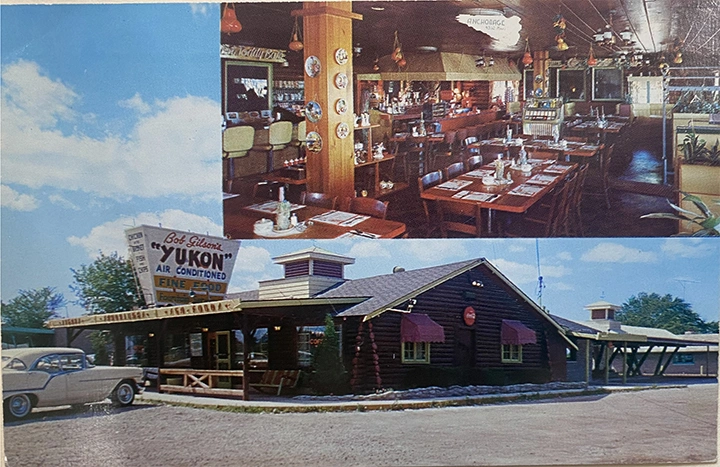
The road itself became a culinary corridor. US-10—today’s State Street—connected Saginaw to the wider nation and encouraged restaurants to lean into novelty and spectacle. Along the route, travelers and locals alike encountered themed eateries designed to be memorable. One standout was the Yukon Restaurant, where diners could enjoy a meal beneath the watchful gaze of a taxidermied bear, an Alaskan fantasy served up with Midwestern hospitality.
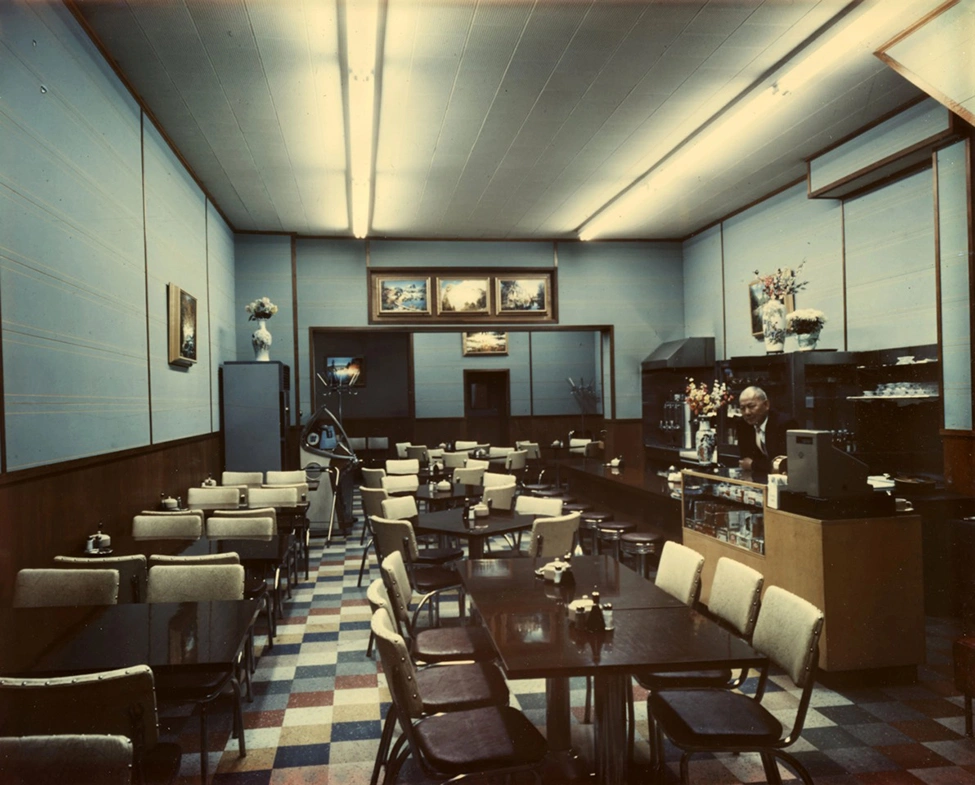
Inside Centennial Hall, museum visitors will experience these shifts through immersive dining vignettes built from artifacts, menus, photographs, and memories preserved in the Castle Museum’s collection. A classic lunch counter invites guests to imagine the clink of coffee cups and the sizzle of the grill. A recreation of the Bancroft’s famed Log Mark Room evokes an era when dining rooms were designed to impress as much as the food itself.
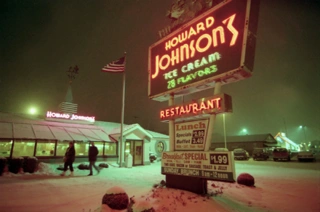
One of the most striking installations will feature a full-size classic automobile, courtesy of Schaefer & Beirlein, anchoring the drive-in motif and placing visitors directly in the driver’s seat of mid-century dining culture. The journey concludes with a return to family-style restaurants like Saginaw’s Howard Johnson’s, where bright interiors, dependable menus, and kid-friendly appeal defined late twentieth-century dining.
Indeed, the restaurants highlighted in Changing Tastes are among the most searched and talked-about topics in the museum’s digital outreach. People remember where they celebrated milestones, grabbed lunch after work, or treated out-of-town guests. A menu isn’t just a list of options—it’s a snapshot of a moment in time, seasoned with nostalgia.
By blending scholarship with sensory storytelling, Changing Tastes invites guests to consider how meals reflect broader social changes: who had time to cook, who could afford to dine out, how communities adapted to new technologies, and how food helped newcomers feel at home. It’s a reminder that history isn’t only found in headlines and dates—it’s simmering in kitchens, passed across counters, and shared around tables.
The Changing Tastes exhibit runs through the end of September 2026. The Castle Museum of Saginaw County History is open seven days a week, and admission is free for all Saginaw County residents thanks in part to a county-wide operational millage. For hours, details, and upcoming programs, visit CastleMuseum.org.
Come hungry—for history, for memories, and for a deeper appreciation of the meals that helped shape Saginaw County.
 info@review-mag.com
 989-780-4162

















Comments (0)