 Jan 15, 2026
 1 Comments
The Majority Maker: A Pivot Point for Michigan’s Future
In the intricate machinery of state governance, it is rare for a single seat to hold the power to arrest or advance the entire legislative agenda of a state. Yet, the special election for Michigan’s 35th Senate District is precisely such a fulcrum.
Following the resignation of Senator Kristen McDonald Rivet, the Michigan Senate currently rests on a razor’s edge—a 19-18 Democratic majority that is one vote away from a deadlock.
Given that since she resigned in January 2025, and the special election isn't until May 2026, the seat will have been vacant for over 16 months by May, leaving the district unrepresented for that entire period in a cynical political power play by Governor Whitmer to keep her party in charge through the disastrous budget cycle which produced possibly the biggest mistake in Michigan history - an additional 24% wholesale tax on a struggling marijuana that cannot possibly produce anything close to the tax income it promises in the governor’s desperate attempt keep her promise to "fix the damn roads".
The result of this contest will not merely fill a vacant chair in Lansing; it will decide whether the upper chamber functions as a partner to the administration or transforms into a firewall of divided government.
This district, encompassing the industrial and agricultural heartlands of Saginaw, Bay, and Midland counties, is a true political microcosm. It is a "purple" swing district where the concerns of organized labor and heavy industry intersect with the values of rural conservatives and suburban moderates.
For over a year, these constituents have been voiceless, a hiatus caused by political maneuvering that has left the district unrepresented during critical debates on energy, education, and the budget. Now, the silence ends, and the voters finally get their chance to speak up.
The candidates vying for your vote in the February 3rd primary race offer starkly different visions for navigating this moment. On the Democratic side, the field wrestles with the classic tension between pragmatic, labor-focused governance and the urgency of progressive reform.
The questions posed in this forum reveal a party debating how best to protect the "kitchen table" gains of the last term—repealing Right-to-Work and safeguarding reproductive rights—while confronting the economic anxieties of working families still struggling with the cost of living.
Conversely, the Republican field presents a choice between the traditional, pro-business conservatism that has long defined Midland’s corporate corridors and a surging populist energy focused on cultural stewardship and "Mid-Michigan First" isolationism. For these candidates, a victory is not just about representation; it is about establishing a "blockade" to halt the Governor’s agenda and forcing a bipartisan compromise through the leverage of a 19-19 tied Senate.
As you review the unvarnished responses in this candidate forum, observe the nuanced differences in how these aspiring Senators approach the district's most specific challenges. Note how they balance the economic necessity of partners like Dow Chemical with the environmental imperative of Great Lakes stewardship. Scrutinize their plans for our schools, where the debate over funding, literacy mandates, and parental rights exposes deep ideological fissures.
The winner of the May 5th general election will face an immediate trial by fire, pivoting instantly from campaigning to governing. The winner will effectively face three major election dates in a single year to secure the seat long-term:
1. May 5, 2026 (Special General Election): The winner is elected to fill the vacancy for the final seven months of the current term.
2. August 4, 2026 (Regular Primary Election): Just three months after taking office, the new Senator must win their party's primary again to be on the ballot for the full term.
3. November 3, 2026 (Regular General Election): The winner of this election secures the full four-year term, which runs from January 1, 2027, to January 1, 2031.
This is an "endless campaign" for a seat that carries the weight of the entire state. We invite you to read closely, think deeply, and engage with the democracy that relies, quite literally, on you.
Republican Primary Candidate Forum Questions and Answers
1. Stopping the "Lansing Agenda" & Senate Control
Context: This special election is the only thing standing between the current Democratic trifecta and a tied 19-19 Senate. The winner will be the "blockade" against the Governor’s agenda for the remainder of the term.
Question: "The Democrats have used their one-seat majority to pass sweeping changes on labor, energy, and social issues without any Republican input. Beyond just voting 'no,' what is your specific legislative strategy to jam their agenda and force bipartisan compromise once you restore the 19-19 balance of power in the Senate?"
Jason Tunney: Democrats have shut Republicans out of the process. Having a 19-19 Senate immediately changes the rules of the game, which is why Governor Whitmer waited so long to call the special election.
First, a tied Senate forces genuine negotiations on committee structure, the calendar, and what legislation can even reach the floor. I will use that leverage to insist that any major policy change include input that represents the 35thDistrict and can attain bipartisan support.
Second, I will work closely with Senate leadership to block budget maneuvers and ensure we get real concessions on taxes, public safety, and energy reliability. A tied Senate is a firewall, and I intend to use every procedural tool available to fully represent the district.
Christian Velasquez: Negotiation is a two-way street. When power is balanced, both sides must find a way to work together on policies that benefit the entire state, not just one political party’s special interests. My strategy is to ensure that there’s a thorough process for legislation, starting with open committee hearings. We shouldn’t be legislating behind closed doors. A balanced Senate gives Republicans the ability to block extreme legislation, protect taxpayers, and push practical, common-sense solutions. It’s time to restore accountability and make sure the state government works for families and small businesses.
Voters, policy change, and gridlock in recent years prove that Michigan is competitive. In a divided Senate, it’s critical that the voice of the 35th is restored with principled, civil, and transparent leadership, which I’m uniquely qualified to deliver.
Chadwick Twillman: As a Mid-Michigan First fighter and outsider, my strategy goes beyond voting ‘no’. I’ve already drafted 12 single-issue bills ready on Day One, focused on district priorities like infrastructure, education, public safety, and constitutional rights, without tax hikes or partisan fluff. Restoring a 19-19 tie will force Democrats to negotiate on real issues affecting our families, like fixing roads and schools. I’ll leverage that balance to block overreach on energy mandates and social policies while demanding bipartisan wins for Bay, Midland, and Saginaw counties, no delays, just results.
2. The Income Tax & Economic Competitiveness
Context: Jason Tunney has proposed cutting the income tax to 4%, and the state's budget surplus has been a point of contention. Republicans generally believe the surplus belongs to the taxpayers.
Question: "While neighboring states like Indiana move toward flat or zero income taxes, Michigan’s rate remains stagnant. Will you commit to voting against any state budget that does not include a permanent reduction in the state income tax, and do you support the eventual full elimination of the state income tax?"
Christian Velasquez: Michigan families are already stretched thin and the state government should not continue taking more than it needs from their paychecks. I support keeping Michigan’s income tax flat and permanently lowering it, starting at 3.75 percent. We should strive to follow the examples of thriving states like Florida and Tennessee and work towards eliminating it entirely. This puts real money back in people’s pockets and makes our state more competitive. A reduction from the current 4.25 percent to 3.75 percent would be roughly a four billion dollar tax cut, and that kind of relief should be paired with serious reform in how Lansing spends money.
That is why I also support zero-based budgeting. Instead of automatically growing the state government year after year, every program should have to justify its cost. That process brings accountability, exposes waste, and helps prioritize what truly matters.
Chadwick Twillman: Yes, I commit to voting against any budget without permanent income tax reductions. Michigan families deserve relief as surpluses belong to taxpayers, not Lansing bureaucrats. I support accelerating cuts and working toward eventual elimination, prioritizing spending audits and waste elimination to fund essential services in the 35th District without harming roads, schools, or public safety. Neighboring states are winning jobs because of lower taxes; it’s time Michigan competes aggressively for economic prosperity.
Jason Tunney: Yes. I believe Michigan’s budget surplus belongs to the taxpayers, not Lansing politicians.
I will not vote for a state budget that fails to include a permanent reduction in the state income tax. Cutting the rate from 4.25 percent to 4 percent is a responsible first step, and it sends a clear signal that Michigan is serious about competing with states like Indiana that are moving aggressively to lower taxes.
Over the long term, I support exploring options to eliminate the state income tax entirely. Michigan will never be competitive if we continue treating working families and small businesses as a revenue source to fund unchecked government growth. Lower taxes mean more jobs, higher wages, and more families choosing to stay in Michigan instead of leaving it
3. Election Integrity & The Vacancy Delay
Context: The Governor waited nearly a year to fill this seat, leaving the district unrepresented. Election integrity and administrative overreach are top concerns for GOP voters.
Question: "Our district was left without a voice for over a year due to political gamesmanship. Will you introduce legislation to strip the Governor of the power to delay special elections, mandating they be held within 90 days of a vacancy, and what other specific measures will you support to strengthen voter ID and election security?"
Chadwick Twillman: Absolutely! I will introduce legislation mandating special elections within 60-90 days of a vacancy to prevent political gamesmanship that silenced our district for nearly 500 days. Additionally, I’ll support stronger voter ID requirements, poll watcher protections, uniform election rules, and measures to ensure transparency and security in absentee and early voting, building on recent reforms to make it easier to vote and harder to cheat.
Jason Tunney: What happened to this district was wrong – it was un-Democratic and un-American, pure and simple. We, the residents of Bay, Midland, and Saginaw counties, were left without representation for over a year because one person had the unilateral power to delay a special election for political reasons. That should never happen again.
I will introduce legislation to ensure that residents of unrepresented districts are not obligated to pay state taxes for the time they are unpresented, keeping with our American tradition of no taxation without representation.
I also support strengthening voter ID requirements to ensure only citizens vote, tightening absentee ballot chain-of-custody rules, and increasing penalties for election fraud. Election integrity is not about suppressing votes, it is about ensuring that every legal vote counts and that voters can trust the outcome. Fair rules and transparent administration are essential to maintaining confidence in our system.
Christian Velasquez: It’s time to end the politicization of special elections. There was no practical reason why the people of the 35th District should have been without representation for this long. I will introduce legislation that would require all House or Senate special elections to follow on a standard election date (May, August, November) of the earliest convenience. This would save taxpayer funds, increase voter participation, and remove the political partisanship games that keep constituents without representation.
Ensuring that Michigan has safe and secure elections is a priority of mine. Strengthening voter ID laws and the overall security of elections is the first step. Under Secretary of State Jocelyn Benson, a Chinese national was able to vote in our election and have their vote counted. This should never have been able to happen. It’s critical that we have the right safeguards in place so that the only people who vote in our elections are legal citizens.
4. Energy Mandates & The "Green New Deal"
Context: The current legislature passed laws requiring 100% "clean energy" by 2040, which critics argue will drive up costs and threaten grid reliability. The potential for new battery plants (like Gotion) is also a flashpoint.
Question: "Lansing has passed aggressive 'Green New Deal' mandates that force the closure of reliable power plants and subsidize electric vehicles. Will you vote to repeal the 2040 clean energy mandates to prevent rolling blackouts and rising utility bills, and do you support banning taxpayer subsidies for foreign-backed battery plants?"
Chadwick Twillman: I will vote to repeal the aggressive 2040 clean energy mandates that threaten grid reliability, drive up utility bills, and close reliable power plants. We need balanced energy policy prioritizing affordability and jobs over forced subsidies. I oppose taxpayer handouts for foreign backed projects like certain battery plants, focusing instead on supporting local manufacturing and preventing blackouts that hurt Mid Michigan families.
Christian Velasquez: I support repealing these extreme energy mandates and ending the subsidies that keep them alive. Affordable and reliable energy is not optional in Michigan. It is essential. Long winters, cloudy days, and a manufacturing-based economy require power that works all the time, not just when the weather cooperates. Policies that force reliable power plants to close drive up utility bills and increase the risk of blackouts. Michigan families and employers are already paying too high a price to keep the lights on.
Michigan should roll back the 2040 clean energy mandates and refocus on an energy strategy that includes natural gas and next-generation nuclear power. These sources provide safe, dependable, around-the-clock energy while keeping costs down. Wind and solar should be able to compete on their own, without taxpayers having to cover the bill. Taxpayers also shouldn’t be subsidizing foreign-backed battery plants. Instead of handing out subsidies to special interests, we can help Michigan businesses expand and attract new ones by lowering energy costs for all.
I bring real-world experience to this issue. I am the only candidate in this race with an energy background and know firsthand how the energy industry works. As a mechanical engineer, I have experience in both traditional and renewable energy supply chains. I worked at a gas-fired power plant, was a key raw materials supplier to the solar industry at Hemlock Semiconductor, and led a business that was a supplier to the materials used in production of wind turbine blades. I understand how energy policy works in practice, not just on paper.
Jason Tunney: Michigan families are already paying more for groceries, gas, and utilities. The last thing we should be doing is forcing the closure of reliable power plants to satisfy ideological climate targets.
I oppose the 2040 clean energy mandate and will vote to repeal it. These policies risk higher utility bills, rolling blackouts, and a less reliable grid, particularly during Michigan winters when reliability matters most.
I also oppose taxpayer subsidies for foreign-backed battery plants and similar corporate welfare schemes. Michigan should not be borrowing money from our children to subsidize companies tied to hostile foreign governments. Energy policy should be about affordability, reliability, and security, not political checkboxes.
5. Parental Rights & Education
Context: Issues regarding curriculum, gender identity policies, and library materials have mobilized Republican parents across the state.
Question: "Many parents feel shut out of their children’s education by state bureaucrats and school boards. Will you co-sponsor a 'Parental Bill of Rights' that explicitly affirms a parent’s authority over their child’s medical decisions and curriculum, and do you support a 'money follows the student' model to give parents true educational choice?"
Jason Tunney: Parents are the primary authority in a child’s life, not state bureaucrats or activist school boards.
I will proudly co-sponsor a Parental Bill of Rights that clearly affirms parents’ authority over curriculum, access to instructional materials, and medical decisions involving their children. Transparency and consent should be the baseline, not the exception.
I also support a “money follows the student” model that expands educational choice. Whether through public schools, charter schools, private schools, or homeschooling, families deserve options. Competition and choice improve outcomes, empower parents, and put students first rather than systems.
Chadwick Twillman: Yes, I will co-sponsor a strong Parental Bill of Rights affirming parents’ ultimate authority over their child’s education, medical decisions, and exposure to curriculum. I support a ‘money follows the student’ model to empower parents with real choice, including expanded options beyond failing public schools. Parents, not bureaucrats, know what’s best for their kids.
Christian Velasquez: Parents are the first and most important educators in a child’s life, and they should have the primary say over what their children are taught and their medical decisions. Schools should focus on teaching core subjects, while keeping parents fully informed and engaged on what is being taught. Parents must always have the ability to review content and opt their children out of sensitive materials without retaliation.
Every child deserves access to a great education, no matter their income or ZIP code. The best way to do that is to let education dollars follow the student so families can choose what works best. Parents care most about their child’s success and should have a real voice in their education. Having a model where the money follows the student is the best way to make this a reality.
6. Public Safety & The Justice System
Context: With crime rates in Saginaw a concern and candidates like Tunney (former prosecutor) and Wendt (law enforcement support) in the race, "law and order" is a key differentiator.
Question: "Progressive prosecutors and bail reform policies have made our communities less safe. As State Senator, will you oppose any legislation that weakens bail requirements for violent offenders, and will you support withholding state revenue sharing from cities that attempt to 'defund' or undermine their local police departments?"
Christian Velasquez: Keeping people safe is the most basic job of government, and Lansing has failed when violent criminals are released back into our communities. I will vote against any legislation that weakens bail requirements for violent offenders, including no-cash-bond policies that put repeat criminals back on the street. If someone is dangerous, they should be behind bars, not released to reoffend.
Cities that choose to defund, undermine, or politically attack their police departments should not be rewarded with state dollars. State funding should go to communities that uphold the rule of law, not those that cater to radical activists.
I am the only candidate in this race endorsed by prosecutors and sheriffs from across the 35th District. These are individuals who actually enforce the law and witness the consequences of bad policy every day. Weak prosecutors and soft-on-crime policies do not work. As State Senator, I will stand firmly with law enforcement, back tough prosecutors, and make it clear that Michigan will prioritize safety over political experiments.
Jason Tunney: As a former prosecutor, I have seen firsthand what happens when violent offenders are put back on the streets because of weak bail policies and ideological experiments.
I will oppose any legislation that weakens bail requirements for violent offenders or ties judges’ hands when public safety is at stake. Reform should protect victims and communities first, not prioritize criminals.
I also support holding local governments accountable when they undermine their own police departments. Cities that attempt to defund or cripple law enforcement should not receive blank-check state revenue sharing. We must support the men and women who keep our communities safe, not punish them for doing their jobs.
Chadwick Twillman: I will oppose any weakening of bail for violent offenders and support withholding state revenue from cities that defund or undermine police. Drawing from my background understanding the justice system, I’ll push for adding officers to reduce youth crime by 50% in high need areas like Saginaw, while reforming courts for fairness and efficiency. Strong law and order protects our communities.
7. Corporate Welfare vs. Free Enterprise
Context: There is a divide in the GOP between pro-business traditionalists (who may support tax incentives like SOAR) and populists (who view it as corporate welfare).
Question: "The state has handed out billions in taxpayer cash to large corporations like Ford and Gotion while small businesses in Midland and Bay City struggle with inflation. Do you support the continued use of the SOAR fund and corporate handouts, or would you vote to eliminate these subsidies and instead cut taxes for all Michigan businesses?"
Jason Tunney: I believe in free enterprise, not government-picked winners and losers – Governor Whitmer’s failed track record of having the corrupt MEDC try to do this is a glaring example of why the free market is essential.
Chadwick Twillman: I oppose continued billions in corporate handouts via SOAR or similar funds, which pick winners and losers while small businesses in Midland and Bay City struggle. Eliminate these subsidies and cut taxes broadly for all Michigan businesses to foster true free enterprise, job creation, and prosperity without taxpayer-funded favoritism.
Christian Velasquez: Michigan has a poor track record picking winners and losers. Taxpayer-funded handouts rarely deliver the promised jobs and the majority of jobs in Michigan are created by homegrown businesses and entrepreneurs. The state should focus on improving our existing business climate to attract new businesses, including cutting taxes. I’ve evaluated capital investments in my career and know firsthand that decisions are driven by raw materials, workers, and customer access, not state subsidies. Smart economic development means removing barriers, lowering costs, cutting red tape, and letting businesses thrive on their own merits.
The state has spent billions of taxpayer dollars on corporate handouts through programs like SOAR, while small businesses struggle with inflation, labor shortages, and high taxes. That is backwards.
I would vote to significantly scale back or eliminate these subsidies and instead focus on broad-based tax relief and regulatory reform that helps every Michigan business compete. The best economic development strategy is lower taxes, predictable rules, and a level playing field, not backroom deals for politically favored corporations.
Extra Credit Questions:
Marijuana Wholesale Tax: Do you support or oppose the current 24% wholesale marijuana tax, and if you oppose it, what specific alternative revenue source would you propose to fund the estimated $420 million intended for road repairs? Would you have voted yes or no on the issue if you were in office this past October?
Christian Velasquez: The current marijuana tax measure is not a sustainable solution. Increased taxes on marijuana are likely to drive people back to illegal markets, which is not only a risk to the public, but also creates revenue uncertainty. The astronomical marijuana tax signed by Governor Whitmer is hurting businesses in the 35th District and burdening law abiding consumers. Roads should be funded through responsible budgeting. This means prioritizing spending and cutting waste. Michigan’s budget is already significantly larger than many states of similar size, most of which maintain better roads. Legislators should focus on using taxpayer dollars wisely to meet our infrastructure needs instead of relying on unstable or counterproductive revenue streams.
Chadwick Twillman: Marijuana Wholesale Tax: I stand firmly against this 24% wholesale marijuana tax that took effect January 1. It places unnecessary burdens on businesses and families while driving activity underground. I would have voted no last October without hesitation. We can fund our roads effectively by eliminating waste, ending corporate subsidies, and prioritizing taxpayers.
Graduated Income Tax Initiative: A proposed 2026 ballot initiative aims to impose an additional 5% tax on high earners (over $500,000 single / $1,000,000 joint) to fund K-12 public schools. Do you support or oppose this ballot initiative, and how would its passage or failure affect your priorities for state funding?
Christian Velasquez: Moving to a graduated income tax is a guaranteed way to drive individuals, families, and businesses from the state. Michigan is already bringing in significantly more revenue than states of comparable size. Instead of letting individuals keep more of their hard-earned money or putting the revenue towards needed areas, the state spends it on unnecessary projects.
Chadwick Twillman: I oppose this 2026 ballot initiative for an additional 5% tax on high earners. It targets success and risks driving jobs and families away from Mid Michigan. Whether it passes or fails, my focus remains clear: protect your earnings and build prosperity through responsible growth and spending discipline.
Property Tax Cap: Do you support a state-level cap on annual property tax increases beyond the Headlee Amendment and Proposal A limitations to provide relief to homeowners? Do you support repealing the city of Saginaw tax cap?
Chadwick Twillman: Yes, I support a stronger state cap on annual increases beyond Headlee and Proposal A to deliver meaningful relief for homeowners. I also oppose repealing Saginaw’s tax cap. Residents deserve protection from rising burdens.
Christian Velasquez: No senior citizens should face losing their home because of rising property taxes on primary residences they already have paid off, yet that’s a reality countless seniors are facing. Young workers and families should not be faced with surprise and subjective appraisals for increasing their property tax burdens annually. As your Senator, I will support policy change to cap and reduce property tax burdens on primary residences. I support the Headlee Amendment provision limiting property tax increases and requiring voter approval for new taxes or tax increases. Proposal A was a step in the right direction but after years of inflation and increased tax burdens, lowering the 5% annual increase cap is worth consideration should voters choose to amend. It’s imperative that we restore the American dream of homeownership; common sense property tax relief will have a positive cross generational immediate and long-term impact on Michiganders.
State Income Tax: Do you support accelerating the phase-down of the state income tax, and if so, how would you prevent the reduction of state revenue from negatively impacting state-funded services in the 35th District?
Christian Velasquez: Michiganders should be able to keep more of their hard earned money. When the state raised the income tax in 2007, taxpayers were promised that it would gradually be lowered back down to the original 3.9 percent rate. Unfortunately, that has not occurred. Instead of lowering taxes, the state has spent billions of dollars of revenue surplus on special projects in favored areas and in corporate handouts. Even with the income tax being lowered, there is still more than enough revenue to keep services functioning as needed. As your State Senator, I’d push to both lower the income tax down to 3.75 percent as soon as possible, putting Michigan on a pathway to phase out the state income tax and growing states throughout the country have done. Simultaneously, I will fight to cut wasteful spending and work to end the pattern of increasing the state spending in a way that outpaces increased revenue, as we have dangerously done this decade.
Chadwick Twillman: I am committed to accelerating the phase down toward full elimination. Families keep more of what they earn when government lives within its means. We will maintain services in the 35th District through thorough audits, subsidy elimination, and policies that spark economic growth.
Legislative FOIA: Would you support legislation to subject the Governor's office and the State Legislature to the Freedom of Information Act (FOIA), which currently exempts them from public records requests?
Chadwick Twillman: Yes, extend FOIA to cover the Legislature and Governor’s office. Open government strengthens democracy and public confidence.
Christian Velasquez: Michigan is one of two states that does not subject the Governor’s office and the State Legislature to the Freedom of Information Act. This needs to be immediately corrected. The public deserves to be able to hold its government accountable and open records requests are a critical way to do that. As your State Senator, I will work to open up both the State Legislature and the Governor’s office to FOIA.
Federal Funds Management: What is your priority for using any future federal block grants or relief funds allocated to the state of Michigan?
Chadwick Twillman: My priority is clear: direct every available dollar toward lasting investments in district roads, infrastructure, and public safety. One time funds yield permanent benefits when spent wisely.
Budget Surplus: How should the state manage periods of budget surplus: by increasing the rainy day fund, issuing tax rebates, or making one-time infrastructure investments?
Chadwick Twillman: Surpluses belong to taxpayers. I favor returning them through rebates and strengthening the rainy day fund before any new ongoing spending commitments.
Dark Money Transparency: Would you sponsor or support legislation to require "dark money" non-profits (501c4s) and other political committees to publicly disclose their donors over a certain threshold?
Chadwick Twillman: I will sponsor legislation requiring disclosure of major donors. Sunlight builds trust, and voters have a right to know who influences politics.
Donor Disclosure: Please list any donors or political action committees (PACs) that have contributed over $500 to your campaign committee to date.
Chadwick Twillman: My campaign draws strength from grassroots supporters across the district. All contributions are fully reported in state filings. No single interest dominates because the people guide my service.
Legislative FOIA: Would you support legislation to subject the Governor's office and the State Legislature to the Freedom of Information Act (FOIA), which currently exempts them from public records requests?
Chadwick Twillman: Yes, extend FOIA to cover the Legislature and Governor’s office. Open government strengthens democracy and public confidence.
Lobbyist Influence: What specific reforms would you support to increase transparency regarding the interactions and financial gifts between lobbyists and state legislators
Chadwick Twillman: I support banning gifts, requiring detailed interaction logs, and enforcing cooling off periods. Special interests will not sway decisions made for the people.
Ethics Committee: Do you support creating an independent ethics committee with the power to investigate and punish legislative misconduct?
Chadwick Twillman: An independent committee with real authority to investigate and address misconduct is essential. Integrity defines effective leadership.
Conflicts of Interest: What mechanism would you support to ensure that legislators who may have a personal financial interest in a proposed bill recuse themselves from the vote?
Chadwick Twillman: Mandatory recusal and full disclosure when personal financial interests arise. Public service demands this standard without exception.
Vacancy Reform: Given the delay in filling the 35th District seat, what specific reforms would you support to ensure legislative vacancies are filled promptly in the future?
Chadwick Twillman: Elections must occur within 60 days of a vacancy. Our district waited far too long, and I will champion reforms to prevent such silences again.
Term Limits: Do you support the current legislative term limits in Michigan (12 combined years in the Legislature), or would you support proposals to change them further, or retore them to the original 3 term for representatives and two terms for Senate?
Chadwick Twillman: I support restoring the original stricter limits. Career politicians lose touch. Unlike others, I enter this role to serve one focused term, deliver results, then return home to raise and protect my family. Real change comes from citizens, not lifelong officeholders.
Open Meetings Act: How would you support strengthening the Michigan Open Meetings Act to ensure all legislative caucus meetings are open to the public?
Chadwick Twillman: Strengthen requirements to ensure all caucus meetings occur in public view. Transparency is non negotiable.
Kalkaska Power Plant/Water Usage: If a large-scale industrial project, similar to the proposed Kalkaska power plant, were proposed in the 35th District, what is the maximum amount of Great Lakes water usage you would permit for such a utility?
Chadwick Twillman: Any project draws minimal Great Lakes water only under strict oversight. Conservation protects this irreplaceable resource for generations.
Energy Grid Modernization: How will you advocate for infrastructure investments to prevent the kind of prolonged power outages that have affected the 35th District during major storms?
Christian Velasquez: In order to support the energy needs for ten million people, Michigan desperately needs to upgrade its energy infrastructure. Our heavy reliance on wind and solar makes the grid weaker and more prone to outages, especially during Michigan’s cold winters.
I will push for smart investments that strengthen reliable power like natural gas and next-generation nuclear, while upgrading transmission lines, substations, and tree-trimming programs to prevent outages. Utilities must be held accountable, and every dollar spent should be justified by real improvements in reliability. Michigan families deserve power they can count on.
Chadwick Twillman: I will advocate strongly for investments that build resilience and prevent prolonged outages during storms. Reliable power matters to every family.
Midland Dam Disaster: What is your plan to ensure the state provides long-term financial support and regulatory oversight for the full reconstruction and safety of the dam system in the Tittabawassee River watershed?
Chadwick Twillman: Permanent state funding and rigorous oversight are required for full reconstruction and long term safety along the Tittabawassee watershed.
Road Funding Priority: If you had $10 million in discretionary road funding, would you prioritize projects on state highways (MDOT) or on local city/county roads (local units), and why?
Chadwick Twillman: Local city and county roads receive my priority for discretionary funds. They impact daily lives most directly.
PFAS/Contaminants: What is your plan to dedicate state funding and regulatory focus to the cleanup of PFAS and other chemical contaminants in the region's groundwater?
Chadwick Twillman: Dedicated resources and strong enforcement hold polluters accountable while cleaning our groundwater thoroughly.
Renewable Energy Goals: Do you support or oppose the state’s current goals for increasing renewable energy use, and what is the appropriate balance between reliability and meeting climate targets?
Chadwick Twillman: Aggressive mandates must yield to reliability and affordability. Balanced policy serves families first.
Broadband Access: What is your specific plan to close the remaining high-speed internet access gaps in the rural portions of Bay, Midland, and Saginaw counties?
Chadwick Twillman: Targeted partnerships and grants will close remaining rural gaps, bringing opportunity to every corner of the district.
Automobile Insurance: What legislative steps would you take to address rising automobile insurance premiums in mid-Michigan following the 2019 reform law?
Chadwick Twillman: Additional no fault reforms can lower premiums while preserving protections. Drivers deserve relief.
Solid Waste Management: What state policies would you support to reduce reliance on out-of-state solid waste and promote local recycling and waste-to-energy infrastructure?
Chadwick Twillman: State policies should advance local recycling and waste to energy solutions, reducing dependence on out of state disposal.
Per-Pupil Funding Equity: What is your plan to close the funding gap between wealthier and less wealthy school districts, ensuring that every child in the 35th District receives an equitable education?
Chadwick Twillman: Targeted increases close gaps for districts like Saginaw, ensuring every child receives the support needed for success.
Teacher Pay and Retention: What state policies would you support to provide meaningful financial incentives, such as student loan forgiveness or higher salary minimums, to retain teachers in high-need districts?
Chadwick Twillman: Strong incentives, loan forgiveness, and emphasis on trades retain outstanding educators where they are needed most.
Workforce Training Investment: How should the state budget prioritize funding for community colleges and technical schools (like Delta College) to ensure their programs directly align with the job needs of local employers?
Christian Velasquez: Michigan’s community colleges and technical schools are critical for preparing our workforce, and Delta College is a great example of a local institution providing affordable, high-quality education. Funding should prioritize programs that meet real employer needs, not what looks good on paper. That means schools and local businesses must work together to align curriculum with job trends and skills gaps. I have firsthand experience coordinating between employers like Dow, HSC, Nexteer, and local education through the region’s STEM Committee, and I know this partnership works.
I also support expanding apprenticeships and private training programs, like the Greater Michigan Construction Academy, to give students on-the-job experience while meeting employer demand. The goal is practical, career-ready education that creates jobs and strengthens our local economy, not more top-down government mandates.
Chadwick Twillman: Prioritizing programs at Delta College that align directly with local employer demands builds lasting careers here.
Per-Pupil Funding Equity: What is your plan to close the funding gap between wealthier and less wealthy school districts, ensuring that every child in the 35th District receives an equitable education?
Chadwick Twillman: Targeted increases close gaps for districts like Saginaw, ensuring every child receives the support needed for success.
Christian Velasquez: It’s important that the state is transparent with parents and taxpayers on how schools are funded. Schools are funded through local, state, and federal sources, so each district receives unique amounts. Looking at the per-pupil funding amount in the three largest school districts in the 35th, it’s apparent that there are funding differences. In the 2023-24 school year, Midland Public Schools received $17,690 per pupil, Bay City Public Schools received $20,065 per pupil, and Saginaw Public Schools received $23,299 per pupil.
Sadly, more money doesn’t guarantee better results. We should be looking at policies that hold schools accountable and improve student performance. We should also equip families to choose the school that works best for their child by allowing Michigan’s per pupil allowance to follow the student. This would do the most to close the wealth funding gap by ensuring that all students, not just those from families who can afford it, can have access to a quality education.
Curriculum/Parental Rights: What is the appropriate balance between parental rights in education and a school board's authority over curriculum?
Christian Velasquez: Parents are the primary educators of their children, and they have a right to know what their kids are being taught. School boards have a role in setting curriculum, but that authority should not override parental input or shield content from scrutiny. The appropriate balance is simple: schools can manage day-to-day instruction, but parents must have transparency, access, and the ability to opt their children out of sensitive material. Education works best when families and schools are partners, not when decisions are made behind closed doors.
Chadwick Twillman: Parents hold primary authority. School boards serve community standards, not override family values.
Literacy Crisis: What targeted state intervention programs do you believe are necessary to address Michigan's persistent youth literacy and reading level challenges?
Chadwick Twillman: Focused interventions and proven phonics approaches address this challenge head on.
Christian Velasquez: Students who are not reading proficiently by third grade are four times more likely to not graduate on time, putting them at a huge disadvantage. Schools must focus on phonics and other evidence-based reading instruction and provide early interventions for students who are struggling.
States that require clear benchmarks, targeted help, and strong accountability for schools have seen substantial gains. It’s time Michigan follows suit. But kids currently trapped in failing schools need immediate help. Families deserve real school choice so that everyone, not just those who can afford it, can find a school that sets them up to succeed.
School Infrastructure: Should the state create a dedicated, non-property-tax revenue stream to fund critical school building maintenance and technology upgrades, reducing reliance on local bond millages? Did you support the Saginaw Township bond proposal?
Chadwick Twillman: Yes, create a dedicated state funding stream independent of property taxes. I opposed burdensome bonds like the recent Saginaw Township proposal to avoid excessive homeowner strain.
School Safety: What non-physical security measures, such as mental health support or early intervention programs, would you prioritize for state funding to improve school safety?
Chadwick Twillman: State funding prioritizes mental health resources and early intervention programs.
Rural vs. Urban Education: How would you ensure that the unique needs of the rural parts of the district (e.g., transportation, small school funding) are addressed equally alongside the needs of the urban centers?
Chadwick Twillman: Equitable policies address transportation, small school needs, and urban demands alike.
Student Debt: What policies would you support to minimize student debt and improve access to the state's public universities for students graduating from the district?
Chadwick Twillman: Emphasize trades and community colleges to provide debt free paths forward.
Skilled Trades Promotion: What legislation would you introduce to require high school students to be informed about skilled trade career paths as an alternative to college?
Chadwick Twillman: High schools must actively inform students about rewarding trade careers alongside traditional college options.
School Choice: Do you support expanding or restricting the availability of non-public school choice options in Michigan?
Chadwick Twillman: I support meaningful expansion. Parents know what serves their children best.
Affordable Housing Crisis: What specific state legislative tools—such as tax credits for developers or direct rental assistance—would you champion to increase the supply of quality, affordable housing units?
Chadwick Twillman: Tax credits for developers and streamlined permitting increase quality housing supply.
Christian Velasquez: Michigan’s housing shortage will not be solved with more bureaucracy or government-run programs. The fastest way to increase affordable housing is to cut red tape and allow property owners and builders to build. The state government should reduce costly mandates that drive up construction costs and delay projects.
I am skeptical of large taxpayer-funded subsidies that distort the market and often benefit developers more than families. Instead, Lansing should focus on removing barriers, protecting property rights, and letting the private sector increase supply. When supply goes up, prices come down. That is how we create more quality, affordable housing without growing government or burdening taxpayers.
Mental Health Services: What is your plan to address the severe shortage of accessible mental health providers and psychiatric beds for adults and children in mid-Michigan?
Chadwick Twillman: Expanded providers and facilities meet this pressing need across Mid Michigan.
Opioid Crisis: What state strategies—combining enforcement, treatment, and harm reduction—would you prioritize to combat the persistent opioid and fentanyl crisis in our communities?
Chadwick Twillman: Comprehensive strategies blend enforcement, treatment, and prevention to save lives.
Healthcare Costs: What state-level legislative action would you support to make prescription drugs and health insurance more affordable for working families and seniors?
Christian Velasquez: Healthcare costs can be reduced by increasing price transparency, allowing more pooling of shared costs among businesses and groups, and removing barriers that limit competition among providers. More doctors and nurses, not more red tape, will help bring real competition and increase access.
Chadwick Twillman: Promote competition and pricing transparency to make care and prescriptions affordable.
Reproductive Rights: Do you believe the current state laws protecting reproductive rights are sufficient, or would you support new legislation to either strengthen or place new parameters on those rights?
Chadwick Twillman: Current laws provide sufficient protection while respecting conscience rights.
Veterans Support: What specific legislation would you introduce to improve the utilization of state benefits and job placement services for veterans returning to the 35th District?
Christian Velasquez: Michigan needs to make the benefits and programs we already have actually work. Too many veterans struggle not because services do not exist, but because they are hard to navigate or poorly coordinated. As your State Senator, my focus would be on oversight and accountability to ensure state agencies are connecting veterans with benefits, health care, and job placement in a clear and efficient way.
I have seen what works outside of government. I worked for an employer with a successful veteran hiring program, and I currently serve as President of the Great Lakes Bay Veterans Coalition, a nonprofit led largely by veterans and their families who help veterans in real need. We also have strong local organizations in Bay County doing this work every day.
The state’s role should be to support and coordinate with these proven local and private efforts, not replace them with more bureaucracy. By improving coordination, cutting red tape, and strengthening partnerships with employers and veteran-led nonprofits, we can help veterans in the 35th District live stable lives.
Chadwick Twillman: Legislation streamlining benefits access and job placement honors their sacrifice.
Senior Tax Relief: What specific tax or property tax relief measures would you support to help seniors on fixed incomes remain in their homes?
Chadwick Twillman: Enhanced credits help seniors remain securely in their homes.
Christian Velasquez: Seniors should not be taxed out of the homes they worked their entire lives to own. I support targeted tax relief that allows seniors on fixed incomes to stay in their homes and remain part of their communities. That includes eliminating, reducing, or at a minimum capping property taxes for homeowners once they reach age 65, so rising assessments do not force them to sell.
Keeping seniors in their homes also keeps families together and keeps Michiganders in Michigan, instead of pushing retirees to move out of state in search of lower taxes.
Union Support: As a State Senator, what legislative action would you take to strengthen local unions and protect the rights of workers to organize and collectively bargain?
Chadwick Twillman: Uphold right to work principles. Participation remains voluntary.
Public Safety Funding: Beyond increasing police payroll, what is your strategy for funding violence intervention and community-based programs proven to reduce crime?
Chadwick Twillman: Community based programs complement strong law enforcement to reduce crime effectively.
Criminal Justice Reform: Do you support further legislative reforms aimed at reducing incarceration rates for non-violent offenses, and what would you do to increase re-entry and rehabilitation programs for returning citizens?
Chadwick Twillman: Maintain accountability for violent offenses while expanding re entry support for non violent individuals.
Gun Safety: Do you support the current state "red flag" laws, and would you propose any additional legislation to either strengthen or modify Michigan's gun safety requirements?
Chadwick Twillman: Advance constitutional carry and protect Second Amendment rights without new infringements.
Immigration/Undocumented Workers: What is your position on state-level policies regarding undocumented workers, particularly their status in the agricultural and service sectors of the district's economy?
Chadwick Twillman: State policies enforce federal law and prioritize opportunities for citizens.
Voting Rights: What state laws, if any, would you support regarding voter ID requirements, absentee voting, or early voting to ensure both security and access?
Chadwick Twillman: Secure elections through strong voter ID paired with accessible options.
Foster Care System: What is your plan to address the state's challenges in the foster care and child protective services system, particularly in the 35th District's counties?
Chadwick Twillman: Increased funding and systemic reforms better protect vulnerable children.
Bi-Partisanship: If elected, what is the first bipartisan bill you would commit to sponsoring or co-sponsoring with a member from the opposite party, and why is that issue critical for the 35th District?
Chadwick Twillman: My first commitment: co sponsor $100 million in district infrastructure investment. This unites us all because safe roads and bridges serve every resident regardless of party.
Democrat Primary Candidate Forum Questions and Answers
1. The "Majority Maker" & Electability Question
Context: This seat will determine whether Democrats keep their 19-18 majority in the Senate. The winner must pivot immediately from a February primary to a May general election in a "purple" swing district.
Question: "This district is the 'majority maker'—if we lose this seat, Democrats lose control of the State Senate. How will you build a campaign that energizes the progressive base in Saginaw while simultaneously winning back the moderate and independent voters in Midland and Bay counties who may be hesitant to vote for a Democrat?"
Pamela Pugh: We are focused on the issues that impact voters. Across the board, people want the same things, lower costs, access to affordable healthcare, affordable housing and childcare, investment in infrastructure that is well managed and not treated as a profit center for privatizers. At the core, people want a government and an economy that works for them and not just the well-connected and wealthy. I understand that and that understanding guides this campaign.
Brandell Adams: Voters in this district are tired of the chaos and gamemanship of politics, and want the officials they elect to actually represent them and prioritize their issues and concerns. Any public servant who serves the people’s interests in this manner will transcend labels and actually unify the people. This is how I view public service, and it is my compass when governing.
Chedrick Greene: The status quo is not working for working families. Too many hardworking men and women— regardless of where they are on the political spectrum or whether they live in Bay, Midland, or Saginaw— do everything right, and still can’t get ahead. My campaign has messaged exclusively on people’s most pressing problems and our district’s needs, how my working class leadership and strengths can meet this moment, and the threats posed by Republicans winning this seat and Democrats losing their majority.
When my team and I take that message to voters anywhere in our district, it connects. When residents learn I’m the only candidate backed by Michigan Labor Unions, they trust I’ll work to unstack the deck, so that more hardworking men and women can build good lives here. When they learn that I’ve risked my life for three decades protecting everyday Michiganders and defending democracy, they trust I’ll fight for them and stand up to extremists in Lansing.
Michigan Democrats recently passed the largest tax break for working families in state history; made historic investments in education; and passed historic legislation for abortion rights, gun violence prevention, voting rights, labor protections, clean energy, and anti-discrimination protections.
Others might call these policies moderate, progressive, or radical; I call them wins. And none of these wins for our families, kids, and workers happens without a Democrat like Kristen McDonald Rivet winning our purple district and giving Michigan Democrats their first Senate majority, and trifecta, in nearly 40 years.
In 2026, the Senate Majority still hinges on our swing 35th Senate District, which has moved from blue to deep purple in the past decade. No one has a better pulse on what our community needs and what it takes to win this district than our local labor unions, State Rep. Amos O’Neal, and Congresswoman Kristen McDonald Rivet. I am proud to carry endorsements from all of them.
Serenity Salak: I have never taken part in a conversation like this. I hadn’t even attended a party meeting until three weeks into my campaign. At the time of this writing, I have yet to meet the head of the Bay City Democratic County Party or the Midland Democratic County Party.
Party politics are weird. I am running as a Democrat but have voted split ticket in many elections. So, I MAY be that independent voter referenced in this question but I am most certainly not a moderate. And I have been completely honest about that from Day 1. (If you have questions about how an uber-progressive, independent voter spits their their ticket, please email me. I’m happy to account for my votes–now and as your future Senator.
I am running to model what democracy can and should be–regular people doing their civic duty and then returning to their communities as “a good and faithful servant”. Voters are tired of revolving door politics, dark money and outsiders influencing our local elections. I am running to be the contrast–90% of our campaign donations are from District 35 voters. We have more grit than we have money. And I know, without doubt, that ordinary people are the architects of extraordinary change.
2. Labor Unions & "Kitchen Table" Economics
Context: With candidates like Brandall Adams and William Morrone emphasizing labor, and the region's strong UAW roots, this is a litmus test for the primary.
Question: "Democrats have repealed 'Right-to-Work,' but labor leaders say there is more to do. Beyond simply voting 'no' on anti-union bills, what proactive legislation will you sponsor to expand collective bargaining power, protect prevailing wages, and ensure that the new clean-energy manufacturing jobs coming to Michigan are unionized?"
Chedrick Greene: As of January 5, 2026, I am the only candidate in this race, Democrat or Republican, endorsed by Michigan Labor Unions— 13 and counting. Labor unions know Michigan Democrats won’t have any opportunity to expand collective bargaining power, protect prevailing wage, or create more union jobs unless we win this swing seat. This is why they have given me their early, public support and are urging Senate District 35 citizens to vote for me in our Feb. 3 primary.
As a dues-paying union member for 31 years, I am pro-worker to my core. I’ll make sure unions continue the comeback that started with Democrats’ repeal of the so-called ‘Right to Work’ and reinstatement of prevailing wage. In all legislative and funding decisions, I will prioritize workers, and fight privatization and harmful cuts.
I will support the right of local communities, school districts, and construction managers on state projects to enter into Project Labor Agreements that help set standards for quality, training, and labor protections. I will strongly advocate for the complete repeal of the preemption on local units of government from setting their own labor standards because they should not be limited in providing better wages and working conditions for those with whom they contract. I will fight to amend the Public Employment Relations Act (PERA) to require certain employers to negotiate minimum safe staffing levels.
I will fight to uphold provisions in Michigan’s Clean Energy and Jobs Act of 2024 which extend prevailing wage and mandate project labor agreements (PLAs) for large renewable energy projects, and strengthen enforcement mechanisms. That will ensure the new jobs in this industry are union jobs with fair pay and benefits.
I will support the construction of all kinds of renewable energy projects knowing that local, skilled laborers are best equipped to build them and that their better-paying union jobs would boost our local economies.
When Democrats had the Trifecta, we secured thousands of good-paying jobs for mid-Michigan workers with employers including Hemlock Semiconductor, SK Siltron, and Corning, Inc. I will continue this work to bring more advanced manufacturing jobs and vital supply chains home to our region. At the state level, and working with our federal counterparts, I will fight for every measure that makes sure workers profit from trade deals, not just corporations and shareholders. I will push for penalties on companies that ship jobs overseas, and incentives for businesses who keep and grow jobs here. Yes, there is more Michigan can do to help workers and our state prosper, and labor organizations know I’m the strongest candidate for that job.
Serenity Salak: Union jobs lift families out of poverty. I grew up in a trailer park. I didn’t know we were poor, then. Before I reached middle school, we moved to a modest middle class home in a neighborhood where the houses had basements. I thought we were rich.
But then I met the neighbors. With a trampoline AND a pool, th Arcond’s home was the place to hang. Mr. Arcond had a job at GM. Every Friday was pizza night at the Arcond household—and they had soda every day. Mrs. Arcond volunteered at her kids’ school. I knew then, at 11 years old, that a union job was a ticket to the good life. And I celebrated when I got my first and only union job at the State of Michigan as a caseworker.
As your Senator, I will proactively sponsor and support legislation that strengthens collective bargaining rights by closing loopholes employers use to delay or undermine union organizing, increasing penalties for unfair labor practices, and ensuring faster, fairer union elections.
Workers should be able to organize without intimidation, retaliation, or endless legal obstruction.
Brandell Adams: Answer: Unions built the middle class and will be the backbone of a manufacturing and innovation resurgence here in Michigan. Fighting for the working class in the modern era requires a varied approach, including protecting traditional labor rights but also adapting to the challenges posed by the gig economy, technological change, and the rising cost of living. I will work to protect against misclassification and work with labor with an inclusive policymaking approach. I will work to promote modern industrial policy by advocating for economic policies that create good-paying jobs, especially in manufacturing and infrastructure. Lastly, I will work to promote union-based apprenticeship programs.
Pamela Pugh: We are proud to be endorsed by the Working Families Party. I have an appreciation for the struggles of the labor movement. For every gain, there seems to be a step backward when republicans take control. I am focused on partnering with the labor movement in a way that solidifies our gains and makes progress to the future. The state must also be more aggressive about pushing changes at the federal level to protect the labor movement.
3. Reproductive Rights Beyond Proposal 3
Context: While abortion rights are now constitutional (Prop 3), access remains a hurdle. Primary voters want to know who will go on the offense.
Question: "Now that reproductive freedom is enshrined in the Michigan Constitution, what specific statutory barriers (such as the 24-hour waiting period, ban on telemedicine, or restrictions on Medicaid funding) will you vote to repeal to ensure that abortion is not just legal, but actually accessible for low-income women in our district?"
Serenity Salak: I had to make this most difficult choice once. I had a half-tuition scholarship to Law School. I had deferred for a year to get married and enjoy being newlywed. During that year, I got pregnant. This was prior to the Affordable Care Act. I was waiting until pay day to pick up my $30.00 birth control script.
I chose to have a baby and forego Law School. No one else played a role in my decision. That’s the way it should be. My partner didn’t get a say. My parents didn’t get a say. My wallet didn’t even get a say–I was uninsured and breaking poly at Hemlock Semi-Conductor.
Any medical procedure that happens between your two legs should be between you, your doctor and whoever you choose to invite into the room. Everyone else–get out.
As your Senator, I will protect every Michigander’s right to dignity and self-determination.
Brandell Adams: State government, known at times for unnecessary bureaucracy, shouldn’t make access to women’s healthcare more difficult. I will always vote for increased access to healthcare services for low-income women, particularly.
Pamela Pugh: I am proudly endorsed by MI List. As a public health scientist I have spent my career working on child and maternal health issues. I will vote to repeal any measure that infringes on the right of us as women to have control of our body.
Chedrick Greene: As women in red states lose access to reproductive services including abortion care, contraception, STI testing, cancer screenings, and wellness exams— I am doing all I can to keep our seat and the Senate Majority blue to protect Michiganders’ reproductive healthcare access.
After the Reproductive Freedom For All Act (RFFA) was overwhelmingly approved by Michigan voters in 2022, including myself, the Michigan legislature repealed some—but not all—of the state’s statutory barriers to abortion access.
I agree with the May 2025 Michigan Court of Claims ruling that found three barriers in particular violated our RFFA and discriminated against Michigan residents who already face health inequities—including women of color, with lower incomes, and in rural areas.
As a result of that ruling, Michigan's 24-hour abortion waiting period— an unfair, mandatory delay— is no longer in effect.
Also struck down by that judge was a law that previously prohibited qualified advanced practice clinicians (APCs), including nurse practitioners, certified nurse midwives, and physician assistants, from providing abortion care. By removing medically unnecessary restrictions impacting telemedicine for abortion, telehealth services that prescribe and deliver abortion medication by mail are now accessible under Michigan law.
I fully agree with these rulings. I would vote to repeal these barriers regardless of whether the Michigan Court found that they violated our RFFA.
Without adequate funding, the right to legal abortion is inaccessible for those who can’t afford to pay out of pocket. In September 2025, a federal court sided with the Trump Administration to “defund” Planned Parenthood— blocking patients from using Medicaid to pay for care at Planned Parenthood health centers. In Michigan, that includes the Healthy Michigan Plan.
This defunding is devastating. While I believe it is unconstitutional and support Planned Parenthood’s legal fight against it, courts will have the final say.
4. Public Education vs. Privatization
Context: With Pamela Pugh (State Board of Education President) and Serenity Hope Salak (teacher) in the race, education is central. The threat of vouchers is a key motivator for Dem voters.
Question: "Public education is under attack from voucher schemes and the diversion of public funds to private interests. Will you commit to opposing any form of tax credit or voucher for private schools, and how will you ensure that the new 'literacy' mandates are backed by equitable funding for our under-resourced schools in Saginaw and Bay City?"
Brandell Adams: Yes. Michigan’s kids deserve strong reading skills and a fair shot at success. I’ll champion universal early literacy screening, evidence‑based reading instruction, and more reading specialists in our schools. I’ll fight to reduce class sizes in early grades, expand high‑quality pre‑K, and fund after‑school and summer reading programs. I’ll work with parents, teachers, and librarians to get more books into homes and classrooms and ensure the state measures progress transparently so every child, in every ZIP code, can read proficiently by fourth grade and beyond.
I will fight to enhance post-secondary education and training access by continuing and expanding guaranteed tuition-free opportunities in higher education, fully funding the Going PRO Talent Fund, expanding work-based learning and career exposure by incentivizing apprenticeships and integrated pathways in K-12, acting on recommendations from the MiLEAP task force to remove financial and logistical barriers (e.g., childcare, transportation, housing), and finally, incentivizing in-state employment while addressing brain-drain.
Pamela Pugh: I am committed to adequate and equitable funding for schools across the board. I support policy and have advocated for policy that increases transparency is how funding is spent especially for charter schools run by for-profit management companies. This also means schools in rural areas that are being hit particularly hard by things that limit access to a high quality, public education.
Chedrick Greene: I oppose any and all attempts to undermine public education including paying for private schooling with public dollars. Whether it takes the form of a voucher, tax credit, scholarship program, etc., it is still the same wolf in sheep’s clothing. And Michiganders know all too well the disastrous results caused by Betsy DeVos and her wolves. Her decades of privatization efforts have played a significant role in Michigan students falling behind the rest of the country.
Public funds belong to public schools, and private schools should not be tax shelters for the wealthy. A 2025 federal spending bill allows states to opt-in to a tax credit voucher scheme marketed as “scholarships” supporting private schools. This would have devastating impacts on school communities in our 35th district and across Michigan, and I would vote against that opt-in.
I will fight to support the newly mandated literacy reforms with equitable funding so that every school benefits, including those with fewer resources. Beyond making sure the grant funding to purchase approved, research-based literacy materials is sufficient, my state Senate team and I will work with our school districts and ISDs to make sure they receive those grant awards from the State Department of Education. I will also fight for professional development investments so all educators, in schools spanning the resource spectrum, are trained in approved science of reading programs. It is easier to improve literacy and other educational outcomes with stronger starts. That’s one reason I would be a strong champion for our Great Start Readiness Program and universal Pre-K.
Improving literacy goes hand-in-hand with teacher attraction and retention programs, reducing class sizes and boosting student supports including basic needs, tutoring, and mental health counseling. Increasing per pupil funding and using a weighted opportunity index to close literacy and achievement gaps for “at-risk” students help everywhere, especially in our under-resourced schools.
Serenity Salak: No. I will not commit to opposing any form of tax credit or voucher for private schools. This is why: there are a great many families who are home schooling. There are some very good reasons that parents choose home school. Sometimes, a child’s temperament is such that there is no “least restrictive environment” available in the district. Other times, a child is medically frail and cannot be in the literal petri dish of a public school.Their children do not receive the $10,050 in per pupil funding. Families spend out of pocket for curriculum materials. I believe that some families would welcome reimbursements. I would want to have conversations with these families before advocating for a blanket ban on vouchers.
I don’t think we should be spending time making laws that dictate to schools how funding should be used. Instead, trust schools to allocate their resources with respect to the students they serve and watch them cook.
5. Environmental Justice & Corporate Accountability
Context: The district includes major industrial players (Dow in Midland) and a history of environmental issues (Tittabawassee River dams).
Question: "Our district sits at the intersection of heavy industry and the Great Lakes watershed. How will you balance the need for economic partnership with major employers like Dow against the urgent need to hold corporations accountable for environmental cleanup and 'polluter pay' laws that protect our drinking water?"
Pamela Pugh: I believe in economic partnerships that create jobs, but partnership does not mean “trade offs.” The health of people and the protection of our drinking water come first. As a chemical engineer, I have worked at Dow Chemical. I have close family members who continue to work within the chemical industry in Midland, MI. As a public-health scientist, I support strong enforcement of environmental laws, polluter-pay accountability, and prevention. Not just cleanup after harm is done. We can have a strong economy and clean water, and we must demand both.
Chedrick Greene: Industrial companies are vital employers and economic partners in our region and state. They also have legal and ethical responsibilities to honor federal and state laws and protect our environment. Companies that manufacture and handle dangerous or toxic substances must be held accountable if their activities pollute natural resources or cause Michiganders harm.
Historically, economic development prioritized industrial output and resource extraction with little regard for environmental consequences. Now, government and industry in Michigan understand that a healthy environment is a ‘must’ for a healthy state economy.
Dow has complied with pollution-related legal requirements and financial settlements, including financing corrective actions for past violations. They have made and fulfilled operational commitments to reduce pollution and achieve sustainability goals. Dow also supports broader environmental efforts like stopping plastic pollution. This accountability has not impeded collaboration on initiatives that keep and create better-paying jobs in our district.
For government, industry, workers and our families, there are significant upsides to prioritizing both economic development and environmental efforts. I’ll communicate regularly about this with Dow and other industrial companies operating in mid-Michigan— driving collaboration to deliver pro-business + pro-environment wins.
Brandell Adams: It’s all about striking the right balance, here. Michigan should retain the ability to implement tailored state regulations for the protection of our natural resources, including the Great Lakes and extensive inland water systems, and respond to challenges like PFAS contamination or a water crisis like what was experienced in Flint.
The state should be an active partner in economic development, but always on the side of taxpayers and workers. The state can use targeted incentives, but only when deals are transparent, performance-based, and clearly deliver good-paying jobs, training, and community benefits—not just corporate profits. Taxpayer-funded incentives and tax breaks should be tied to enforceable job, wage, and investment commitments, with clawbacks if companies fail to deliver. This reflects a principled, pro-worker, fiscally responsible approach consistent with common economic development best practices.
Serenity Salak: Economic partnership with major employers like Dow must be grounded in accountability, not accommodation. Corporations that profit from operating in our region have a responsibility to fully remediate the harm they cause—past and present. That means no cost-shifting to taxpayers, no half-measures, and no closed-door settlements that prioritize corporate convenience over community safety.
I support strengthening “polluter pay” laws so companies responsible for PFAS and dioxin contamination are required to fully fund cleanup, long-term monitoring, and health protections at a level that matches the scale and duration of the damage. Cleanup standards must be science-based, independently verified, and designed to protect downstream communities and the Great Lakes—not just meet minimum compliance thresholds.
As your Senator, I will tell corporations that we don’t do “slap on the wrist” penalties anymore. And we don’t care for your thoughts and prayers, either. The cost of doing business should not be health and well-being.
6. Healthcare & The Social Safety Net
Context: Candidates like Dr. Martin Blank and Dr. William Morrone bring medical backgrounds. The cost of care is a top voter concern.
Question: "Too many families in the 35th District are forced to choose between groceries and prescriptions. What specific state-level action will you support to lower healthcare costs—specifically, do you support creating a Prescription Drug Affordability Board to cap costs on essential medications?"
Chedrick Greene: I believe health care is a basic right that should be affordable, accessible, and available to all. Our current health care system is broken, but the way to fix it is NOT what Trump and Republicans at the federal level are doing. Gutting the ACA and cutting $1 trillion from Medicaid only raises our insurance premiums and makes basic health care unaffordable for too many families in our 35th State Senate District.
In the wake of huge, potentially destabilizing federal cuts, I will fight to protect state funding for our hospitals, healthcare workers and constituents. I will also support stronger hospital financial assistance programs and make sure medical debt doesn’t negatively impact your credit score.
Almost everyone in our district is personally impacted by extreme prescription drug costs, or has loved ones who are. I would strongly support a Prescription Drug Affordability Board that increases transparency and prevents price gouging throughout the drug supply chain. This would lower out-of-pocket costs for Michiganders who rely on these medications to survive, and reduce excessive spending in state-run health plans.
Brandell Adams: Our federal partners are making/considering changes to healthcare, further complicating the states' healthcare regime and tax structure. Michigan tax policy may likely have to treat all insurance plans, not just Medicaid ones, in the same way to receive federal matching funds. This would make healthcare less affordable for employers and employees with commercial insurance.
States with the best healthcare offerings for their citizens, businesses in those states that offer the best offerings will not have trouble attracting employees. I look forward to a Prescription Drug Affordability Board to cap costs on essential medications.
Pamela Pugh: I support Medicare for all and would be supportive of MiCare here in Michigan.
Serenity Salak: Healthcare is a human right. I support a single-payer statewide healthcare program funded by income payroll taxes–doing away with premiums, co-pays, cost-sharing and other made-up industry terms which, for generations, have nickeled and dimed working class families to death (literally).
7. Combating Extremism & Defending Democracy
Context: Candidates like Chedrick Greene and Martin Blank have explicitly campaigned against "MAGA extremism." Primary voters are highly motivated by the threat to democratic institutions.
Question: "You have spoken about the threat of 'MAGA extremism.' In a divided legislature, how do you plan to govern effectively and pass a budget while standing firm against anti-democratic rhetoric and attempts to roll back voting rights or civil liberties?"
Pamela Pugh: Disagreement is part of a two-party system, but dysfunction doesn’t have to be. I’ve stood up to MAGA extremism, and I’ve also worked across party lines when it meant delivering results. During the Flint Water Crisis, I worked with officials in a Trump administration because people’s health came first. At the State Board of Education table, I have worked with Republican board members, in one instance, to stop the closure of 38 schools across the state by Governor Rick Snyder. I’ll govern the same way in Lansing, never compromising on democracy, voting rights, civil liberties, or public health but finding common ground where possible.
Serenity Salak: You know what happens when you hold folks accountable? They either give an account or they get uncomfortable. And if they’re uncomfortable, keep asking questions.
Teachers, parapros, lunch aides, playground monitors, principals and custodians could give a masterclass in accountability. Everyday, skeleton crews make sure 300+ students can eat breakfast, play, learn, eat lunch, exercise, socialize and problem-solve–in buildings too small and not properly ventilated. I will be asking my colleagues to take note. How do they do it? They are called to a service greater than themselves. They’re there for the kids. Likewise, legislators are there for their constituents. In Lansing, I will remind my colleagues who we are there to serve.
No one unintentionally rolls back voting rights and/or civil liberties. It takes real effort. I know who I am–and I do not sit idly by in the face of injustice. I will question every attempt to deprive Michiganders of dignity and self-determination. I will not stop.
Brandell Adams: The job will be to seek common ground without surrendering core democratic values. That means working with anyone of good faith to pass a responsible budget that invests in people, while drawing a clear line against efforts to roll back voting rights, undermine civil liberties, or fuel anti-democratic rhetoric.
Moral leadership is balancing progress with principle and always putting people ahead of party.
Chedrick Greene: It’s never been more important to have leaders with the courage, character, and credibility to stand up to MAGA extremists. A good legislator will protect everyday Michiganders and defend democratic values. I put my life on the line doing both for three decades. My fellow Marines and I risked our lives to defend democracy, not any MAGA tyranny. I earned combat honors protecting freedoms for every American, not just the rich and powerful.
All candidates have the right to pursue recounts, legal challenges and audits. They also have the democratic obligation to accept electoral defeat when there is no evidence to question or overturn it. Baseless challenges to election integrity; inciting political violence and intimidation; weaponizing our legal system to go after political opponents; making it more difficult for eligible citizens to vote; assaulting our Constitutional and civil rights— this MAGA extremism hurts real people and is destructive to our democracy and social fabric. I will never back down from condemning and fighting against it.
Working in the Marines and fire service for the last 30 years, I have fought, served with, and led men and women of all political stripes through crises. While the public and elected officials have steadily lost trust in each other, mid-Michiganders have greater confidence in military and public safety servants. I believe my military and working-class leadership offers something different that our district’s constituents and colleagues across the political spectrum can better trust.
As demonstrated by the recent bipartisan condemnation over the unprecedented, reckless decision made by a minority of extreme Republicans to cut $645 million in previously approved state funding— I know there are some Republicans in Lansing who, at least on some issues, will prioritize the people we’re sworn to serve over political purity points. I’m eager to work with anyone who is committed in good faith to make life more affordable, safe, and free for Michiganders.
 info@review-mag.com
 989-780-4162







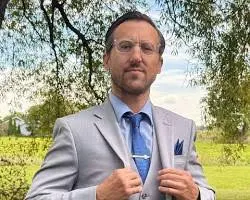
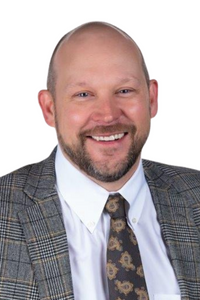
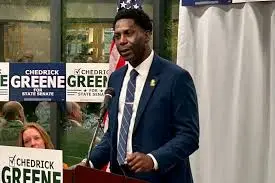








Comments (1)
Anthony Castillo
1768579802
Why are the questions to the parties so different? Shouldn't they be the same to both sides? When it comes to the environment and climate question - it appears that the republicans don't believe in math based science.