 Jan 15, 2026
 0 Comments
As we embark upon the new year the Saginaw Bay Symphony Orchestra is busily preparing an ambitious performance on Saturday February 7th titled Rachmaninoff, Dvorak & The New World that is designed to entice and engage audiences of all ages with an accessible showcase of works by three popular Classical composers.
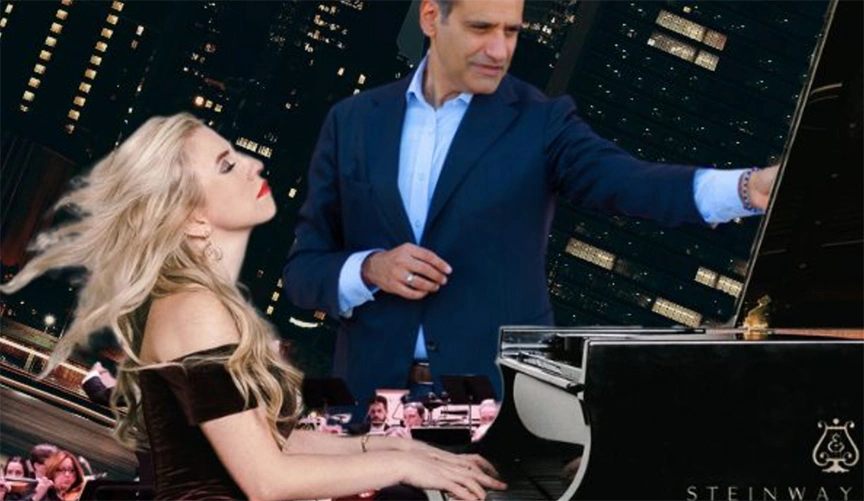
This delightfully structured performance will open with Barber’s Adagio for Strings and include a celebration of one of the most beloved piano pieces in history, Rachmaninoff’s Piano Concerto #2, featuring celebrated pianist Natasha Paremski, which will set the tone for showcasing the definitive and much-loved symphonic masterpiece Dvorak’s Symphony No. 9 ‘From the New World’.
Rachmaninoff's most famous piece is widely considered to be his Piano Concerto No. 2 in C minor, Op. 18, celebrated for its lush melodies, emotional depth, and prominent role in the film Brief Encounter. Its enthusiastic reception roused the famously moody composer out of his depression following the disastrous premiere of his First Symphony in 1897, and Rachmaninoff dedicated the concerto to Dr. Nikolai Dahl, who helped him overcome his crippling feelings of inferiority and insecurity.
“Not only is this Concerto one of Rachmaninoff’s most famous pieces, it’s probably one of the most famous pieces of romantic piano concertos in the repertoire of classical music,” explains Maestro Fouad Fakhouri. “Apart from its lush melodies, it’s really well designed and written and is filled with memorable themes that focus on the skills and athleticism for the soloist, so when you leave the concert you cannot help but be struck by the terrific performance skills of the soloist. I’ve never worked with our guest soloist Natasha before, and found out about her as I was researching guest pianists to perform this piano concerto, which is one of the pieces she’s really well-known for. She's a great pianist and I'm excited to work with her.”
“What’s interesting about this piano concerto is that after Rachmaninoff premiered his First Symphony in 1897, it was a total failure in terms of being panned by the critics, which really put him into a tailspin or deep depression,” notes Fakhouri. “Dr. Nikolai Dahl helped him overcome that depression, which is why he dedicated this concerto to him. Nikolai Dahl was Russian and ended up in Lebanon, working there for about 30 years at the American University of Beirut. That’s where I lived and grew up literally next to that university. All my family attended that university, and at one time they performed this piece there, so that connection is really interesting.”
“This particular concert program happened because we had a member on our Board of Directors, Carol Thomas, who is very supportive of the symphony and loves that piece of music and has wanted to hear it performed by the SBSO for a long time,” adds Fakhouri. She’s an attorney now but started out as a piano major and has a very big passion for the piano. About two years ago she mentioned this Rachmaninoff concerto was one of her favorite piece, so we started working on making it happen. She had the idea of inviting all the kids in high school and middle school to come hear Natasha perform, so on Friday, February 6th we’re going to also give a Youth Concert of this piece with over 750 kids coming to attend this performance, while also having the opportunity to interact with her as well.”
‘From the New World’ • A Groundbreaking Composition
The Symphony No. 9 in E minor, "From the New World", also known as the New World Symphony, was composed by Antonín Dvořák while he was the director of the National Conservatory of Music of America from 1892 to 1895. It premiered in New York City on December 16, 1893 and is one of the most popular of all symphonies. Astronaut Neil Armstrong took a tape recording including the New World Symphony along with him during the first Moon landing of the Apollo 11 mission.
“Historically, this is the quintessential American symphony,” states Fakhouri. “While Dvořák was Czechoslovakian, he wrote this symphony in the United States and whenever you think of an American symphony this is the one that gets performed the most. People know the theme to the second movement very well. When he came to the United States Dvořák thought Americans must really embrace their heritage and their history - their folk music, if you will - so they could write their own symphonic works and not embrace or model everything off the work of European composers.”
“A lot of the melodies found in this symphony are melodies that come from popular music of the time, whether it’s native American melodies or even African-American music, he thought you should always tap into the cultural vernacular and popular music of your country, so he threaded all these different styles and cultural elements into this composition.”
“Once he took that position at the American Conservatory his idea was that America had to find its own musical voice and not just imitate Europe, so that’s the entire purpose behind this work, which he attempted to do almost on behalf of the United States by incorporating the themes he heard here in the new world.”
Barber’s Adagio for Strings
While these two works form the core of this showcase performance, opening the concert will be Barber’s Adagio for Strings, which Maestro Fakhouri says he selected because of its accessibility for audiences. “I really wanted to go back to the basics of performing pieces our audience know and would be able to relate to.
“Barber’s Adagio for Strings has become extremely popular, especially in solemn occasions, you hear it performed quite frequently. For instance, after September 11th and the World Trade Center attacks, or anytime there is a death or something tragic you will hear it performed simply because it's such a sad and empathy filled peace. It's full of pathos and real anguish and it just lingers on and most people when they hear it end up sort of crying. It really is very powerful, reflective, and a great piece of music.”
Samuel Barber arranged this piece for string orchestra from the second movement of his String Quartet, Op. 11, which he finished in 1936, the same year he wrote the quartet. . It was performed for the first time on November 5, 1938, by Arturo Toscanini conducting the NBC Symphony Orchestra in a radio broadcast from NBC Studio 8H. Toscanini also conducted the piece on his South American tour with the NBC Symphony in 1940.
Rachmaninoff, Dvorak & The NEW WORLD with the Saginaw Bay Symphony Orchestra and guest pianist Natasha Parenski takes place Saturday, February 7th at 7:30 PM at The Temple Theatre. Tickets start at only $20.00 plus fees and are available at the Temple Theatre Box Office or online by clicking this link.
 info@review-mag.com
 989-780-4162










Comments (0)