 Jun 11, 2009
 0 Comments
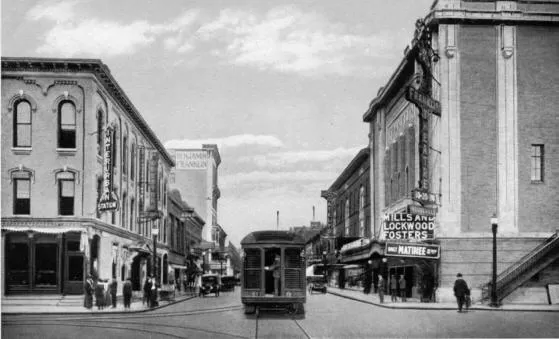
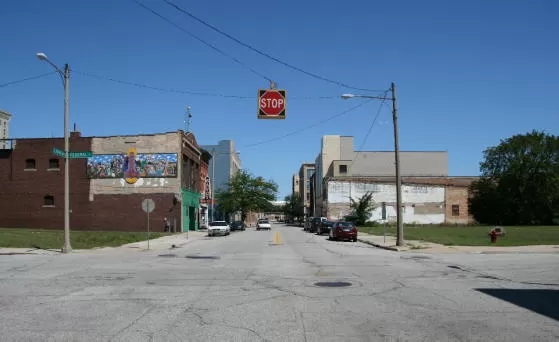
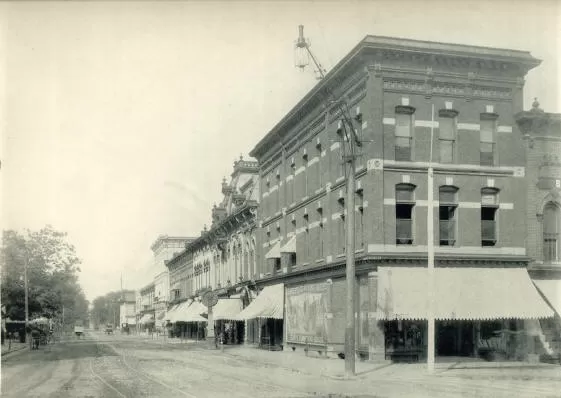
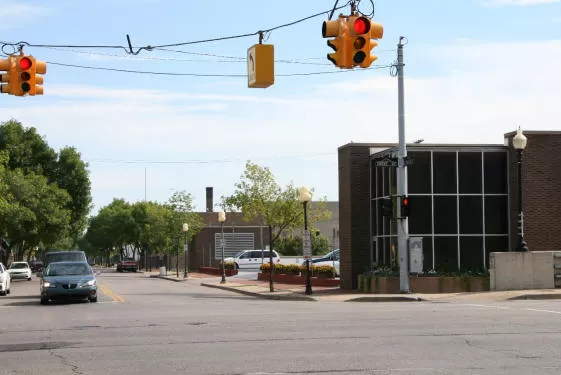
Historian George Santayana once wrote "Those who forget history are condemned to repeat it" and for Carrollton history teacher Kevin Mark Rooker that maxim rings truer today than ever.
A Saginaw native, the 1977 Douglas MacArthur High school graduate has meticulously assembled his interest in the architectural history of Saginaw into a compelling and often haunting visual & verbal memoir entitled Saginaw: Then and Now. ($21.99/Arcadia Publishing).
Working with his own collection of historic photographs and postcards and augmenting it with additional research, Rooker set about photographing his own current portraits of the properties and places depicted decades earlier, working with over 700 photographs and siphoning the collection down to 128 sets of pictures spanning the 1820s to today.
The result is as evocative as the idealization of a dream that once was as it is compelling by virtue of a reality that insofar as it existed once, with proper commitment and vision, could easily exist again.
"I entered this project for a few reasons," explains Rooker, who has been teaching since 1985. "First as a Saginaw preservationist that is always taking photos of old buildings and secondly to show my students what Saginaw looks like today as opposed to years ago, to stimulate discussion from students asking why we lost our direction. My goal with the book is to inspire people who with dedication, commitment and planning, can help Saginaw reclaim her past glory and become the center of a revitalized metropolitan area once again."
Two years in the making, Rookers challenges were numerous. "In trying to set each shot up as those taken in the original postcards or photos that I was working with, I realized that new digital cameras do not line up the same as those giant view cameras that were once used for photography. Consequently, it took a lot of time to capture each image properly. Fortunately, I have enough material to put a Volume 2 together."
"What I'm really documenting is the notion that what we have in terms of resources is worth saving and it takes all of us to say no to the destruction of our community. Our architecture is the fabric that holds our community together and all you need to do is look at Europe, where they value and preserve their architectural heritage."
Apart from weeding down the tremendous amount of material that he had to work with, Rooker notes the most challenging component of this project came in the form of traditional writers block at finding the words he wanted to describe what he was trying to say. In a majority of instances with this work, however, a photo is indeed worth a hundred words.
Rooker says he is hopeful when speaking to young students because he sees a renewed commitment to preservation of urban architecture.
"They are disappointed that they don't have a downtown to go to anymore and are tired and over with things like shopping malls," he notes. "They all want window shopping and cafes and the things that we had as kids growing up in Saginaw. They love downtown experiences and get excited about urban living."
"As gasoline prices move up city cores will come back," predicts Rooker. "City cores need to come back. The outer rings of the townships and in the county are not affordable and not sustainable. Perhaps its the eternal optimist in me speaking, but I believe the shifting economic paradigm will rejuvenate the cities. McMansions will become the apartment buildings for renters and those property values will decrease while those in the inner cities will come back. Youre already starting to see this happen."
Rooker is disappointed that Saginaw leaders do not capitalize on their heritage more. "We were the Lumber Capitol of the World," he explains, "and I believe we should rebuild a sawmill on the Saginaw River and push the city as Timbertown USA. Other towns capitalize on their legacy and we could garner much more tourism if we did as well."
Extremely active in Saginaw preservation and neighborhood revitalization, Rooker is the secretary of both the Saginaw Historic District Commission and the Triangle Parks Neighborhood Association. He also serves on the Cathedral District Neighborhood Association and piloted a project over the course of three years where he guided and taught 240 students to do historic home research for a newly proposed historic district in Saginaw.
When asked what he feels the biggest difference between community leaders of the past and those of today centered around, Rooker points out the innate philanthropy of City Fathers like Wellington Burt and Arthur Hill, whom would donate and rebuild within the community without expectation of private or personal gain.
"They would assist in the transition from a lumbering to a manufacturing-based economy by building new educational facilities, donating auditoriums, and improving our quality of life. What drove them wasnt personal gain so much as improving the fabric of our community."
Available at bookstores and pharmacies and gift shops throughout the area, as well as online, Rooker will be conducting a book signing for Saginaw: Then & Now at Barnes & Noble from 1:00-3:00 PM on June 20th.
 info@review-mag.com
 989-780-4162

















Comments (0)