 Dec 18, 2025
 0 Comments
The seat, a swing district which represents parts of Bay, Midland, and Saginaw counties, is set for a special election in May 2026 to fill a vacancy left by Democrat Kristen McDonald Rivet. She was elected to the U.S. House of Representatives, and vacated the seat in January 2025. This election to replace McDonald Rivet has been delayed 18 months, during which time the people of the area have been unrepresented in the Senate and therefore Democrats maintained their narrow 19-18 majority which allowed them to control the state budget process, including the industry killing 24% wholesale marijuana sin-tax.
Senate Minority Leader Aric Nesbitt (R) blamed the Governor for disenfranchising area voters and said "This is a complete failure of leadership from the Governor, who should be ashamed for abandoning these hardworking families.”
Candidates for the open seat, which is set for a primary election February 3rd, are as follows:
• Jason Tunney (Attorney) brings a strong professional legal background to the race, focusing on government accountability and constitutional conservatism. www.tunneyforsenate.com
• Chadwick Twillman (Businessman) focuses on economic growth, cutting taxes, and addressing the high cost of living. www.chadwicktwillman.com
• Christian Velasquez (Businessman) from Midland previously ran for the seat in the 2022 Republican primary. www.velasquezforsenate.com
• Andrew Wendt (Former Saginaw city council member) who emphasizes his local governmental experience and is running on a platform of supporting law enforcement and restoring local funding for roads and infrastructure. www.wendtforstatesenate.com
Democratic Primary Candidates:
• Pamela Pugh (President of the Michigan State Board of Education), the clear front-runner in the primary says her successful statewide campaigns demonstrate she can appeal to a diverse coalition necessary to win a large, multi-county district. www.pugh-michigan.com
• Brandall Adams (Saginaw County Democratic Party Chair) contends that his focus on kitchen-table economics and his background as a former union supporter is essential to winning back the working-class www.brandelladams.com
• Martin Blank (Trauma surgeon) says “It’s not enough to oppose Trump and his MAGA flunkies. We must crush them at the ballot box. www.blankformichigan.com
• Chedrick Greene (Marine veteran/Saginaw Fire Department Captain) endorsed by House Rep. Amos O’Neal, says, “we need to protect working Michiganders from MAGA extremists in Lansing who want to gut our health care and schools, ban abortion, and roll back our rights.” https://chedrickgreene.com
• Serenity Hope Salak (Substitute teacher) has a vision for childcare that includes creating pre-K for 3-year-olds, having free before- and after-care at schools and giving vouchers to parents of children age 3 or younger that can be used for babysitters or caregivers.www.facebook.com/p/Serenity-Hope-Salak-for-State-Senate-61581815300797/
• William Morrone (Medical Examiner from Bay City) is running to make life more affordable, strengthen unions and working families, fix our roads, and build a simpler, fairer health care system that treats the whole person.www.morroneforsenate.com
School Board Recall Petitions
Bridgeport-Spaulding Community School board members Brentoya Bray-Breamsy, Carmen Castillo, Lucy Ann Erby, Brenda Morales are being recalled for refusing to extend the expiring contract of School Superintendent Mark Whelton, who has led the schools for the past 7 years.
Concerns over low test scores influenced some board members' decision, including placing Welton on paid non-disciplinary administrative leave to allow for a third-party investigation into unspecified concerns. while recall proponents who packed the recent school board meeting point out the progress that Whelen has made during his tenure, and that under his leadership, the district moved from a $1 million financial deficit to a $7.1 million fund surplus, and cited "evidence of achievement and gains and district improvement over the previous seven years.".
Welton's stated focus is on a "students' first" approach, and supporters point to positive changes like upgraded technology and new program options such as welding. The recall proponents need to obtain signatures of 25% of voters in the school district, or approximately 1,000 signatures for each petition.
Saginaw County School Millages Fail Again
• Saginaw Township Community Schools Bond Proposal failed for the second time in 2 years by a wide 62%-38% margin. The tax hike failed miserably in all 13 township precincts.
• Birch Run Area Schools Bond Proposal failed for the second time in 6 months by a 53%-47% margin, losing in all 3 precincts.
The decisive defeat of the recent multi-million-dollar school millage proposal in Saginaw has sent a clear message to the district's leadership: trust is at a low, and the community is demanding greater accountability. The proposal, marketed to fund essential facility upgrades and educational enhancements, was overwhelmingly rejected by voters, reflecting more than simple tax fatigue. It underscores a significant credibility gap between the school board and the residents it serves.
For years, many citizens have felt disconnected from the decision-making process, questioning the fiscal prudence and long-term vision of the district's administration. The rejection suggests that voters were unconvinced that the proposed funds would be spent efficiently, transparently, or in a way that truly addresses core educational deficiencies.
Vague justifications for large sums, coupled with a lack of compelling, easy-to-digest data, fueled public skepticism. The perception is that the board failed to make a genuine, persistent case for the necessity of the spending, instead relying on the assumption that the public would approve any request framed as "for the kids."
This disconnect is now galvanizing a movement to challenge the political status quo. Frustrated parents, concerned taxpayers, and education advocates are beginning to organize, viewing the ballot box as the only viable path to meaningful institutional reform. The defeat of the millage has sharpened the focus on the upcoming school board elections.
Activists are no longer content with simply voting "No" on millages; they are preparing to vote "No" on the incumbents. The emerging strategy centers on identifying and supporting a slate of candidates who pledge a commitment to radical transparency, rigorous financial oversight, and a collaborative approach to facility planning and educational policy.
The future of Saginaw Public Schools, they argue, cannot be secured by simply re-submitting a smaller millage request. It must be built on a foundation of restored public confidence. This involves a board that proactively seeks community input, provides clear, measurable outcomes for every dollar spent, and proves its competency through action, not just promises.
The message to the current board members is unambiguous: your failure to earn the public's trust on the millage will now be challenged directly at the polls. This shift from simple disapproval to active political mobilization marks a new, more engaged chapter for Saginaw's educational landscape.
Governor Whitmer's "Fix the Damn Roads" Plan & the Cannabis Tax Conflict
Governor Gretchen Whitmer’s defining promise to, “Fix the Damn Roads,” culminated in the passage of a bipartisan budget deal, yet the political victory was immediately clouded by controversy over a new tax on the thriving marijuana industry. The plan, enacted as part of the Fiscal Year 2026 budget, claims to secure a nearly $2 billion annual investment for state and local infrastructure, a goal that had eluded Michigan lawmakers for years.
The roots of the solution trace back to Whitmer's earlier, more controversial proposals, including a 45-cent per gallon gas tax increase that failed to gain traction. The final, successful road funding plan, part of the broader Mi Road Ahead initiative, was conceived to provide a comprehensive, sustainable, long-term funding source without solely burdening everyday commuters.
Key elements of the finalized bipartisan compromise include:
• A Revenue Shift: Eliminating the state's 6% sales tax on gasoline and replacing it with an increase in the fuel tax, ensuring that every dollar paid at the pump is dedicated to road funding. To offset the loss of sales tax revenue that typically went to schools and other funds, the state will dedicate general fund revenue to fill that gap.
• Corporate Contribution: Dedicating a chunk of the Corporate Income Tax (CIT) revenue to roads, estimated to reach up to $1 billion annually by 2030, which the administration framed as ensuring corporations pay their "fair share."
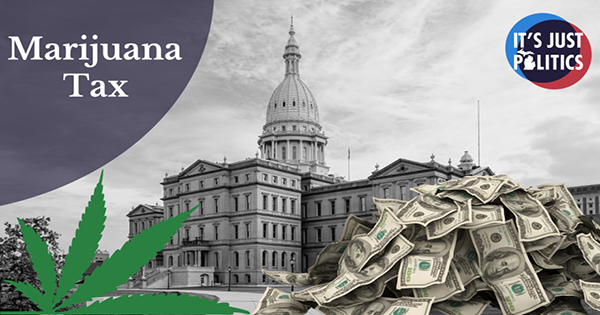
• The Marijuana Wholesale Tax: The most contentious piece of the funding puzzle: the creation of a new 24% wholesale excise tax on recreational marijuana. This tax, said to generate over $420 million annually for road repairs, was intended to close a loophole that exempted the industry from wholesale taxes applied to similar products.
The passage of the budget and the accompanying sin-tax legislation was a nail-biter. Despite bipartisan support for the overall budget, the marijuana tax bill in particular faced strong resistance and passed the Senate in the early morning hours by a slim margin after intense negotiation, demonstrating the political difficulty in securing the new revenue streams.
Immediately following the bill's signing, the Michigan Cannabis Industry Association (MiCIA) filed a lawsuit challenging the constitutionality of the new 24% wholesale tax. The core of their argument is that the Comprehensive Road Funding Tax Act (CRFTA) improperly amends the 2018 voter-approved Michigan Regulation and Taxation of Marihuana Act (MRTMA), which only imposed a 10% retail excise tax.
Under the Michigan Constitution, amending a voter-approved initiative requires a ¾ supermajority in the legislature, a threshold the tax bill did not meet. The industry groups argue that the new tax indirectly violates the intent of the original law, with a 10% excise tax, which aimed to keep prices competitive to transition consumers away from the illicit market.
A Court of Claims judge, however, denied the industry's motion for an injunction to block the tax from taking effect on January 1, 2026. The judge ruled that the wholesale tax is "another tax," not an amendment to the original legalization law, thereby upholding its immediate implementation. The broader constitutional challenge, however, is being allowed to proceed to determine if the tax conflicts with the original purpose of the MRTMA.
The new 24% wholesale tax will apply to the sale or transfer of marijuana between licensed entities, including the first sale to a retail licensee or products cultivated and processed for retail sale by the same licensee. This is in addition to the existing 10% retail excise tax and 6% sales tax, which means Michigan’s total tax burden on recreational marijuana will become one of the highest in the nation, estimated to be around 40%.
Industry leaders are warning of significant negative consequences. Michigan’s cannabis market is already heavily saturated with an oversupply that has led to some of the lowest consumer prices in the country. The added 24% wholesale tax on thin profit margins is expected to cause severe financial strain, forcing many smaller operators out of business. Furthermore, industry advocates worry that the dramatic increase in the final price could drive consumers back to the illicit market, undermining a key goal of legalization.
The legal battle continues, but for now, the cannabis industry must brace for the financial impact of funding the state’s massive road repair effort.
It is not clear that the tax, onerous as it may be, will actually raise the money needed to fix the damn roads, and the government’s trite reference to $420 million revenue may backfire on Democrats when the repairs fail to materialize.
Democrats, especially Governor Whitmer and Attorney General Dana Nessel, enjoyed the support of Marijuana advocates in the past, but the marijuana advocates will long remember this betrayal of the citizen initiative process.
Economic Development and Business Issues
Future of Corporate Incentives: A major debate centered on reforming or replacing the state's main corporate incentive program, the Strategic Outreach and Attraction Reserve (SOAR) Fund, after the new state budget defunded it. Lawmakers are now focused on a new approach, potentially a payroll tax plan that focuses on job creation over direct business incentives.
Minimum Wage and Tipped Workers: Implementation of the phased increase in the minimum wage and the eventual elimination of the lower wage for tipped workers continued to be a hot political and legal issue, with ongoing legislative efforts to modify the court-ordered timelines.
Key Social and Legal Policy Debates
Gun Safety Task Force: A state task force on gun violence released its final report recommending measures such as banning assault weapons, outlawing "ghost guns," and raising the firearm purchase age.
Public Records Reform (FOIA): Legislation to expand the Freedom of Information Act (FOIA) to include the legislature and governor's office was a major source of partisan disagreement.
Health Care Legislation: Bills related to prescription drug affordability (creating a Prescription Drug Affordability Board), measures to reduce maternal mortality (the "Momnibus" package), and new regulations on raw milk sales saw legislative movement.
Infrastructure, Flooding, and Development
Infrastructure and development projects were central to local political discussions, often intersecting with climate change and local funding needs.
Midland Flooding/Repetitive Loss Analysis: The City of Midland focused heavily on its Repetitive Loss Area Analysis as part of its participation in the National Flood Insurance Program's Community Rating System. This involved public surveys and open houses to gather input on areas that have experienced repetitive flooding, leading to political pressure for long-term flood mitigation strategies.
Transportation Improvement Plans (Bay City/BCATS): The Bay City Area Transportation Study (BCATS) sought public comment on both its Public Participation Plan (PPP) and the proposed 2026-2029 Transportation Improvement Plan (TIP), which outlines future funding for road, bridge, transit, and non-motorized transportation projects across Bay County.
Road Maintenance Programs: All three cities continued with their major Surface Treatment Programs (e.g., crack sealing and patching) for local and major streets, which are a persistent local political and budget issue.
 info@review-mag.com
 989-780-4162













Comments (0)