 Mar 05, 2026
 0 Comments
The current exhibition at the Marshall M. Fredericks Sculpture Museum (MFSM) provides the visitor an insightful journey into the body of work of its namesake, Marshall M. Fredericks (1908-1998). The visionary sculptor, whose monolithic creations can be viewed at various locales throughout Michigan, across the U.S., and around the world, launched his professional career in 1936 when he won a competition to create the Levi L. Barbour Memorial Fountain on Belle Isle.
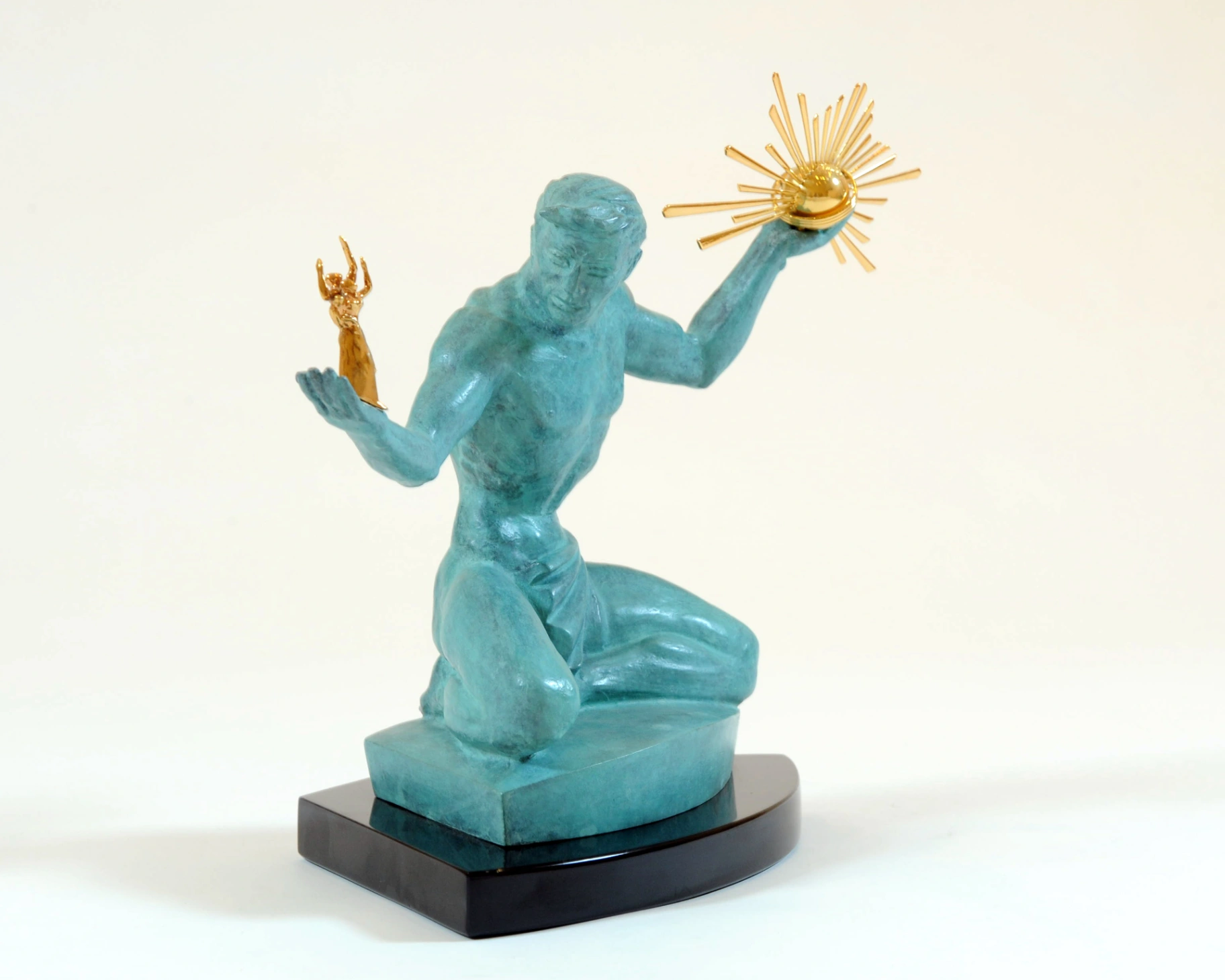
One of his most recognizable creations, The Spirit of Detroit, was dedicated in 1958. The design was immediately embraced by the City, and continues to be featured on the City’s official letterhead, business cards, city garbage trucks, manhole covers, and more – even the bright green aprons city workers wear for protection.
A year later, in 1959, Fredericks’ massive work, Christ on the Cross, a 28-foot bronze Corpus mounted on a 55-foot-tall redwood cross, was placed at the Indian River Catholic Shrine in Indian River. A plaster mold used to create the bronze sculpture is on display in the permanent collection at the Museum.
The Rock Island, Ill., native settled in Michigan, establishing his studio in Royal Oak, where he kept active on projects up until four days before his death in 1998. Virtually all of the contents of his Royal Oak studio would be incorporated into the Artist’s Studio, which can be viewed as part of the permanent exhibit at the MFSM.
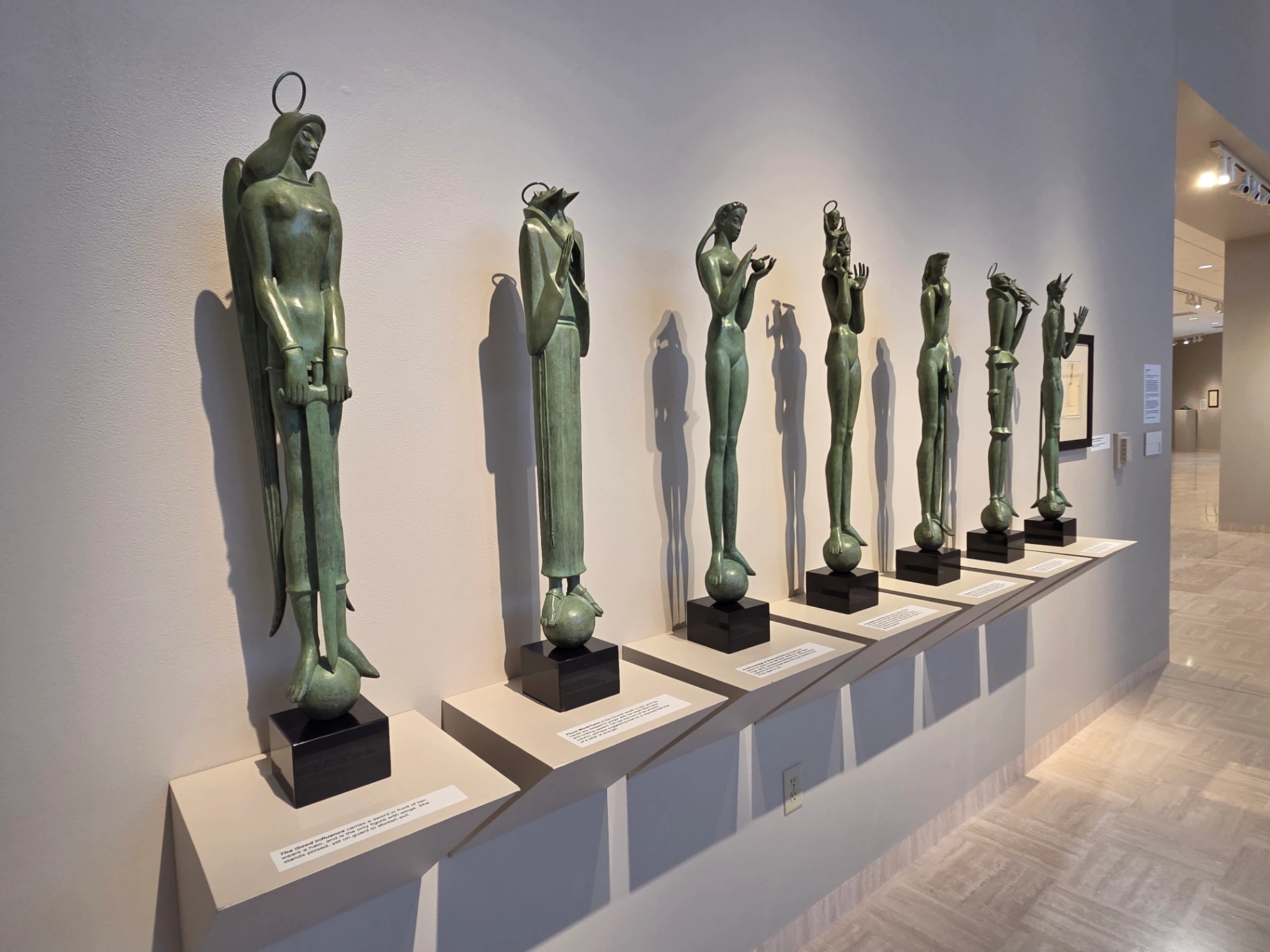
Sketches to Sculptures, Rendered Reality: Sixty Years with Marshall M. Fredericks represents the creative arc of six decades of Fredericks’ work. The exhibition features 28 bronze sculptures; 2 bronze reliefs; an anodized aluminum relief; archival reproductions of 29 drawings and sketches by the artist; a photograph and a letter; and a newly gifted self-portrait.
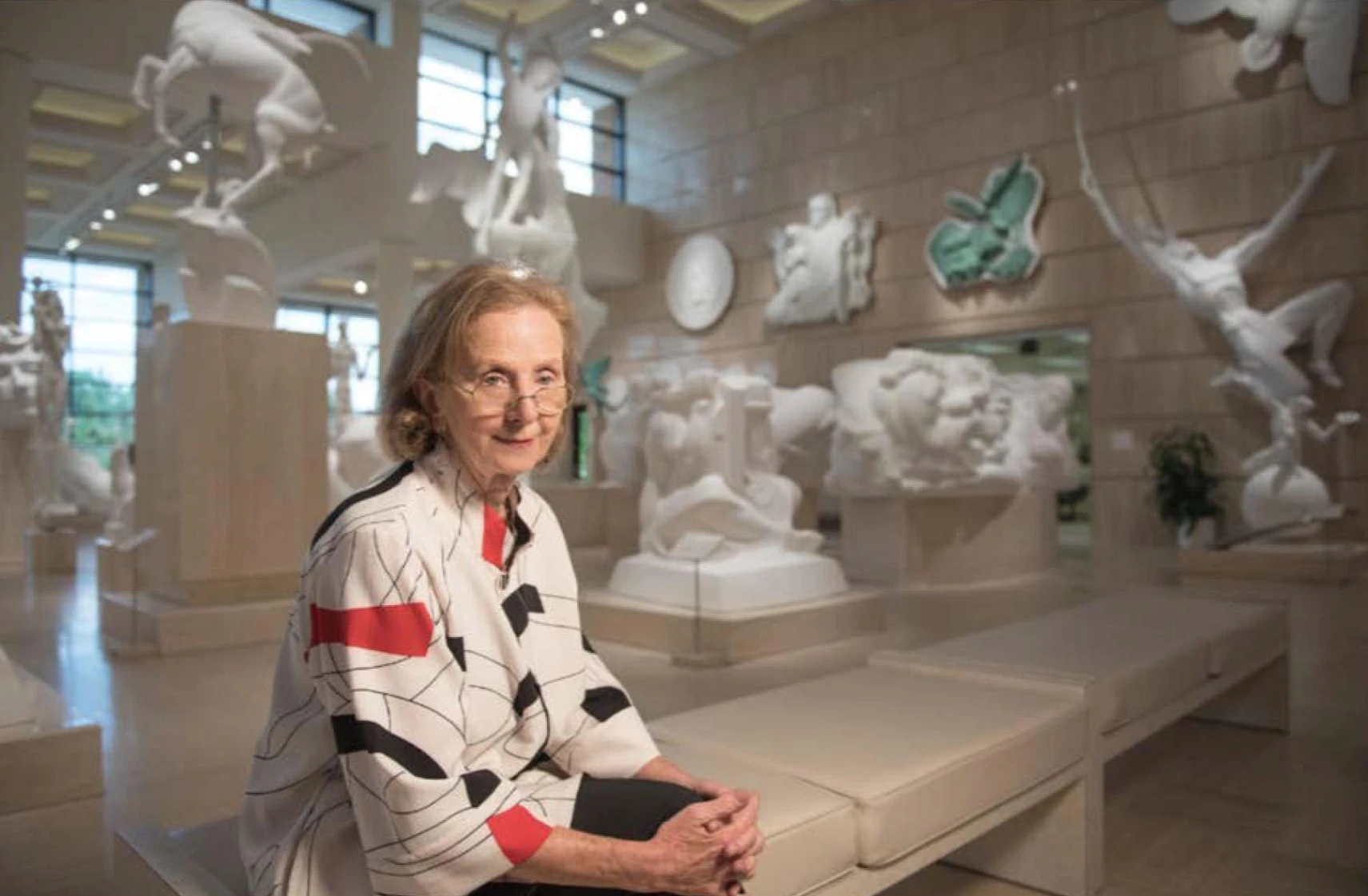
Although Marilyn Wheaton did not meet the artist until the occasion of his 90th birthday, she was already deeply familiar with his work. At the time, Wheaton was Director of Cultural Affairs for the City of Detroit, and Mayor Dennis Archer asked her to represent him at Fredericks’ birthday event. She would have the opportunity to visit with the artist in his studio on a couple occasions before his death three months later.
“Marshall was as much a humanitarian, husband, father, and friend, as he was a sculptor,” recalls Wheaton. “He really understood people, especially children. So many things he created with children in mind. Marshall wanted everything he created to be easily understood, to be enjoyed, and to give people some sense of peace and hope.”
Wheaton would go on to serve as the MFSM’s executive director from 2006 to 2018, bringing her expansive knowledge of the arts, as well as her intimate familiarity with the artist, to Saginaw. “Never in my wildest dreams did I imagine I would be the director of the Museum,” says Wheaton. “But, things evolve. And that happened.”
When she was being recruited, Wheaton was told of two priorities that the Board of Advisors and the University wanted the new director to achieve: (1) Get the museum accredited by the American Alliance of Museums and (2) facilitate and create a strategic plan that both the board and the staff could understand. “The prior strategic plan had sat on the shelf without being implemented,” she recalls.
Wheaton began her tenure on October 2, 2006. Within two months, she was facilitating a strategic plan with the board and staff. “It was a 5-year plan, she remembers. “After that plan was implemented, we did a second strategic plan, and then a third strategic plan. So, strategic planning was key to putting the [MFSM] on the map and giving everyone who knew about it the opportunity to see how it would grow. Strategic planning was pivotal to everything that [we achieved].”
During the second campaign, Wheaton’s desire for the museum to have its own dedicated entrance came to fruition.
“I always felt a museum of the stature of Marshall Fredericks should have its own entrance,” says Wheaton. “So that when people came, they were coming into the museum, not through hallways and [past] classrooms to get to the museum.”
Wheaton approached SVSU President Eric Gilbertson with her intention of creating an exterior entrance to lead people through a beautiful sculpture garden and into the museum.
“I always felt that people coming to the museum need to have some sense of what they’re going to experience,” says Wheaton. Gilbertson told her if she could raise the money, she could do it.
She approached Donald and Jo Anne Petersen. “Donald Petersen was the CEO of Ford Motor Company for several years, and he and Marshall had become very good friends,” notes Wheaton. “I asked Don and Jody if they would be the lead supporters in this effort.” They agreed, contributing $500,000, which jumpstarted the process.
The Jo Anne & Donald Petersen Sculpture Garden provides an exterior entrance commensurate with the stature of its interior. The original entrance, largely unchanged since the museum opened, is situated in a classroom hallway, with the men’s and women's restrooms flanking the hallway near the entrance.
The space was known as the Marshall Fredericks Sculpture Gallery when it opened in 1989; and the artist himself was intricately involved in every architectural element, including the marble that was selected for the walls and the placement of every sculpture.
“He really was an architect’s sculptor,” notes Wheaton. “He worked with a lot of architectural firms and built a fine reputation as a sculptor who knew how to work with architects.”
Near the end of her tenure at the MFSM, in 2018, a celebration was held to commemorate the 60th anniversary of the installation of the Spirit of Detroit in downtown Detroit. “We had an exhibition at the museum [to mark the occasion]. In the gallery, I invited artists from Detroit to create a piece that for them represents the spirit of Detroit – not Marshall’s sculpture, but just the spirit, the feel of Detroit. So we had 20 or 25 pieces by artists, and then in that outer gallery, we had more than 100 objects that had that Spirit of Detroit image on it.”
While not a native son, the City of Detroit continues to embrace Fredericks and the spirit of his works. “He has so many major pieces in Detroit. The Spirit of Detroit is probably his most well-known piece internationally. If you are a Detroiter, you live with it every single day.”
“This exhibition is a result of me and my staff, especially the registrar and the archivist, working together,” she says. “When we decided to create a traveling exhibition, we knew we could not [transport] plaster [pieces]. There’s a legal agreement between the University and the Museum that no plasters will travel out of the museum. So we selected 33 bronze macquettes, studies for this traveling exhibition, and the archivist selected drawings and sketches from each of those 33 sculptures. What you see is exactly what travels in the exhibition.” Drawings, she points out, are precise copies, thus sparing the original paper from additional wear from travel.
Sketches to Sculptures, Rendered Reality: Sixty Years with Marshall M. Fredericks is on display at SVSU’s Marshall M. Fredericks Sculpture Museum through spring 2026.
 info@review-mag.com
 989-780-4162

















Comments (0)