 Oct 01, 2026
 0 Comments

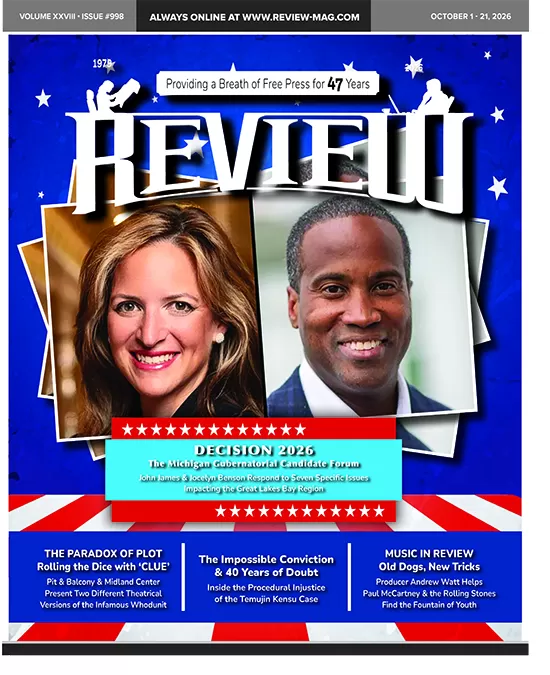
On November 3, Michigan voters will fill an office that has not been genuinely open since 2018. With Governor Gretchen Whitmer being barred by term limits from seeking a third term, voters will fill the office of Michigan’s next Governor by choosing between two nominees who emerged from the August 4 primary with very different mandates.
Secretary of State Jocelyn Benson took the Democratic nomination with 83.2 percent against Genesee County Sheriff Chris Swanson, while Congressman John James took the Republican nomination with 50.1 percent against businessman Perry Johnson, carrying President Trump’s endorsement into a contest he won by roughly a single point of margin.
Both campaigns have since produced the usual apparatus of a statewide race: the television spots, the coordinated press releases, the county-fair appearances, the carefully staged tour stops. Very little of it has been addressed to the Saginaw Valley as a place with its own ledger of grievances.
Statewide campaigns are built to travel, and the questions that travel best are the ones that mean approximately the same thing in Marquette and in Monroe. The trouble with a question that means the same thing everywhere is that it usually means nothing anywhere.
REVIEW took a different approach. We submitted seven written questions, identical in wording, to both campaigns, each grounded in a specific decision, a specific dollar figure, or a specific local consequence, and each drafted to make a general answer visibly general.
The campaigns received the same questions at the same time, with the same deadline, and they answered in writing rather than under a podium light with a moderator’s clock running. The answers are printed here as submitted. Neither campaign saw the other’s responses before publication, neither was offered a rebuttal, and the order of presentation alternates question by question so that neither candidate holds the first word throughout.
The seven subjects are ours, not Lansing’s.
Question one takes up the data center buildout, the sales and use tax exemptions running to 2050, and whether a monthly bill in Saginaw, Bay City, or Midland can be made to stay out of the financing of grid capacity built for somebody else’s servers.
Question two takes up Bay City’s 2021 sale of the Liberty and Independence bridges to United Bridge Partners, the tolls of $2 to $5.50 per crossing, the lease running as long as seventy-five years, and what a city in that position is supposed to do when Lansing offers nothing else.
Question three takes up the Edenville and Sanford failures of May 2020, the roughly $400 million restoration, and the forty-year capital assessment now carried by property owners in Midland and Gladwin Counties who sued and lost.
Question four takes up the more than $200 million in SOAR incentives and related grants that came to Saginaw County, the layoffs at Nexteer that came anyway, and who should hold the authority to claw a subsidy back.
Question five takes up the 24 percent cannabis wholesale tax effective January 1, which was projected to raise about $420 million a year and produced near $34 million in its first four months.
Question six takes up a city that has gone from roughly 100,000 residents in 1960 to about 42,600 today, and the 1,800-odd structures demolished since 2013 with no recurring mechanism to make the resulting vacant land worth anything.
Question seven asks each candidate to name one thing they would concede to the other party and one thing of their own party’s they would refuse, on the theory that the next governor will face at least one hostile chamber whether the campaign literature mentions it or not.
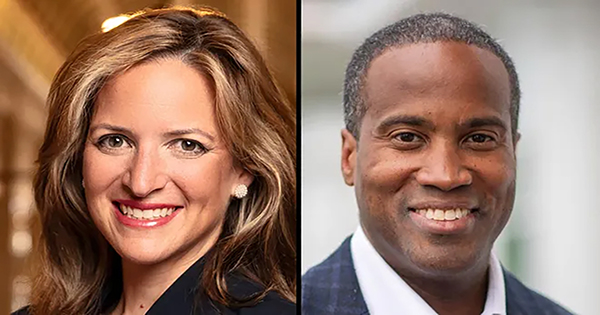
The candidates arrive at these questions from careers that have almost nothing in common. James, of Shelby Township, is a West Point graduate and Ranger-qualified Army aviator who logged more than 750 combat hours flying Apaches in Iraq, afterward ran James Group International, and is now in his second term representing Michigan’s 10th District; his campaign presents him as a combat veteran and job creator whose first priority is affordability.
Benson, of Detroit, investigated white supremacist and neo-Nazi networks as a young researcher, clerked for Judge Damon J. Keith, became the youngest woman ever to serve as dean of an accredited American law school when Wayne Stateappointed her at 35, and has served as Secretary of State since 2019; her campaign presents her as the candidate who fixes broken government systems and who will make Michigan affordable.
James runs with state Representative Jay DeBoyer of Clay Township. Benson runs with Senate Majority Leader Winnie Brinks.
Readers should know what this forum is not. It is confined to the two major-party nominees, and the November ballot will carry three additional tickets, listed with their websites at the end of this piece so that no reader must take our editorial judgment about newsworthiness as a substitute for the ballot itself.
The race also looked different for most of the past two years, until Detroit Mayor Mike Duggan ended his independent candidacy on May 21 and returned the contest to its conventional two-party shape.
It remains close enough to matter: a Glengariff Group survey of 600 likely voters conducted for The Detroit News and WDIV from August 31 through September 3 put Benson at 47 percent and James at 43 percent, with 10 percent undecided and a margin of error of four points. Absentee ballots go out on September 24, which means a meaningful share of this region will have voted before either candidate stands on a debate stage.
One observation, and then the floor is theirs. Question seven told both campaigns in advance that a general commitment to bipartisanship would be published exactly as written, and that readers would notice the absence of a specific answer. Both campaigns submitted a general commitment to bipartisanship.
Both are printed below, exactly as written, and readers may draw their own conclusions about what that symmetry indicates, either about the two candidates or about the condition of a state where naming a single concession in advance is apparently the most expensive thing a candidate can be asked to do.
The answers follow.
Question 1. Data Centers and the Power Bill
Michigan has granted qualifying data centers sales and use tax exemptions running to 2050, while utilities pursue multi-gigawatt data center projects and more than two dozen Michigan communities have adopted local moratoria amid concern over energy demand, water use, and rate impacts. DTE has stated Michigan law requires that data centers not be subsidized by other ratepayers, but the mechanism for enforcing that promise as demand grows remains contested in Lansing.
What specific, enforceable guarantee will you put in place to ensure a monthly electric bill in Saginaw, Bay City, or Midland does not rise to help finance grid capacity built primarily to serve a data center? Should Michigan’s 2024 tax exemptions for data centers be retained, narrowed, or repealed? When a township denies or delays a data center project through its own zoning authority, should the state be able to override that decision?
John James (R): Local control is paramount. No community should be forced to accept a data center, and no Michigan family should see its electric bill go up to subsidize one. Any data center receiving public support must be responsible for the infrastructure and grid upgrades its project requires, with enforceable benchmarks and full transparency so those costs are not shifted onto taxpayers or ratepayers.
Michigan should welcome investment, but not with blank checks. Any incentive must produce a measurable public benefit through real jobs, long-term investment, and accountability. Data centers also cannot strain drinking water supplies, create excessive noise, or replace productive farmland. Brownfields and former industrial sites should be prioritized. If a city or township says no through its local zoning process, Lansing should not override that decision. Local control is my moratorium.
Jocelyn Benson (D): My responsibility as governor, first and foremost, will be protecting the people of Michigan. That’s why I unequivocally support a moratorium on data centers until we can pass strict, enforceable guardrails that safeguard our electrical grid, our Great Lakes, and local autonomy. When it comes to data centers, I was the first gubernatorial candidate to roll out a plan for enforceable guardrails, to ensure data center projects can only move forward if they are transparent with their local community, commit to delivering well-paying union jobs, don’t raise utility bills, and don’t hurt our water. The specific requirements of my data center plan include:
● Public hearings to ensure projects do not go through without residents having the opportunity to share their concerns.
● Transparency and disclosure reporting to ensure no backdoor deals that exclude communities.
● Requiring developers to prove prior to construction that the data center will not abuse natural resources – from water to land – and it will not drive up energy costs for Michiganders.
● Data centers bear the cost of additional energy usage. Not the consumer.
● Union contracts that ensure the creation of well-paying jobs.
Until we get these rules in place we must pass a moratorium on data centers in order to ensure that developers are doing right by Michiganders and I am the only candidate willing to do so. After taking thousands from those who profit from data centers and voting 4 separate times against local control, opting to have DC politicians decide what local communities can do about data centers, my opponent has made it clear he has no plans to rein these projects in and protect Michiganders.
Question 2. Privatized Infrastructure and Local Control: The Bay City Bridges
In 2021 Bay City sold its Liberty and Independence bridges to United Bridge Partners, a private firm, which now collects tolls of $2 to $5.50 per crossing under a lease running up to seventy-five years. The deal funded rehabilitation the city could not otherwise afford, but it has also drawn sustained protest, diverted traffic onto the toll-free Veterans Memorial Bridge, and produced a dispute over whether the terms of a related agreement with Bay County may be kept confidential from the public.
Bay City is not unique: Michigan communities under fiscal pressure are increasingly financing infrastructure through private ownership and user fees rather than public funding. Should the state set limits on how long a municipality may lease public infrastructure to a private operator, or on what terms of such a deal may be withheld from public disclosure? Would you support state financing or bonding tools that let cities like Bay City rehabilitate bridges, water systems, or other core infrastructure without selling operating control to a private company? If not, what should a city in Bay City’s position have done instead in 2021, given the constraints it faced?
Jocelyn Benson (D): I have always sought the advice and input of local leaders because they know their communities best, and as governor, that will not change. From my plans to tackle housing, healthcare, and data centers, I’ve been clear that we need to bring everyone to the table, work with local leaders, and take a partnership-based approach to solving problems. But taxpayers also deserve transparency with where their dollars are going.
Michigan has world-class assets, but they mean nothing if our residents don't have clean water to drink, reliable ways to get to work, and the other critical infrastructure our economy depends on. That’s why as governor, I will work with our local leaders to invest in aging roads, bridges, water systems and other critical infrastructure our economy depends on. Our mayors and city council members should have a voice at the table, and Lansing should give them the tools to make responsible decisions for their communities.
John James (R): Michigan communities should not be forced into bad long-term deals because Lansing failed to address critical infrastructure. I believe the state should give local governments better tools to repair roads, bridges, water systems, and other essential infrastructure before communities are left with no option but to surrender operating control for generations.
My approach has consistently been that local governments must take responsibility for their infrastructure, while the state can help expedite critical upgrades through tools such as offering low-interest financing to the local communities for this purpose. In Congress, I have delivered tens of millions of dollars for flood mitigation, sewer, stormwater, and other infrastructure projects because preventive investment is far less costly than waiting for failure.
Whatever financing model a community chooses, taxpayers deserve transparency and accountability. Public-private partnership management of infrastructure and transportation assets can be an effective solution to cutting costs. Indiana is an example of a state that has effectively managed its transportation assets by deploying solutions such as these. However, public assets should never be managed through agreements that leave the people paying the bill unable to understand the obligations being made on their behalf.
Question 3. Who Pays to Rebuild After a Disaster • The Midland and Gladwin Dam Assessments
The May 2020 failure of the Edenville and Sanford Dams displaced more than ten thousand residents and caused hundreds of millions of dollars in damage across Midland and Gladwin Counties. The Four Lakes Task Force is funding the roughly $400 million restoration chiefly through special assessments on property owners in the affected watershed, a capital assessment running forty years, over the objection of property owners who sued and lost, arguing the charges were disproportionate to any resulting increase in their property values.
State and federal grants have covered only a portion of the cost. Do you believe the state provided an adequate share of funding for the Four Lakes restoration, and if not, what more should it have contributed? For future dam failures or comparable regional disasters, should Michigan create a standing state fund so that the financial burden of rebuilding does not fall so heavily on a single county’s property owners through decades-long special assessments? Please answer with a specific funding mechanism, not a general commitment to disaster relief.
John James (R): The Four Lakes disaster showed what happens when aging infrastructure is ignored, owners defer maintenance, and government reacts only after failure. Families and taxpayers end up paying the price. My approach is to prevent the next disaster rather than simply argue over the bill afterward.
As Governor, I will require a comprehensive review of Michigan’s highest-risk dams, particularly aging and privately owned structures with known safety concerns. Owners must be held accountable for maintenance, and any transfer of ownership must include proof of financial capacity, technical expertise, and a long-term maintenance plan. Dam decisions should be based on engineering, public safety, local input, and sound science. Greater state and federal enforcement can go a long way to preventing a future disaster.
Jocelyn Benson (D): Michigan’s repeated dam failures have put families at risk and devastated local economies. They are a reflection of a broken system rooted in aging infrastructure, unaccountable bad actors, and a reactive rather than proactive approach to maintenance, leaving taxpayers to cover astronomical cleanup costs. Our Great Lakes are a critical part of our economy and protecting them is personal to me. That’s why I am the only candidate in this race with a plan to protect our Great Lakes and safeguard the world-class natural resources we have in Michigan against corporate polluters and others who would seek to abuse them.
As governor, I’ll prioritize public safety, and take the financial burden off Michiganders, by strengthening dam inspections, improving oversight and enforcement, and ensuring owners are held accountable for long-term maintenance and repairs before disasters happen. And because preventive maintenance is cheaper than disaster recovery, I’ll also create a dedicated dam safety and resilience fund to enable us to proactively prevent costly failures before they harm our communities.
Question 4. Taxpayer-Subsidized Jobs and the Tariff Squeeze on Saginaw County Manufacturing
Saginaw County has received well over $200 million in state SOAR incentives and related grants for Hemlock Semiconductor and Corning’s Solar Technology plant, projects credited with roughly 1,200 new jobs at Solar Technology alone. At the same time, Nexteer and other regional auto suppliers have issued layoffs tied in part to tariffs and a slowdown in EV demand, and statewide, SOAR-funded companies have so far produced only a small fraction of the jobs originally promised across the whole program.
Would you continue, expand, reform, or wind down the SOAR incentive program? If a company that received a SOAR award fails to deliver the jobs it promised, what should happen to the subsidy already paid, and who should have the authority to claw it back? Separately: what would you do, as governor, in response to tariff-driven layoffs at a supplier like Nexteer, where the cause originates in federal trade policy rather than anything the state controls?
Jocelyn Benson (D): We should welcome innovation and job growth in our state, but companies coming to Michigan must do right by Michiganders. That’s why I would reform SOAR so corporations don’t get our taxpayer dollars before they even deliver for Michiganders.
Transparency is my first priority when it comes to giving corporations any sort of subsidy, and if they receive taxpayer dollars, my administration will ensure that they create and maintain good union jobs and commit to responsible contracting standards. I’m also committed to holding corporations accountable if they try to skirt these requirements. If corporations move jobs away or fail to deliver the jobs they promised, we must hold them accountable. Period.
And when federal policies like these reckless tariffs, that my opponent John James voted for, put Michigan workers at risk and raise costs on our residents, I will act. The tariffs are the “John James Tax” on Michiganders. I will use every tool in my toolbox to help Michiganders survive them. That includes negotiating subnational agreements to mitigate some of these higher costs and putting more money back into our small businesses’ pockets so they can keep their doors open.
John James (R): Michigan does not need more corporate welfare; it needs a better business climate. I would move away from the SOAR model of writing enormous checks to politically connected companies and refocus economic development on retention, reclamation, and recruitment—in that order.
When taxpayer incentives are used, they must have measurable benchmarks and a real return on investment. If a company takes taxpayer money after promising jobs and fails to deliver them, the state should claw that money back. Businesses that have already invested in Michigan and employ Michigan workers should not be placed behind whichever company has the best lobbyists in Lansing.
For manufacturers facing economic pressure, Michigan must control what it can control: lower taxes, affordable and reliable energy, faster permitting, workforce development, and a regulatory environment that makes it easier to keep jobs here rather than move them elsewhere.
Question 5. The 24% Marijuana Wholesale Tax
Effective January 1, 2026, Michigan imposed a 24% wholesale tax on cannabis under the Comprehensive Road Funding Tax Act, on top of the existing 10% retail excise tax and 6% sales tax, with revenue earmarked chiefly for road repair through the Neighborhood Road Fund. The tax was projected to raise roughly $420 million annually, but collections through the first four months came in near $34 million against an expected $105 million per quarter.
Statewide retail licenses have declined, an Upper Peninsula chain has closed five of nine stores citing the tax directly, and bipartisan repeal bills are now pending in both the Senate and House, while a legal challenge to the tax remains before the courts. Saginaw, Bay City, and Midland are home to licensed cultivators, processors, and retailers directly affected by the wholesale rate, and cannabis is an active part of the regional economy.
Do you support repealing the 24% wholesale tax, keeping it as enacted, or replacing it with a different structure? If you would repeal or reduce it, name the specific alternative revenue source or spending cut you would use to replace the road funding it was projected to generate, since that funding cannot simply disappear from the budget. If you would keep it, address directly the shortfall between projected and actual collections and explain why you expect the tax to still meet its purpose.
John James (R): Michigan needs a marijuana policy based on fair taxes, real enforcement, and safer communities. The 24% wholesale tax is too high and should be sharply reduced or even eliminated, as it is not a stable source of revenue for roads. Excessive taxes make it harder for licensed businesses that follow the rules to compete while creating more opportunity for illegal operators and the black market.
We should be focused on shutting down unlicensed operations, protecting minors, and enforcing the law—not creating a punitive tax structure that puts legitimate Michigan businesses at a disadvantage.
My broader approach to the state budget is also clear: Lansing has a spending problem, not a revenue problem. Before raising taxes or creating new ones, we should audit state government, eliminate waste, fraud, abuse, corporate welfare, and unnecessary spending, and prioritize core responsibilities like roads.
Jocelyn Benson (D): I know we need to do a wholesale review of how we're generating revenue to the state to ensure we're cutting costs, and there's a lot of data yet to be determined on that particular tax. We need to know where the money is going and also the impact that it's had on the industry. But, at the same time, I want to make sure that any changes we are making to our tax code do not come at the expense of driving up costs for Michiganders, increasing costs to things like healthcare and other things that those tax dollars were helping to fund.
So I look forward to having those additional conversations with people in the industry and people on the ground as we work to see whether or not that particular tax cut or tax on this new industry is actually helping or hurting the residents of the state. The three pillars of our campaign are costs down, wages up, and ending corruption, and as governor I will always look at everything through that lens.
Question 6. Population Loss, Blight, and What Comes After Demolition
Saginaw’s population has fallen from roughly 100,000 in 1960 to about 42,600 today, and more than 1,800 structures have been demolished under state and federal blight programs since 2013, funded substantially by one-time grants rather than a recurring state commitment. Research tied to those demolitions found a meaningful reduction in crime, but vacant land now covers a large share of former residential blocks with no funding mechanism to put it to lasting use, and the city’s public safety costs continue to consume the majority of a general fund that isn’t growing.
Beyond another one-time demolition grant, what will your administration do to help legacy cities like Saginaw convert vacant land into something that holds value — housing, green space, redevelopment sites — rather than allowing it to sit vacant indefinitely? Do you support a recurring state funding stream for blight remediation in cities with sustained population loss, and if so, how would it be funded?
Jocelyn Benson (D): Turning around our stagnant population growth and growing our economy is personal to me. I’m a mom of a ten-year old kid who, in just a few years, will be deciding whether to stay or leave Michigan. I know we have everything it takes to ensure our loved ones choose Michigan to call home.
Investing in our people, places, and infrastructure is at the core of that economic vision. Places like Saginaw and Flint are at the core of my economic vision because I know that if we invest in them, they can be considered some of the strongest places in Michigan.
We do that by building and growing vibrant communities with more affordable housing, revitalized downtowns and main streets, well-maintained public spaces, and safe neighborhoods that attract more families and businesses. We need to make it easier to revitalize these properties, to build more quality housing and foster small businesses. That’s why, as governor, I will cut red tape and end the bureaucracy, eliminating the obstacle course that developers endure simply to build in our state.
Lastly, we must also invest in our infrastructure. That’s why I will fight to build a statewide transit and high-speed rail system. That includes expanded regional public transit networks in metropolitan areas, intercity rail connections between major cities and Chicago, and rural transit options so communities outside cities aren't left behind.
These investments are not one-time things, they are projects that will require sustained, long-term involvement and commitments from Lansing – and I will be the governor who gets them done.
John James (R): Michigan’s legacy cities do not need another program that tears something down and then walks away. The goal should be to turn vacant and underused property back into something productive: housing, businesses, recreation, or redevelopment that strengthens neighborhoods and grows the tax base.
That means faster and more predictable permitting, reducing regulations that increase the cost of new housing, and prioritizing brownfields and previously developed land for new investment rather than consuming productive farmland. My administration will reform MEDC by prioritizing retention, reclamation, and recruitment of jobs - in that order - and create a customer-service culture that helps communities and employers turn dormant property back into economic opportunity.
Ultimately, the best anti-blight strategy is growth: safer communities, affordable housing, good-paying jobs, and an economy that gives young people a reason to stay and families a reason to invest.
Question 7. Governing Without a Majority
The next governor will almost certainly face at least one legislative chamber controlled by the other party, a dynamic mid-Michigan voters have watched produce stalled transparency legislation, contested budgets, and initiatives that pass one chamber and die in the other.
Voters in this region have heard both campaigns describe what they intend to accomplish; they have heard far less about what either would give up. Name one substantive policy priority of the opposing party that you would sign into law and explain why. Then name one priority of your own party that you would decline to pursue or would veto and explain why. General commitments to bipartisanship will be published as written, but readers will notice the absence of a specific answer.
John James (R): I’ve gotten legislation passed and signed into law under Presidents of both parties because I focus on results, not who gets the credit. I’ll bring that same approach to Lansing.
If Democrats put forward an idea that makes Michigan more affordable, improves our schools, strengthens public safety, creates good-paying jobs, or brings greater transparency and accountability to government, I will work with them to get it done. If Republicans put forward something that grows government, wastes taxpayer dollars, undermines local control, or makes life more expensive for Michigan families, I won’t support it simply because there is an “R” next to the sponsor’s name.
I’m running to put Michigan first. Good ideas are good ideas, bad ideas are bad ideas, and as Governor, that’s how I’ll govern.
Jocelyn Benson (D): The primary responsibility of the next governor will be to lower costs, raise wages, and protect Michiganders – I’ve said many times I’m willing to work with anyone to make that happen. Just as I’ve worked across the aisle to implement historic reforms at the Department of State, I will continue to seek out bipartisan solutions as governor. No one party has all the answers, and it will require working together to deliver for Michiganders. If we do that, we can build more housing, improve infrastructure, grow small businesses, and create good-paying jobs faster.
On the November 3 Ballot: Governor and Lieutenant Governor.
Governor and Lieutenant Governor are elected together on a single vote. The major-party nominees are listed first; the remaining tickets follow. Party order on your actual ballot is set by statute and can be confirmed on your sample ballot.
Jocelyn Benson Democratic • Lieutenant Governor: Winnie Brinks • jocelynbenson.com
John James Republican • Lieutenant Governor: Jay DeBoyer • johnjamesmi.com
Anthony Hudson Libertarian • Lieutenant Governor: Beau Parmenter • electanthonyhudson.com
Douglas Campbell Green • Lieutenant Governor: Bobbie Clay migreenparty.org/douglas-campbell-governor
Donna Brandenburg U.S. Taxpayers • Lieutenant Governor: Robert Donald Cowper II brandenburgforgovernor.com
Registration, absentee ballot applications, early voting sites, and a sample ballot for your precinct are available through the Michigan Voter Information Center at mvic.sos.state.mi.us.
 info@review-mag.com
 989-780-4162












Comments (0)