 Oct 01, 2026
 0 Comments
In 1986 my family moved to Michigan when I was turning eight. That September the hundred-year flood hit Midland, and I remember digging trenches with my dad and grandpa, routing the water away from our new house. So many memories of experiencing Michigan for the first time that fall. I grew up here, went through Michigan schools, started a company here, raised three kids here, and now I have two grandchildren, a whole family tree grown out of Michigan ground in the years since.
In November of that same year, a few weeks before my first Michigan winter set in, a 23-year-old man named Fredrick Freeman was arrested for a murder in Port Huron. He has been in prison for my entire Michigan life. Every year full of memories I lived since then happened to him in a cell.
I didn't know any of this until a month ago.
I run an AI, app and web development company. The job that came to me was not a normal one: take the complete file of a 1986 murder case and appeals since then, gigabytes of it, tens of thousands of pages of court filings, transcripts, police reports, third-party investigations, affidavits, and federal opinions, merged from the separate archives of three different people who had each spent years on it, and build a site where the public can read it all, in thirty days.
I don't do advocacy work. I build strategic solutions that make companies more effective, and I assumed that reading into the case would talk me out of taking it. I took the job because I found his innocence to be overwhelming, and the deadline is looming: by the time this article publishes, the one person with the power to act will only have 92 days left in office.
Two years ago, this project would have taken twenty people at least a few months. We did it in less than thirty days with just a few people because AI assisted every stage of the work: the research and analysis across those merged archives, the strategy, the information hierarchy, the writing, the illustrations, the design, the user experience journey, the frontend and backend development. It made the slow, tedious parts of this work fast, and every output was checked against the record, and run by an expert in that domain. The speed and complexity of the approach had one purpose: giving one man his best chance while the chance still exists.
When I was reading through the documents, it sent me down a rabbit hole, first as a skeptic checking the claims against the documents, then as someone who had realized something alarming about our justice system: how deep its belief in finality runs.
The system is built on the premise that a jury can't get it wrong, and its definition of "new evidence" is so narrow that the exonerating alibi witness in this case, his pregnant fiancée with him at the time of the murder, has never been allowed to testify in front of any court in forty years. She has held to her account in sworn affidavits for decades, and she passed a polygraph examination that sits in the federal court record.
Here are the basic facts from the file:
On November 5, 1986, at 8:58 in the morning, Scott Macklem was shot in a parking lot at St. Clair County Community College in Port Huron. He was 20, engaged, about to be a father. The man convicted of killing him, Fredrick Freeman, now named Temujin Kensu was 450 miles away in Michigan's Upper Peninsula. Nine witnesses swore to his location at his trial. They were mostly strangers to each other, in separate settings, all on that day. The sworn drive time in that era of 55-mph national speed limits was nine and a half to ten hours each way with stops. The trip doesn't fit before the murder. It doesn't fit after it.
The state's answer was a theory that he could have chartered a night flight. No record of such a flight, no pilot who flew it, no aircraft, no airfield log, no payment has ever been produced. Not at trial, not in forty years since. In December 2023, letters reached the Governor's office from the men who actually ran the airfields: Harvey Setter, who managed Escanaba's Delta County Airport from 1982 to 1999, the field such a flight would have left from, and Rick Orzel, who spent three decades running fixed-base operations at the St. Clair County airport, the field where it would have landed, joined by a commercial pilot who wrote a third letter. "It's so improbable it's unbelievable," Setter told NBC News.
What convicted him was an eyewitness who was hypnotized within hours of the shooting, in a session arranged by the police, who first identified a different man entirely, and whose noted plate number came back to the wrong car. The other element leading to his conviction was a jailhouse informant facing a life term who got it reduced for his testimony, and who later swore he made the whole confession up. At trial the lead detective agreed under oath that no physical evidence of any kind connected Kensu to the crime.
These are startling and documented facts. And it doesn’t end there…
In 2010 a federal judge read the whole record and found four constitutional violations, among them ineffective assistance from a defense lawyer fresh off probation for a 1985 cocaine conviction; his alleged drug use during the period, in her words, 'casts questions upon every decision trial counsel made.'
She ordered Kensu released or retried. For nineteen months a federal court order said this conviction could not stand. In 2012 his conviction was reinstated, based upon a filing deadline under a statute written nine years after his original trial. The appeals court did not dispute a single finding about what happened in that courtroom. It ruled he had asked too late.
In 2022 the Attorney General's own conviction review closed his file on definitional grounds, no new evidence under its rules, and made no finding of guilt and none of innocence. There is still a latent fingerprint from the evidence sitting at the State Police laboratory. It has matched no one, including him, and it was last searched in 2008 on FBI systems that have since been retired. Nobody has ever run it on the systems that exist now.
Scott Macklem's family lost a son, and a brother and a father-to-be, and they have lived with what the facts demonstrate as an unsolved loss for forty years. Critics point to who Freeman was in 1986, and the record does show a young man with rough edges. But character evidence is not geographical evidence, and nothing about who he was puts him 450 miles from where nine people swore he stood.
It didn’t take long to understand what was bothering me about this case after confirming his innocence. It was the dates. He was arrested in November of 1986. I compared it to my own November 1986 and understood, in a way no court document could make me understand, what "almost forty years" means. I was eight when he went in. I grew up, raised three children, and watched two grandchildren arrive, three generations of my family, all inside his one sentence. Every birthday, every graduation, every first step in that line happened while he was in the same place, waiting.
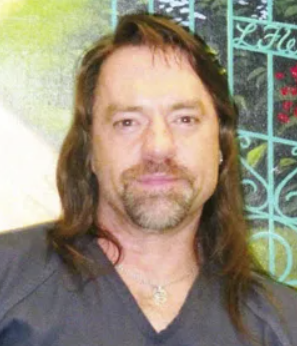
He is 63 now. A clemency application has been pending before Governor Whitmer since June 2022. In September 2025 it was amended to tell her office that he suffers from a life-threatening medical condition; his doctors cannot promise he survives a wait for the next clemency window, years away under a future administration. The Governor did not create any of this. She is simply the last person who can end it, and she can do it with a signature. She has 92 days from the time this article is published.
That's why the site exists. Not to debate. To show. Every claim above is pinned to a court record, a state document, affidavit or a named source, and the documents themselves, the transcripts, the opinions and more, are hosted in full at temujinkensu.info, so you can check me the way I checked everyone else.
If you're a journalist, the story angles are sitting in the open: the fingerprint no one is running, the same-day police hypnosis of the only identifying witness, the exculpatory witness never allowed to testify, four constitutional findings erased by a calendar, an unsolved murder nobody is looking into, and a clemency process that has no lane for the innocent.
And whoever you are, here is the ask. Look for yourself at temujinkensu.info. Then, while there is still a chance, take a few minutes to voice your support for Temujin to Governor Whitmer and to the Michigan Parole Board. The site has the letter drafted, both addresses, and the Governor's form; the whole thing takes a couple minutes, and your voice truly matters to help correct a terrible injustice.
I took this job thinking I'd spend thirty days building a website. I spent them measuring my life against his imprisonment. Forty years, a whole Michigan lifetime, behind bars for a crime the record shows he could not have committed, while whoever killed Scott Macklem has never been caught.
The record did the convincing. I'm just the one who read it.
 info@review-mag.com
 989-780-4162















Comments (0)