 Sep 03, 2026
 0 Comments
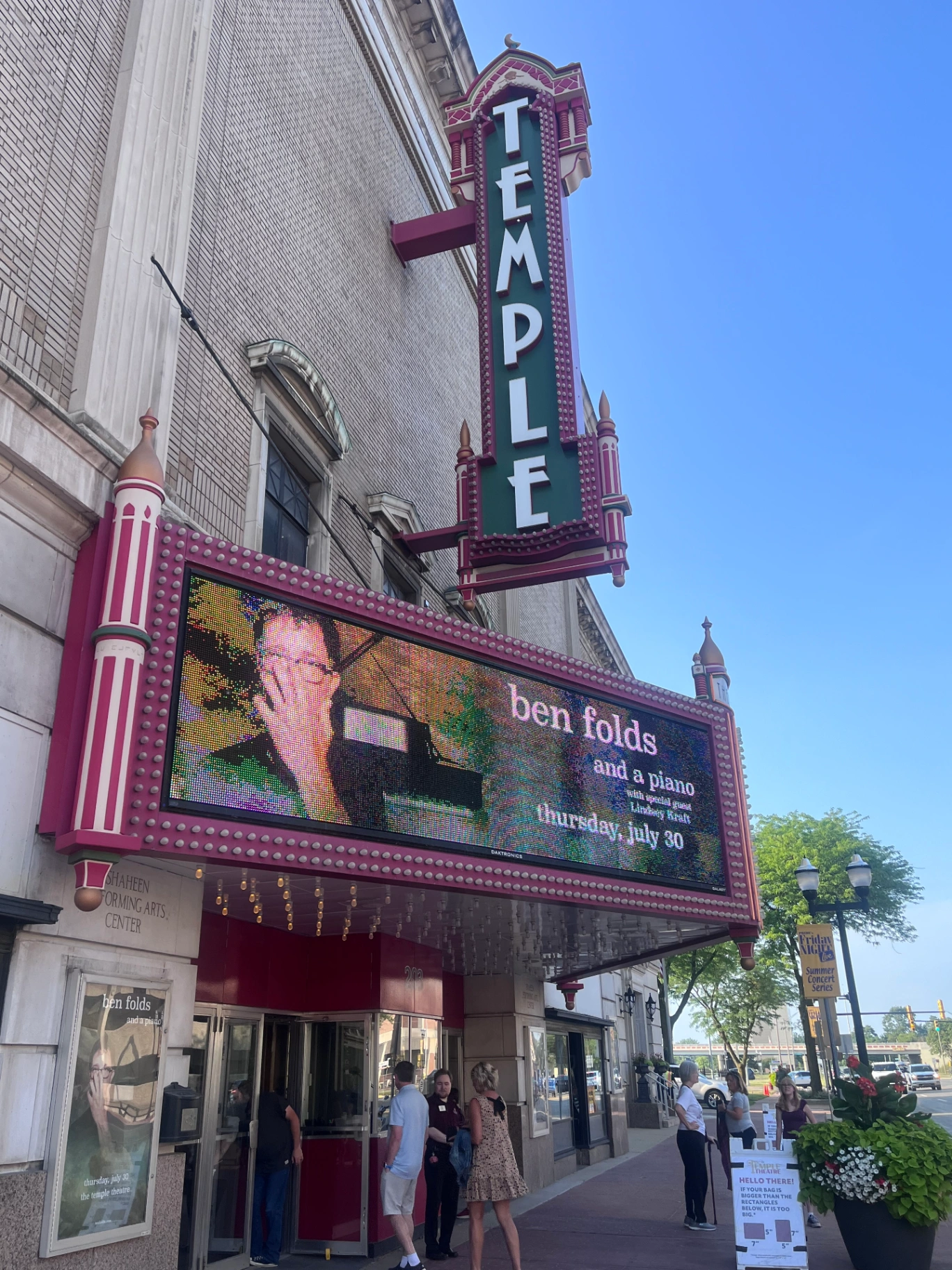
Rising proudly on the street of Washington Avenue nestled like a precious jewel that shimmers in the heart of Downtown Saginaw, there is good reason that The Temple Theatre has enjoyed a long-standing reputation as the ‘Showplace of Northeastern Michigan’ that extends far beyond provincial boundaries as the most beautiful historic theatrical venue still standing in the State of Michigan north of Detroit.
A beautiful movie palace built in 1926 after the city’s previous concert hall was lost to a fire, the theatre was originally operated by the W.S. Butterfield movie chain and officially opened on July 28, 1927. Built by Osgood & Osgood – the same architectural firm who constructed the equally impressive Fox Theatre in Detroit the following year – the Temple was a technological marvel featuring fireproof construction, geo-thermal cooling of the auditorium, spectacular acoustics, and state of the art stage rigging and dimming systems for the lights – not to mention its immaculate architecture.
As a point of interest, both the Fox and the Temple were commissioned by Shriners as Masonic Temples and both follow the same pattern, which adds an adjoining space next to the theatre consisting typically of three floors with a ballroom on the top and a balcony in the ballroom.
With the wonderful sound rising out of its Barton Butterfield Special Pit Theatre Organ, which is the only one in the world remaining intact in its original condition, The Temple Theatre carries a seating capacity for 1.750 and has been graced by legends ranging from B.B. King to George Carlin; and Art Garfunkel. When it first opened 99 years ago the programming consisted of a combination of live Vaudeville acts and silent movies accompanied by a 10-piece orchestra.
By the time the Temple reached its 75th birthday it was sadly showing signs of its age, weakening with a failing boiler system, a deteriorating roof, crumbling plaster, and torn carpets. The electrical system from 1927 was not large enough to handle the amount of electricity required to operate the theatre in the Modern Age, and one more winter would have drained the Temple of its lifeblood.
Following the fate of far too many magnificently designed buildings throughout the city, sadly the theatre was facing demolition until the family of Dr. Samuel Shaheen purchased the The Temple Theatre in 2002, along with the adjoining 3-story building containing a Grand Ballroom, Premier Room, the Leopard Lounge, and a commercial kitchen. After an investment of $8 million dollars, the “Showplace of Northeastern Michigan” was thankfully returned to her original glory.
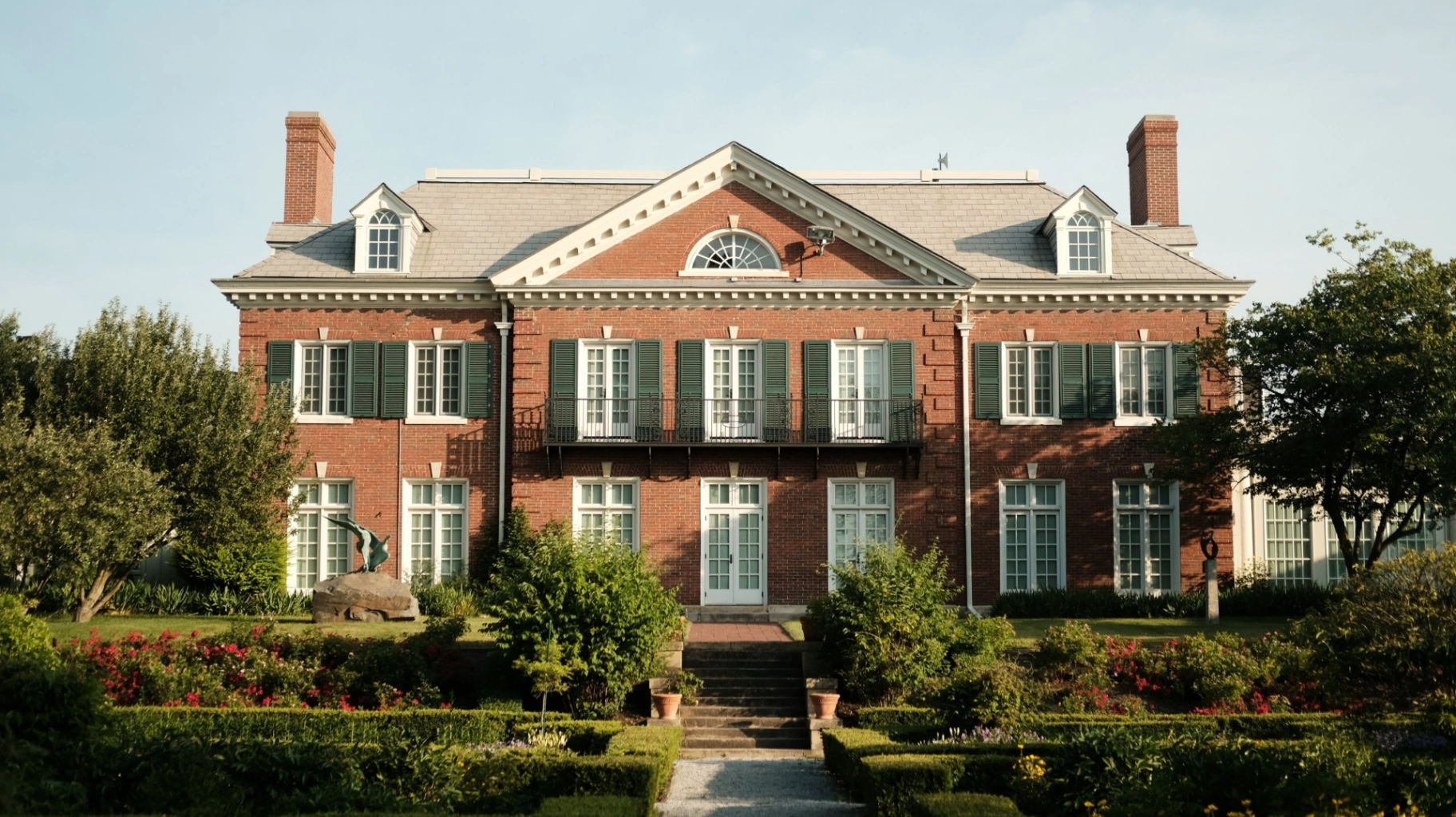
As the Temple Theatre approaches its 100th Anniversary, recently The REVIEW sat down with Director of Operations Tony Serra to discuss not only their upcoming 2026-27 season of entertainment, but also the upcoming year of activities scheduled at The Saginaw Art Museum, which is also under the umbrella of the non-profit Temple Arts Association.
REVIEW: Architecturally and culturally the Temple Theater and Saginaw Art Museum are both emblematic of the rich history of Saginaw and exist as havens for creativity and incubators for education that reaffirm the role and importance of diverse creativity. What are the biggest challenges involved with your role in navigating these entities through unpredictable currents into the future?
Tony Serra: I was hired as Executive Director one year ago to oversee all day-to-day operations and certainly running a nonprofit arts organization in America is a full of challenges. We have always operated as arts organizations on a razor thin margin, and in a post-COVID environment especially with touring acts and artists featured at The Temple, costs have risen and that creates a balancing act for us internally where we try to provide world-class entertainment and attempt to keep it affordable for everybody while also prudently maintaining our business interests, so that’s part of the challenge right now – threading the needle and finding opportunities where we can sort of have our cake and eat it, too.
REVIEW: As Executive Director you are responsible for the leadership and strategic and operational management of the two organizations including programming, exhibitions, fund development and community outreach. How did your background and interest in the Arts inform your goals for the roles these two entities fill within the cultural landscape of our region?
Tony Serrra: I was fortunate to gain my initial experience here at the Temple Theater before spending five years as Director of Operations at The Fox Theater down in Detroit. Both are classic historic world-class theaters, and The Fox is the second largest theater by seating capacity in the United States. There’s no question every step in my journey has been growth oriented and I learned an immense amount through the experience of being part of the Ilitch organization by seeing not just what happens within the walls of the Fox Theatre, but also what happens at Little Caesars Arena.
313 Presents is the newly formed broker for entertainment in the trade arena and being exposed to those organizations, those venues, and those operating teams certainly helped form who I am now and the type of leader that I am and how I approach my work. For me it was about learning as much as I could being a part of the highest level of performance within the industry. When the phone call to come home happened it became extremely easy to say yes because it gave me an experience that I could bring home and share with Saginaw and the Great Lakes Bay region communities that I didn’t have before.
REVIEW: Please tell us what your approach is as far as sculpting the season for the upcoming year. Let’s start with the Saginaw Art Museum because I believe there is close to 2000 pieces of irreplaceable artwork housed within their permanent collection.
Tony Serra; Yes, the collection is immense. We have a beautiful collection of roughly 2000 pieces with an emphasis on 18th, 19th, and 20th Century American & European art. When I started my role here I learned about several different components to this museum that are truly integral to what we do. The first is our American Association of Museum’s accreditation that allows us to enjoy a standard that places us with the top 3% of American museums within the country.
Very few museums hold that accreditation standard so that allows us to forge relationships with institutions of the same type such as the Flint Institute of Art, Cranbrook Art Museum, and the Detroit Institute of Art, so we can borrow some of their works and configure shows featuring widely known names such as the Andy Warhol Exhibition that we recently presented. When you can feature more than a dozen different pieces of Warhol’s work, these types of exhibits only happen through relationships that we have because of that accreditation.
One of the things I challenged our team with a year ago is how do we bring not only exciting but broadly known artwork into this museum. It’s hard for an artist to become more well-known that Andy Warhol, so for us to have achieved a brand name blue chip artist within my first year is something I couldn’t be prouder of the team for pulling together in-house using our network of resources.
It is also important for us not to lose sight of the high-quality work coming from our regional artists, so we have two galleries that rotate roughly three times a year with the work of local regional artists on display, which is why this Fall we will feature the work of well-known regional artist Susie McColgan, who recently won an All Area Arts Award this year.
Then after the Warhol exhibition closes on September 9th we’re going to be borrowing a show from the Flint Institute of Arts showcasing Japanese Silk Prints that promises to be a stunning show, as we will also be working with the Japanese Cultural Center here in Saginaw to structure some ancillary programming.
REVIEW: Let’s shift over to The Temple. You’ve got the 100th Anniversary of the Temple coming up this year so what’s your approach for this upcoming season?
Tony Serra: This season will be the 99th year of operation for the Temple Theater and the first film that opened it was shown on July 28, 1927, so starting in July of next year we will begin our 100th season. In terms of our programming mix its sort of a balancing act between what the community needs, desires, and wants, and what is available on the menu of options.
We’ve been fortunate to bring in some major acts this past year, but comedy is something that the community has strongly embraced, which is very interesting because back when I started working at The Temple fifteen years ago, I was part of the team that started the Leopard Lounge Comedy Club inside of the theater. I knew back then there was an appetite for comedy in Saginaw and the Great Lakes Bay Region, so people love to laugh.
Prior to my arrival our Associate Director Sarah Lamblin did a great job forging phenomenal relationships with agents specifically within the comedy sphere and had already brought to our stage the likes of Tim Allen, Steve Martin and Martin Short, and some of the biggest names in American comedy history before my arrival, so for us to have that momentum already forged in the industry allows me to lean in and play into the fact Saginaw loves to come out and laugh. Plus, comedians are less expensive than having to build out a full concert stage with multiple instruments and all the production value that comes along with a large concert.
Because the Temple is also home to the Saginaw Bay Symphony Orchestra and the Saginaw Choral Society there’s no question this also forms an important part of the diversification of programming, we’re able to feature that I’m most proud of, because in a way we are acting like Carnegie Hall in some ways by representing the finest classical performing acts that you can find on the planet.
Last March we brought Joshua Bell & The Academy of St. Martin in the Fields into the theatre, and he is probably one of the top two violinists alive on the planet, so to have him come into our area is a major achievement.
Everything is on the table when it comes to what we’re striving to bring to Saginaw and how we’re trying to make new experiences. In October we’ll be featuring Whose Line Is it Anyway, which is the old Drew Carey comedy show with many of the original cast members from the television show that promises to be a lot of fun; and we’ve also got the national comedian Chelsea Handler coming in and Ghostbusters In Concert coming, which will be using our film presentation capacities so we can show the original film with a live orchestra playing the soundtrack beneath the film itself.
REVIEW: You mentioned The Leopard Lounge earlier and it seems like that would fill an important void in downtown Saginaw if it were able to be open regularly featuring live local music and entertainment on a weekly basis.
Tony Serra: For sure I agree and think it’s only a matter of time. My first year was focused on getting to know the staff and re-engaging with the community and putting my finger back on the pulse of what’s going on. We’ve been successful with making some changes and pushing programming in areas that we can to create outstanding experiences for audiences, and I have more ideas that haven’t come to fruition yet but hopefully will fall into place in the years ahead. I agree that The Leopard Lounge is dripping with opportunity and would be an asset for the downtown community if it were to be activated. We’re trying to look at all the different assets in the Temple Theatre and how we can leverage those in time for the 100th anniversary, prioritizing where we put our time and resources.
REVIEW: So can you give us any idea of who you’re aiming at bringing in for the big 100th Anniversary celebration?
Tony Serra: Everybody in town is asking me that question and as much as I want to announce it and give everyone that excitement we all love that comes with the buildup to a big event, because this industry is changing so rapidly, getting commitments more than a year out from the date of an event from large names who are well known is not as easy as we would want them to be from a planning stages standpoint. I can assure you that we plan to celebrate the 100th Anniversary and what it does for our community at the highest possible level.
It’s a testament to the Shaheen family that 25-years since they reopened the Temple in our community it’s continued to improve and evolve for a quarter century now. As Americans we tend to sometimes take things for granted, but every performer that walks into that space always comments about how spectacular it is.
To learn more about upcoming events at the Temple Theatre and Saginaw Art Museum throughout the Fall Season be sure to check out their websites at TempleTheatre.com and SaginawArtMuseum.org.
 info@review-mag.com
 989-780-4162


















Comments (0)