 Sep 03, 2026
 0 Comments
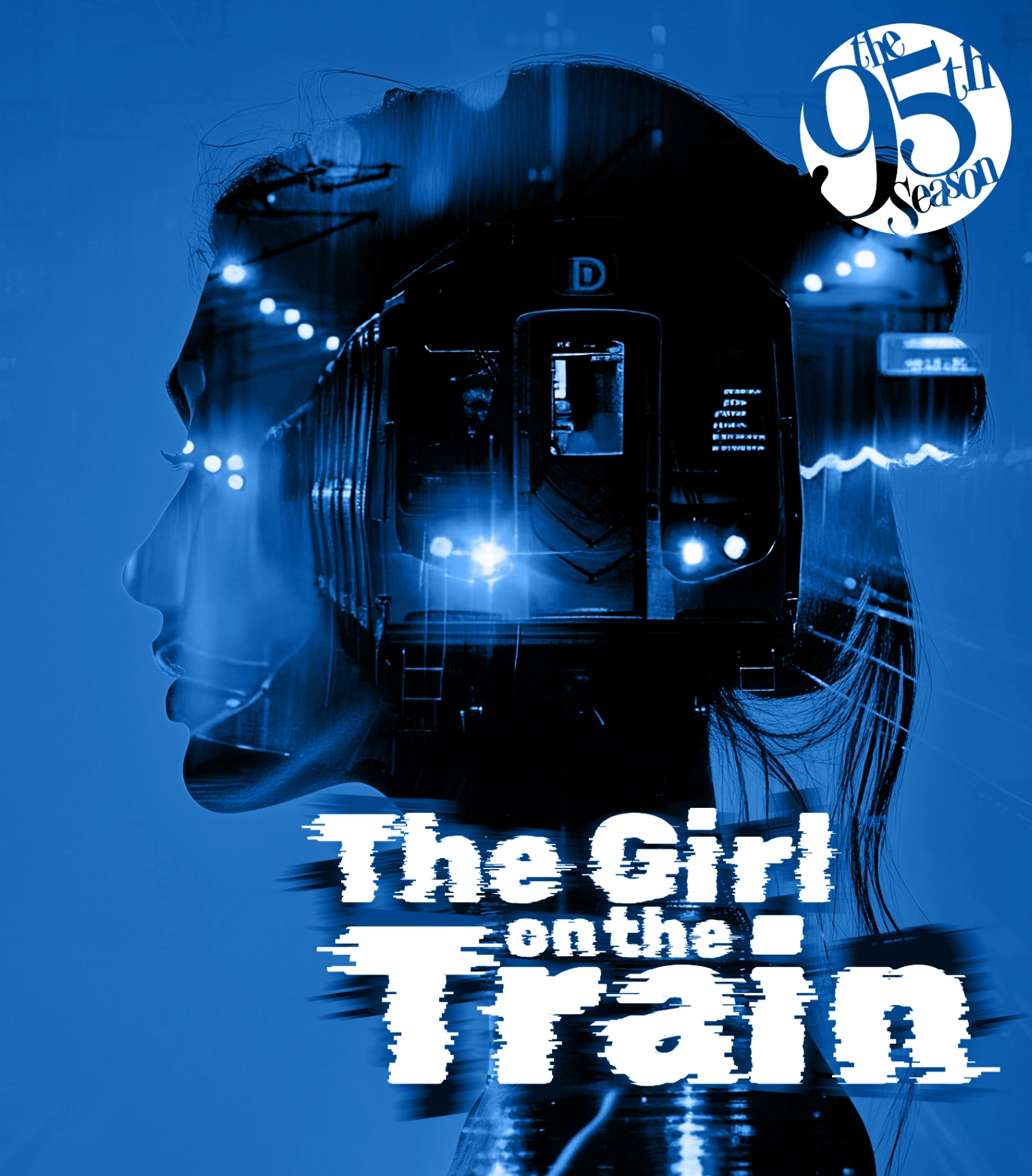
In the grand tradition of Agatha Christie, Pit & Balcony Community Theatre Is setting the stage for audiences to jump aboard a thrilling start to its landmark 95th Season with their opening production of The Girl on The Train, which will be running down the tracks in a series of performances beginning September 11-13th & 18-20th.
There is something oddly comforting about the mundane familiarity of the daily commute to work, and this chilling thriller, based on the bestselling 2015 novel by Paula Hawkins and the subsequent DreamWorks film toys with this very truism. Adapted for the stage by Rachel Wagstaff and Duncan Abel, The Girl on the Train follows the character of Rachel Watson, a recovering alcoholic who rides the same train every day – the 8:04 to London, returning home faithfully on the 5:56. Longing for a different life, the sad truth is that she lost her job because her drinking made her unreliable, so she maintains the commute because it is the only thing that gets her out of the house each day.
When the woman she has been secretly watching each day suddenly disappears, Rachel finds herself drawn into a twisting mystery—as both a witness and a suspect. As the truth begins to unravel, Rachel faces revelations bigger than she could ever have anticipated. Aware at some level that she may hold the key to events, Rachel takes it upon herself to investigate the extraordinary happenings she has witnessed, catapulting herself into the dark heart of a web of deceit and mystery.
Directed by Todd Thomas, the production features Arlo Welser as Rachel Watson, Jeff Rogner as Tom Watson, Lyn Emerson as Anna Watson, Michelle Mersey as Megan Hipwell, Jordan Reed as Scott Hipwell, Dan Kettler as Kamal Abdic, Greg Allison as Detective Gaskill, and Sandra Cline as Detective Riley.
When asked what drew him to this theatrical mystery and what he feels distinguishes it from other psychological thrillers, Thomas cites a case of serendipity. “I was actually slated to direct CLUE: the Musical, which is the next production slated for performance at Pit & Balcony in their 95th season,” he reflects. “When Managing Director Amy Spadafore mentioned she did not have a director she was satisfied with for Girl on the Train, I read the script and immediately asked her if I could direct it as well, making it two in a row of course, and she agreed.”
“While I enjoy farces like CLUE, I also enjoy tackling shows like this production which require much more character work and artistry in directing and from the actors. This is a great story and if anybody attends who has not seen it before, it is written in a suspenseful manner of both a mystery and a thriller…a mystery because we truly don’t know who did it until near the end and then a thriller because we truly don’t know what’s going to happen after that. I love the complexity”
Tackling a play based upon both a bestselling novel and popular film can be a tricky task for a Director, so how does Todd plan on balancing audience expectations with the unique demands of a live stage play?
“It’s always a challenge when a majority of your audience probably ingested the story through some other medium before showing up. As a director, I honesty do this by ignoring the novel and film. My research has excluded reading or watching. I’m more interested in looking at behaviors and as a result will collaboratively build my own story in collaboration with the unique set of actors and designers. Why would I want to give the audience the same experience they’ve had before? Here they will have a much more intimate experience with the story than they had with the movie. And there’s never a reason to attempt to compete with a book.”
Insofar as a psychological thriller relies heavily upon tension, how does Todd plan on building and maintaining the sense of suspense in a live and shared theatrical space? “I personally believe it is easier to build tension and suspense in live space than it is through film,” he states. “In fact, I’m depending on the audience feeling it is a shared space. When conversations are awkward for Rachel, I want the audience to empathize and feel awkward. When they are violent, I want the audience to feel defensive. Yes, I know that happens with great films and certainly great books, but to have those people only feet in front of you is an advantage rather than a weakness.”
“This is as fully committed a cast as I’ve worked with. All of them have been working hard to bring this thriller to an audience in a way that tells the story and has its own uniqueness for a story in a book or in film.”
Given that Rachel is a deeply flawed and complex protagonist struggling with severe alcoholism and blackouts, how does Thomas work with his lead actor to ensure her portrayal is emphatic rather than a caricature? “I’m not sure how to answer that question. I suppose it will be the same way I work with any actor. I think for the actor portraying Rachel, the trick is to remember that the play starts with Rachel already a bit of a mess. This didn’t just happen, so the challenge is to find the peaks and valleys, the familiar parts and those that are truly a panic, and weave those into an evolution over the course of two acts.”
Because the narrative of this story is told through Rachel’s fractured memory, how difficult is to direct the ensemble cast to play with the line between her reality and her perception? “This is not as difficult as it sounds because Rachel’s perceptions ARE reality…at least to Rachel,” notes Thomas. “This is one of the things about this story. If you have inside knowledge of what happened to Megan, then you know when Rachel’s memories are manufactured and when they are not. If you don’t have inside knowledge, you must believe them until something (usually Rachel herself) adjusts the interpretation.”
Seeing as the train itself is practically a character in this story, how does Todd and his scenic designer plan to visually represent the moving train and the view from the window?
“I am also the set designer, and I decided not to over-complicate this,” states Thomas. “As you say, the train is central to the story and, if nothing else, is presented prominently frequently throughout the action. Our train owns a part of the stage, but I didn’t want to overstate it by making it huge or garish. It is understated, but it is always there. Rachel has easy access to come and go on the train as do other passengers. On a small stage, trying to create a moving piece that doesn’t take the audience out of the story can be difficult, so the train is where the train is. The living spaces DO change throughout, so having the train in a single location also allows us to do a little sleight-of-hand with scene changes.”
Because the script moves quickly between different times, places, and memory fragments, what is Todd’s strategy for keeping the transitions seamless without slowing down the plot? “I keep the set tight and do much of it through lighting. While it does move quickly, it doesn’t go anywhere (with one big exception) without staying there for a minute. I think we have it blocked right now where it can move seamlessly without losing the audience regarding time and place. We’ll see.”
Season 95 also brings a new performance schedule, offering audiences more flexibility than ever with three evening performances and three matinee performances for each mainstage production.
Evening performances begin at 7:30 p.m., while matinees begin at 3 p.m. Second Saturdays, previously an evening performance, are now part of the theatre's regular matinee schedule. Evening performances are September 11, 12 & 18 at 7:30 p.m. Matinee performances are September 13, 19 & 20 at 3 p.m.
Tickets are $20 and are available through the Pit & Balcony box office and online. For more information and tickets, visit pitandbalcony.com or contact the box office at (989)-754-6587.
 info@review-mag.com
 989-780-4162
















Comments (0)